Can't find what you're looking for? Get in touch!



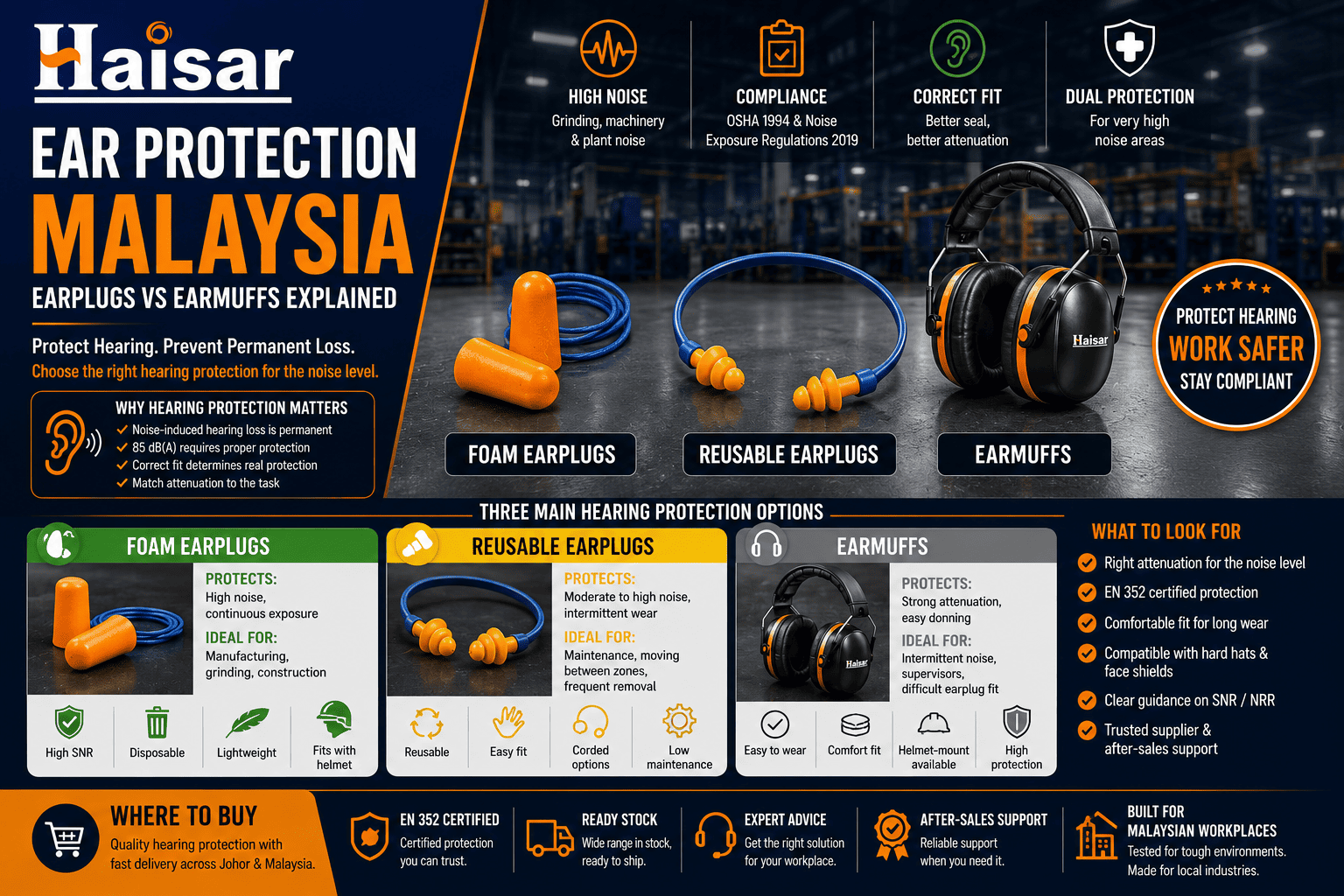
Noise-induced hearing loss is permanent. Unlike a laceration that heals or a chemical burn that can be treated, the damage that loud noise does to the hair cells of the inner ear does not repair itself. Once those cells are destroyed, the hearing loss they cause is irreversible. There is no surgical correction and no medical treatment that restores the lost sensitivity. Workers who develop occupational hearing loss from years of inadequate noise protection carry that loss for the rest of their lives.
Malaysian industrial workplaces generate noise levels that create genuine risk of hearing damage across a wide range of sectors. Manufacturing plants, fabrication workshops, power generation facilities, oil and gas compressor modules, data centre plant rooms, and construction sites all regularly expose workers to noise levels above the 85 dB(A) threshold at which Malaysian OSH regulations require hearing protection.
The two primary devices for hearing protection in industrial environments are earplugs and earmuffs. Both are effective when correctly specified and correctly used. Neither is universally superior. Choosing between them, or combining them, requires understanding how noise is measured, what level of attenuation each device provides, and which device suits the specific working environment and task requirements. This guide covers all of it.
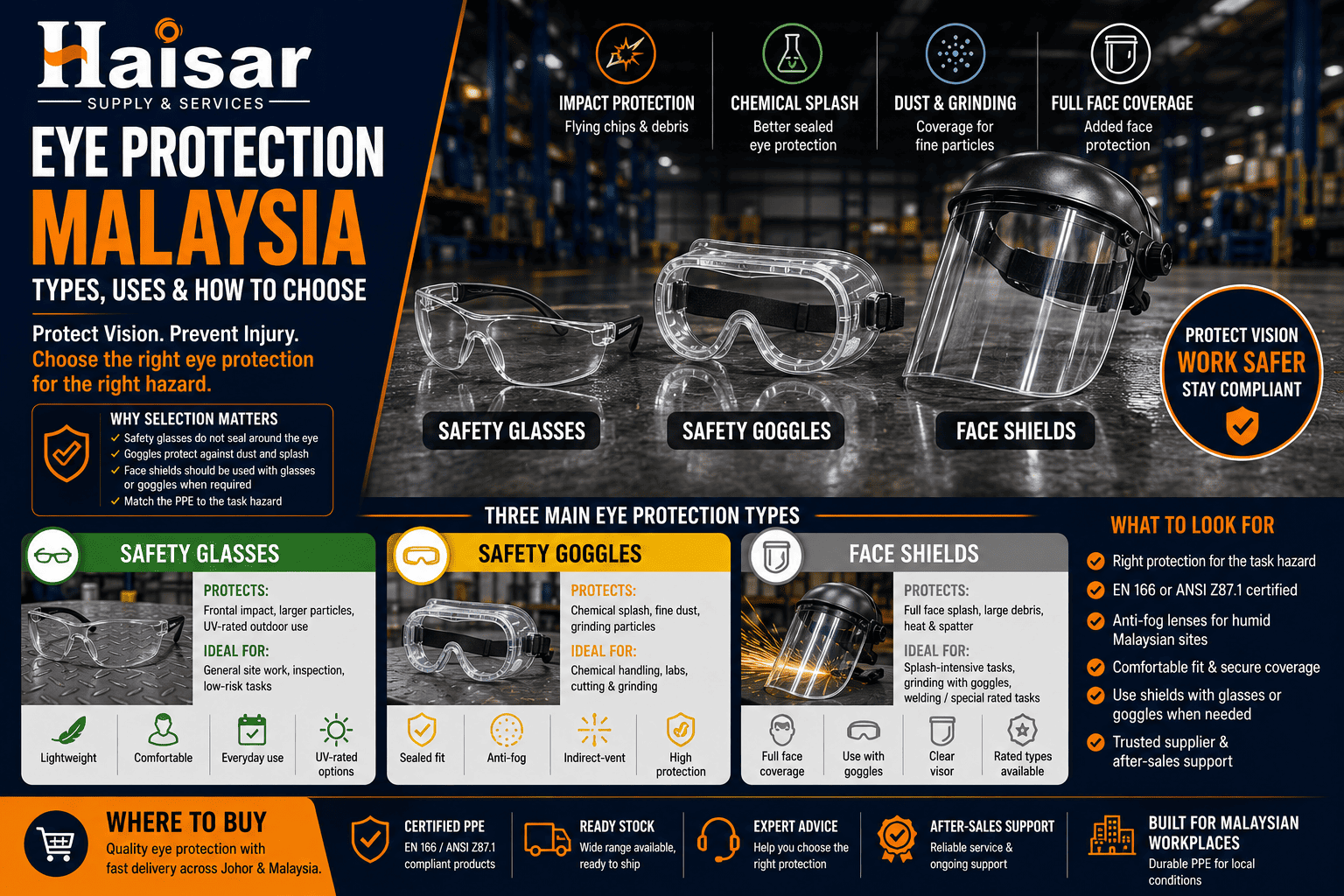
Eye injuries are among the most preventable workplace injuries in Malaysian industry, and among the most consequential when they occur. A foreign body embedded in the cornea, a chemical splash causing corneal burns, or an arc flash causing photokeratitis are all injuries that could have been prevented by the correct eye protection worn correctly. The challenge is that the three main categories of eye protection, safety glasses, safety goggles, and face shields, are not interchangeable. Each is designed for a specific range of hazards and using the wrong one for a given task either provides no protection or inadequate protection for the hazard present.
This guide cuts through the confusion. It explains what each type of eye protection does and does not protect against, provides a clear comparison, covers the standards applicable in Malaysia, and gives safety officers and procurement teams a task-by-task reference for making the correct specification decision.
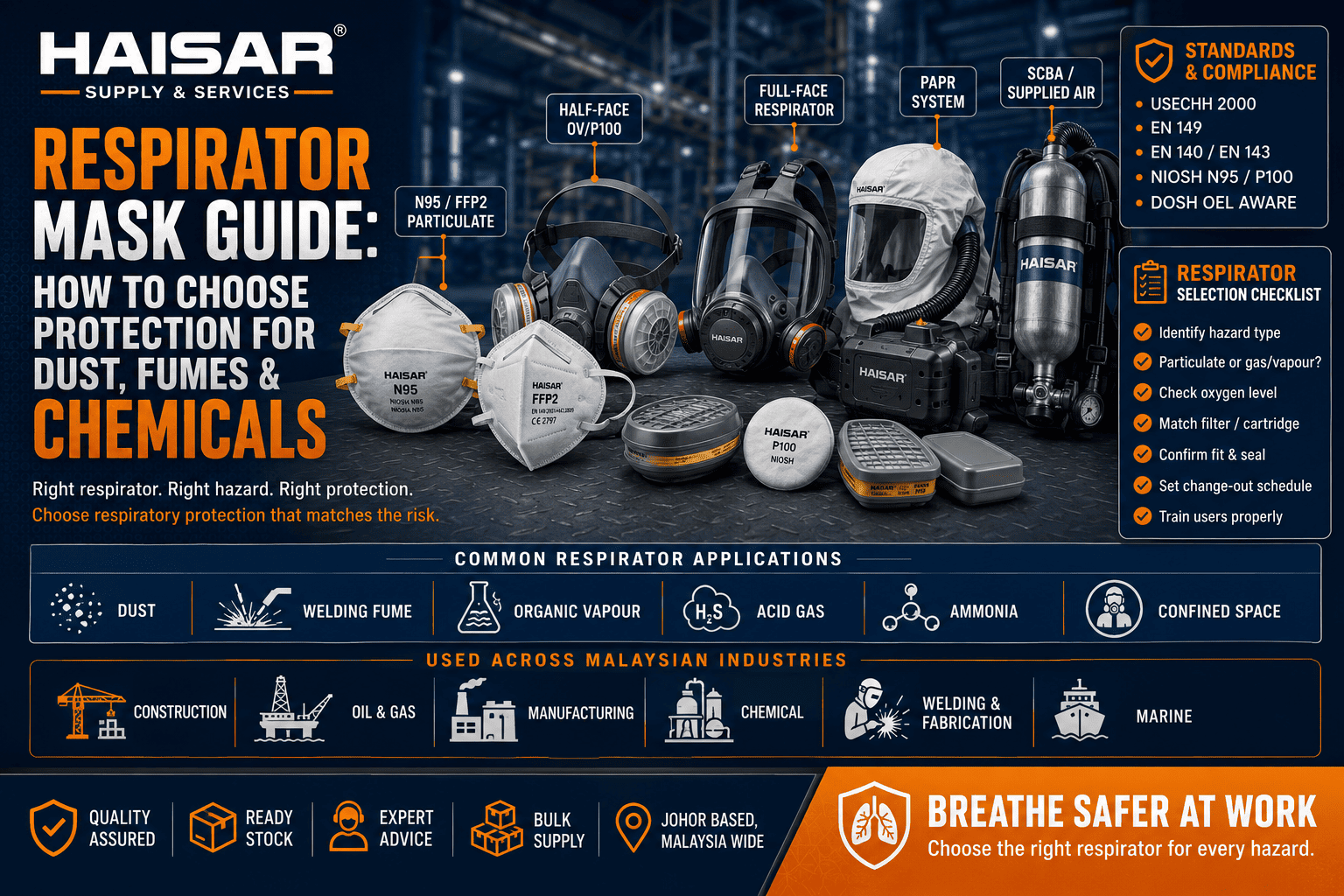
Respiratory protection is the PPE category where getting the selection wrong carries the most invisible consequences. A worker wearing the wrong glove for a chemical task may notice skin irritation quickly. A worker wearing the wrong respirator for a toxic dust or vapour exposure may not notice anything at all, while cumulative damage to the lungs, airways, and bloodstream accumulates over months or years.
Occupational lung disease from inadequate respiratory protection is one of the leading occupational health problems in Malaysian industry. Silicosis from construction and quarrying dust. Occupational asthma from chemical sensitisers in manufacturing and painting. Chronic obstructive pulmonary disease from welding fumes. These are irreversible conditions that develop when the wrong respirator is worn, when a respirator is worn incorrectly, or when no respirator is worn at all because the hazard was not recognised or the right equipment was not available.
This guide covers the full respirator selection process for Malaysian workplaces, from understanding the hazard types that require different respirator classes, through the N95, FFP, and cartridge-based systems, to the fit basics that determine whether a respirator actually works for the individual wearing it. Whether you are an HSE manager building a respiratory protection programme, a procurement officer sourcing respirators for a construction project, or a site supervisor trying to understand what your team should be wearing, this is the reference you need.
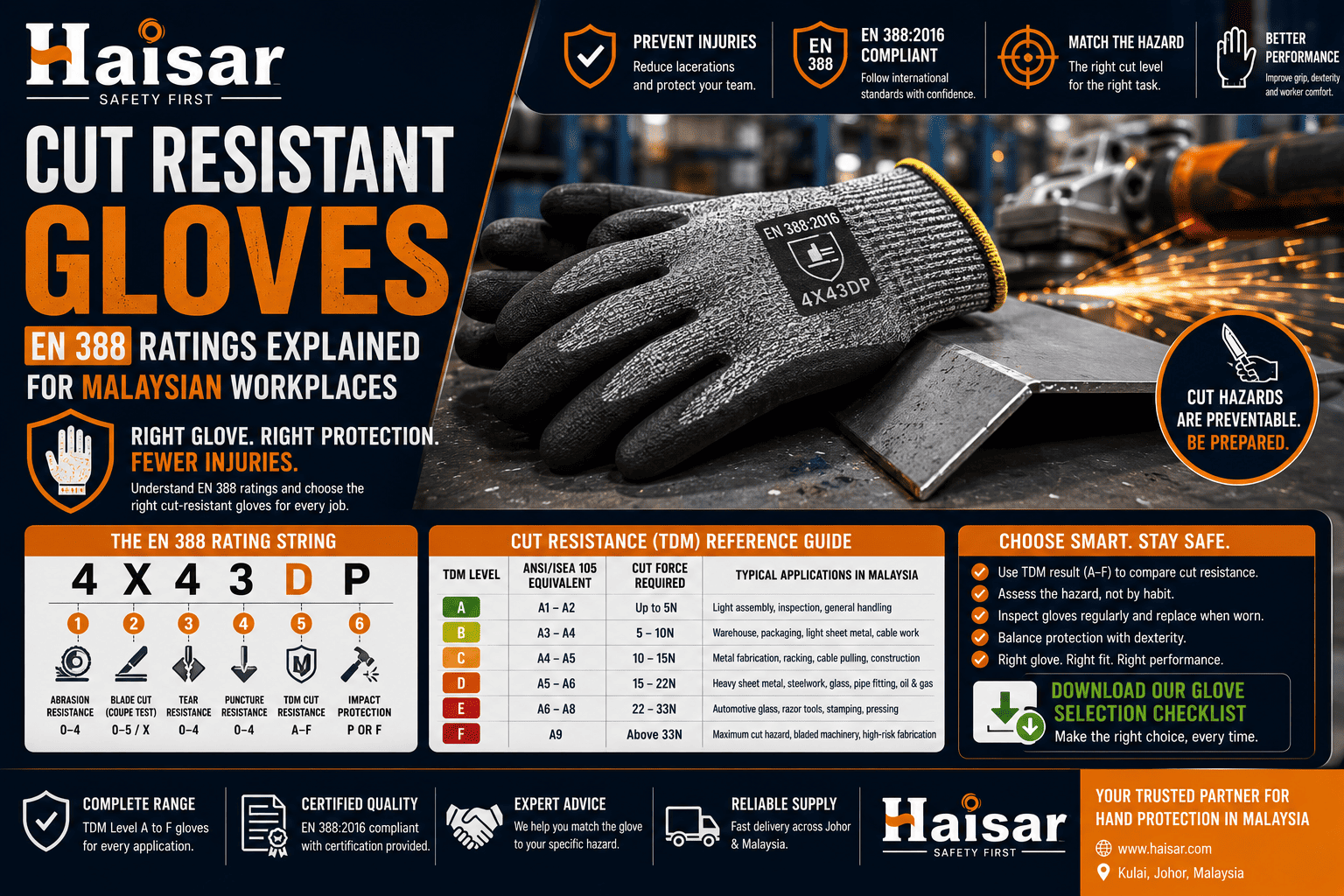
Cut injuries are the most frequently reported hand injury type on Malaysian industrial and construction sites. Most of them are preventable. The right cut-resistant glove, matched to the specific cutting hazard present at the task, reduces the severity of lacerations when contact with a sharp edge occurs and eliminates many cut injuries entirely.
The challenge procurement managers and HSE officers face is not finding cut-resistant gloves. The Malaysian market has dozens of options at every price point. The challenge is understanding the EN 388 rating system well enough to match the glove to the hazard rather than picking based on price or the most familiar brand.
This guide explains the EN 388 standard and its cut resistance ratings in plain terms, gives a clear reference table for Malaysian workplace applications, and covers the most common specification mistakes so your team avoids them.
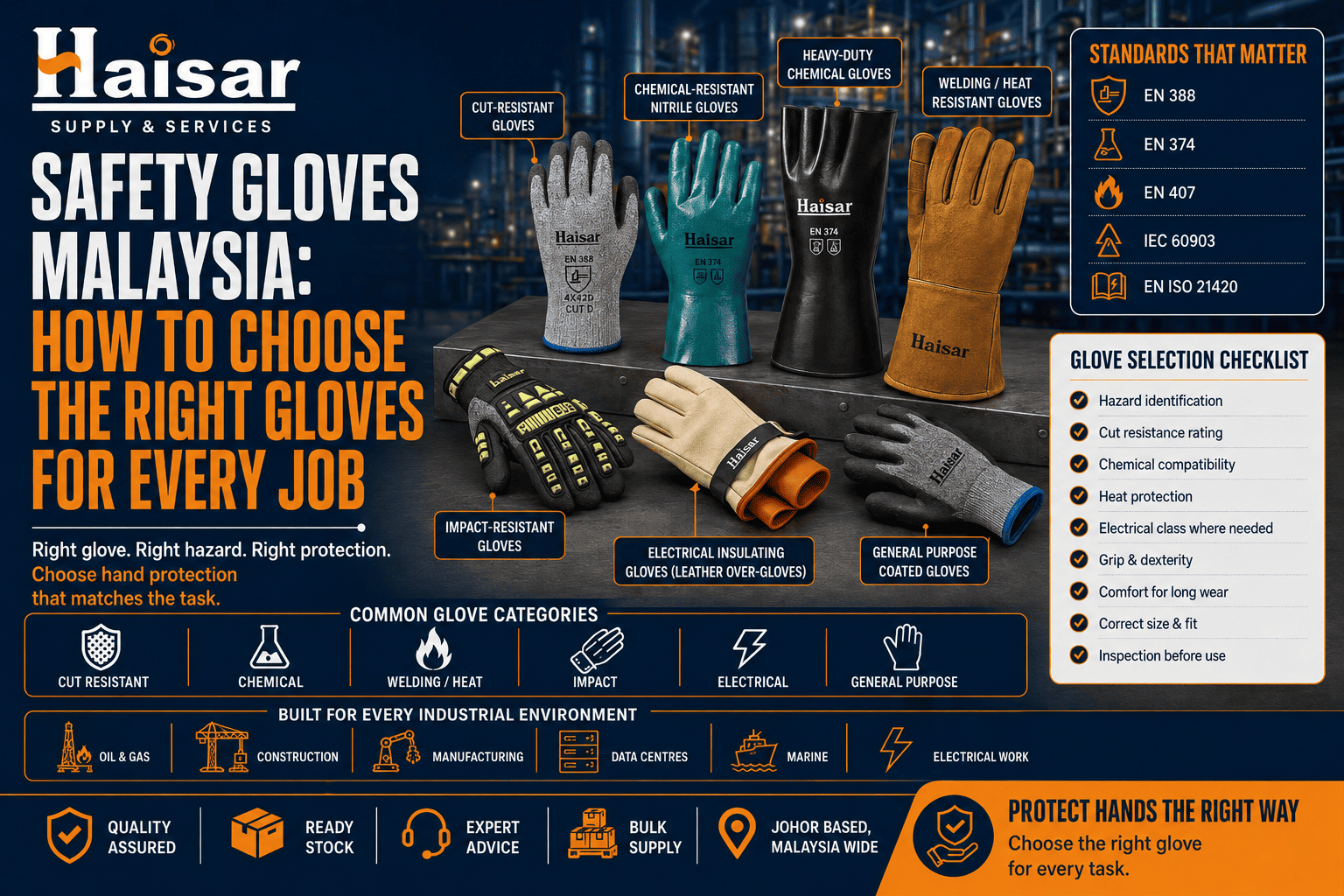
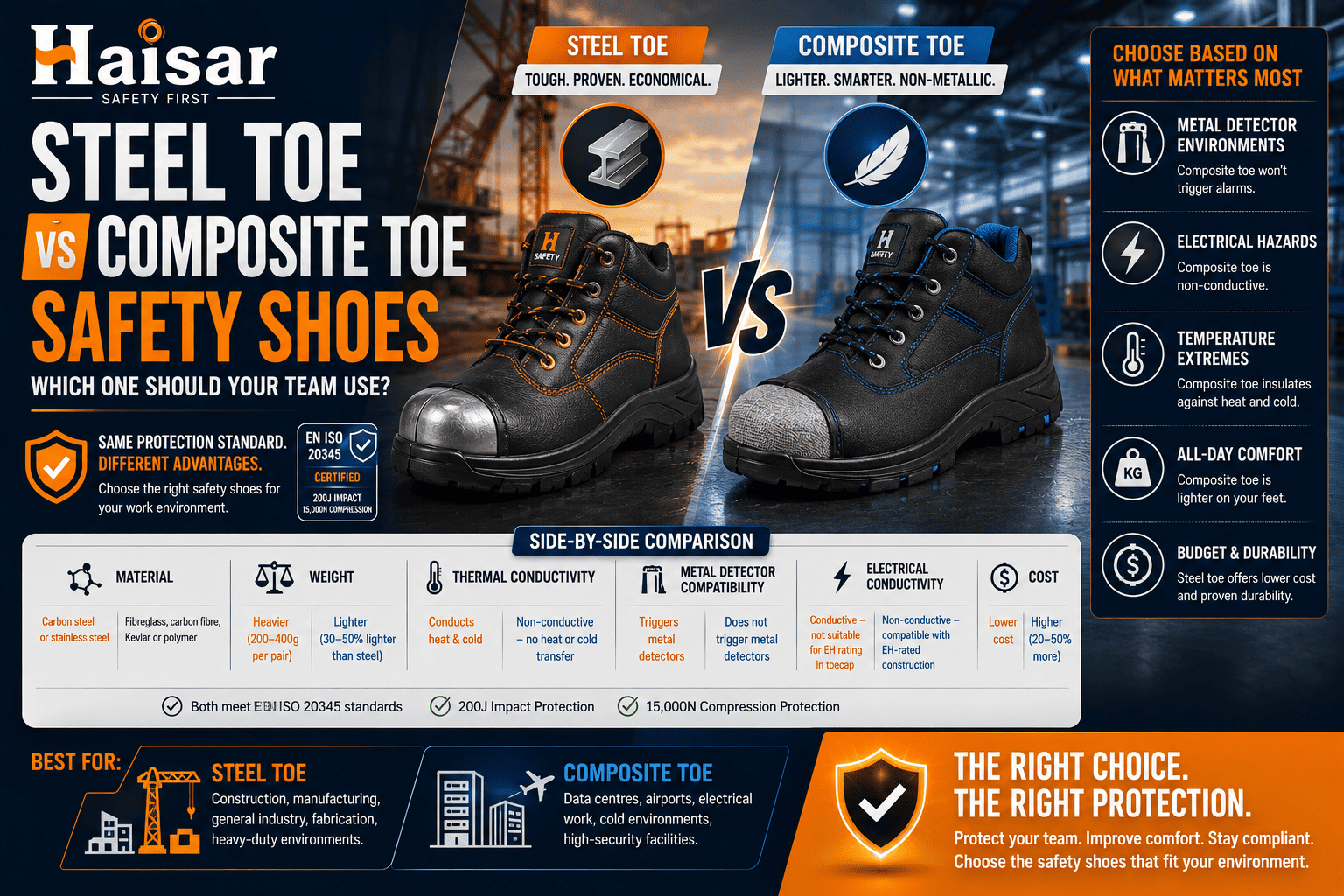
Walk into any safety equipment supplier in Johor and you will find both steel toe and composite toe safety shoes sitting side by side, often at very different price points, often with minimal explanation of why one might be right for your team over the other. Most procurement teams default to steel toe because it is familiar. Some default to composite because it sounds more advanced. Neither is the right approach.
The choice between steel toe and composite toe safety shoes is a specification decision that should be driven by the specific hazard environment, the working conditions, the regulatory requirements of the site, and the physical demands on the worker. Both meet the same fundamental impact and compression protection standard. The differences between them determine which one serves your team better in practice.
This guide breaks down the comparison clearly, covers the key differences in plain terms, and gives industrial buyers in Johor the information needed to make the right call for each site environment.
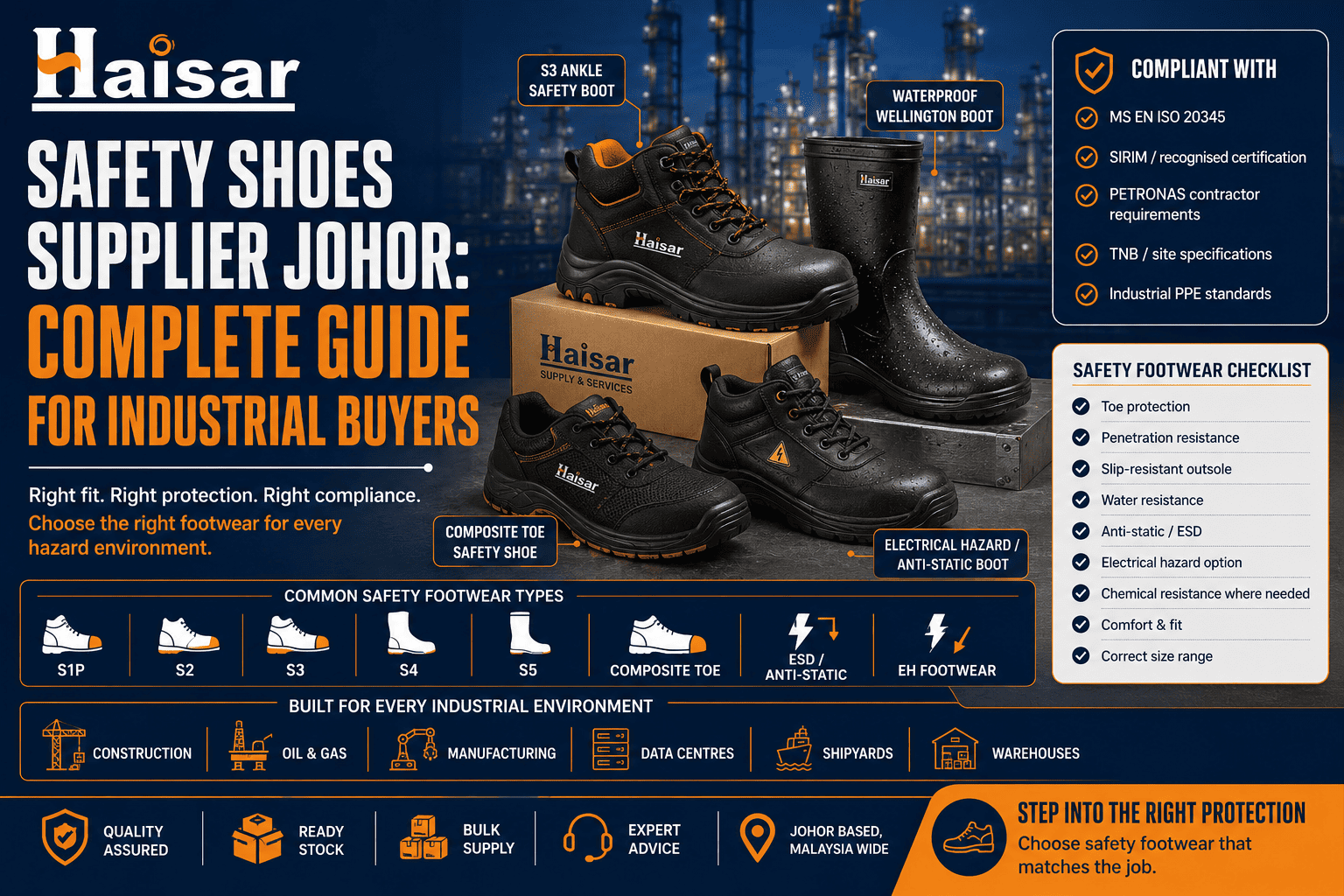
Safety footwear is one of the most personal items of PPE your workers will wear. Unlike a hard hat or a hi-vis vest that sits on top of the body, safety shoes are worn for an entire shift, walked in across uneven terrain, stood in on concrete for hours at a time, and subjected to the full range of Malaysian weather from monsoon mud to sun-baked tarmac. When the footwear is right, workers wear it without complaint. When it is wrong, the PPE programme starts to unravel because workers find ways to avoid wearing it.
For industrial buyers in Johor sourcing safety shoes for construction sites, oil and gas facilities, manufacturing plants, data centres, shipyards, and warehouses, this guide covers everything you need to make the right procurement decision. From the safety shoe types and protection standards that apply in different hazard environments to the practical selection checklist that procurement managers and HSE officers use to specify correctly, this is the complete reference for safety footwear sourcing in Johor.
