Can't find what you're looking for? Get in touch!



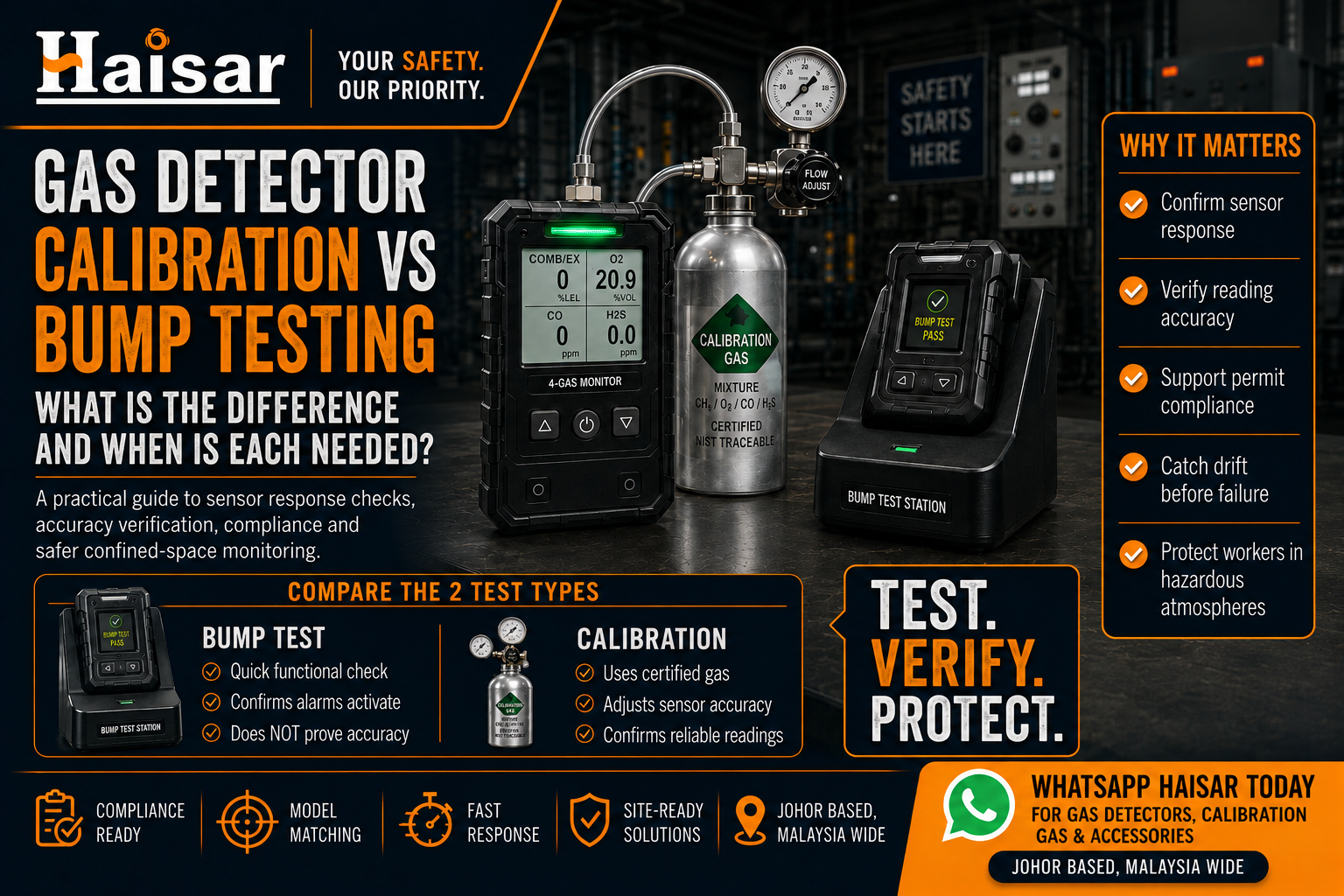
The two questions that come up most often from HSE managers and confined space supervisors when gas detector maintenance is discussed are these: is a bump test the same as a calibration, and if we bump test every day, do we still need to calibrate? The answer to both is no, and understanding why matters more than simply following a schedule someone else set. A gas detector that is bump tested regularly but calibrated infrequently, or calibrated on a fixed calendar interval without daily bump testing, is a gas detector whose reliability is lower than the user assumes. In confined space entry, in flammable atmosphere work, and in any environment where a gas detector's alarm is the primary warning before an irreversible exposure, that gap in reliability is a life safety gap.
This article explains what each process does, why both are needed, what happens when either is skipped, and what the maintenance programme for a gas detector should look like in practice.
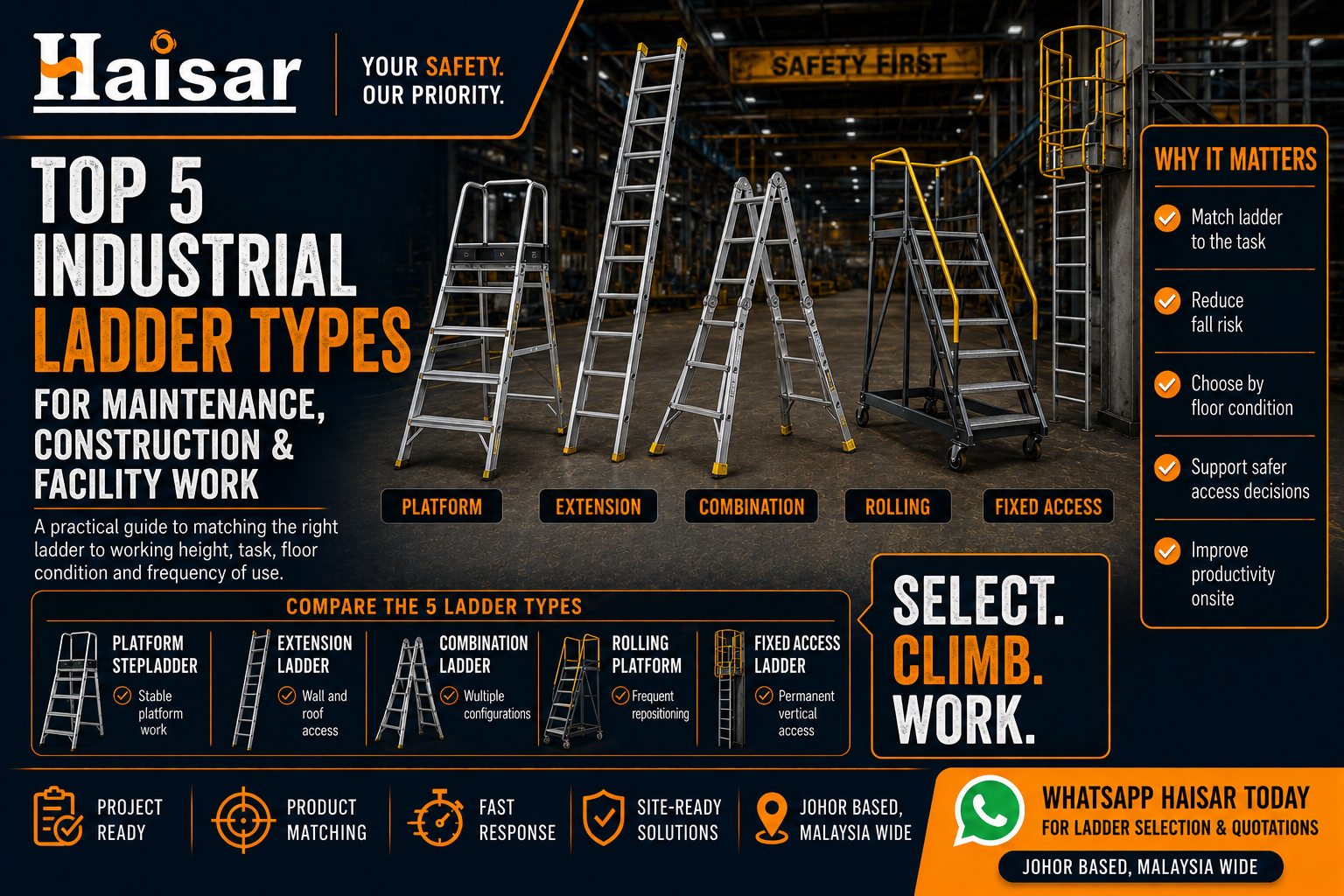
The right ladder for a job and the nearest available ladder are often different objects, and the gap between them is where most ladder-related incidents begin. A single-section straight ladder leaned against a wall is adequate for some tasks and genuinely dangerous for others. A stepladder that was the right tool for a two-hour occasional maintenance job becomes the wrong tool when it is used eight hours a day in a production environment with uneven floors and frequent repositioning. Getting the ladder type right is not pedantry. It is the difference between a tool that performs the task safely and one that introduces a fall risk the user compensates for with posture and grip rather than with appropriate equipment.
This article covers the five ladder types most commonly used in industrial, construction, and facility maintenance environments in Malaysia, what each one is designed for, where it performs well, and where a different type should be selected instead. The ladder selection worksheet at the end translates these factors into a set of questions you can work through before specifying or ordering.
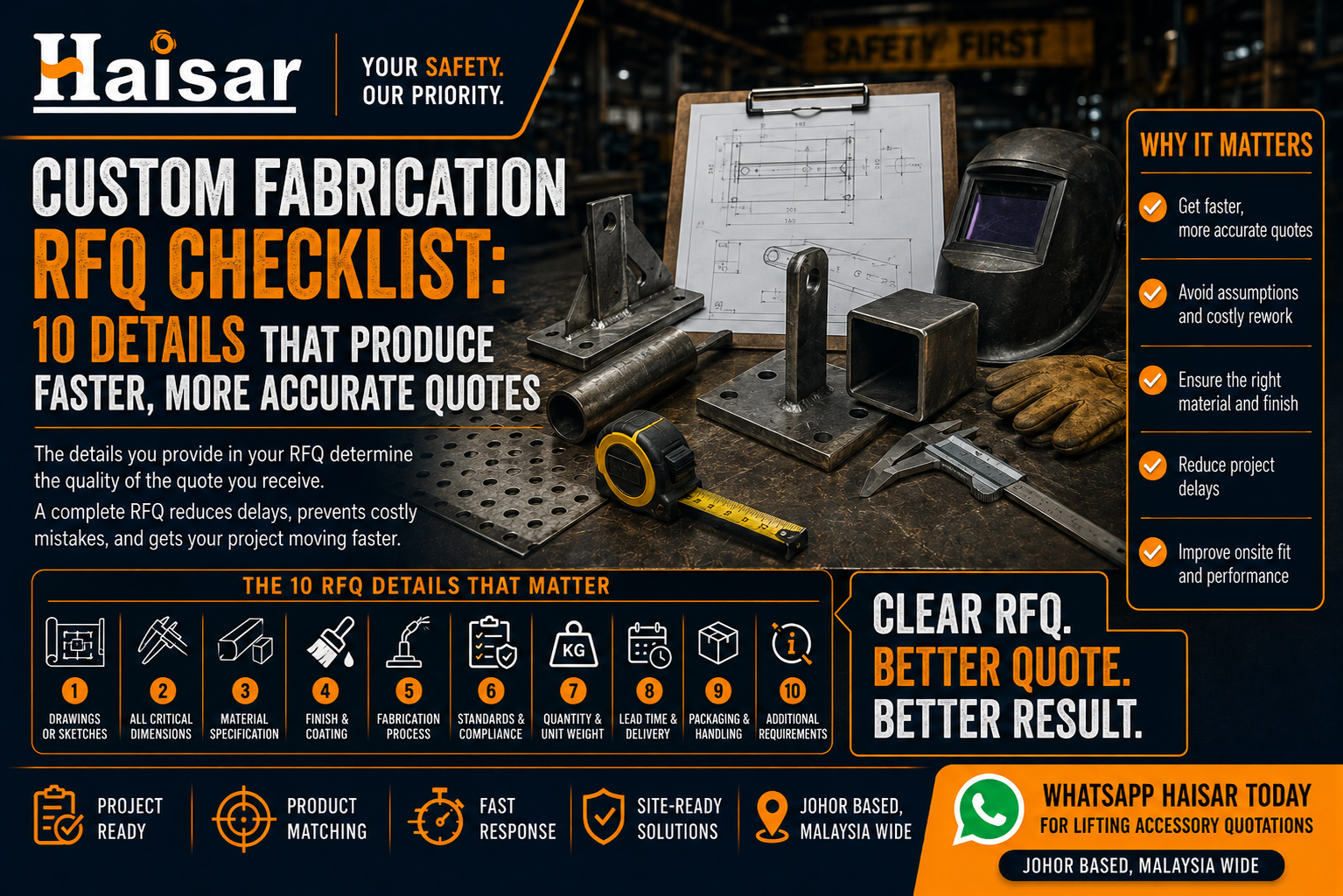
Fabrication quotes take longer than standard product quotes, and the gap between a useful quote and a useless one is almost entirely determined by what you give the fabricator to work with. A request that arrives with a clear drawing, confirmed material specification, and realistic timeline produces a price the fabricator can stand behind and the buyer can approve. A request that arrives as a verbal description of what something should look like produces a price built on assumptions, and those assumptions only become visible when the fabricated item arrives and does not match what was intended.
This pattern repeats on project sites across Johor's industrial corridor constantly. The custom drainage cover that was fabricated in mild steel when stainless was required. The safety bollard with the wrong base plate dimensions for the anchor positions already cast into the concrete. The LOTO station board in the wrong gauge sheet, heavier than needed and overweight for the wall mounting. All of these problems exist at the quotation stage, not the fabrication stage, and all of them are preventable by getting the right ten details into the RFQ before it goes out.
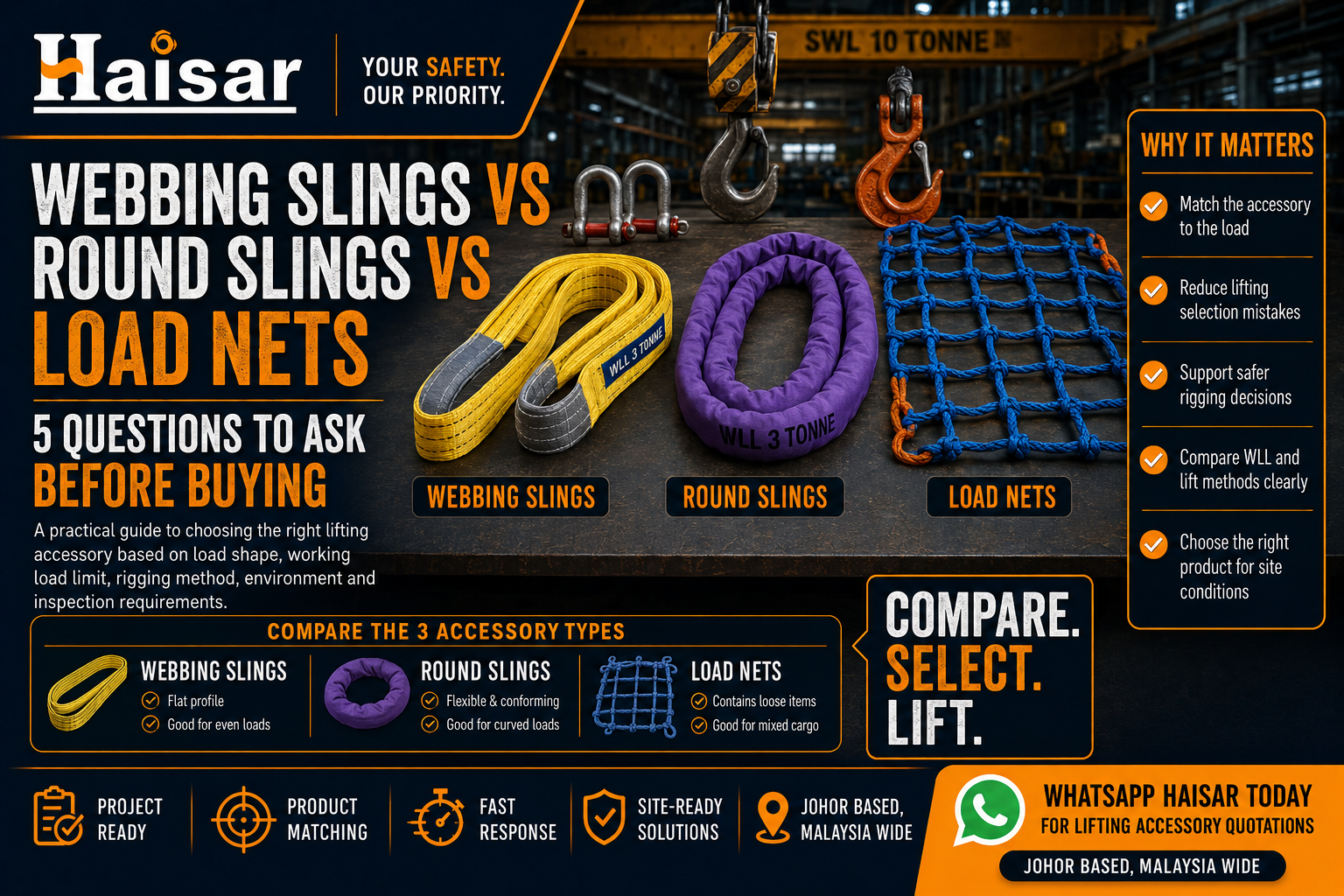
A lifting accessory that looks similar to the one you actually need is not the same thing as the one you actually need. Webbing slings, round slings, and load nets all do the job of connecting a load to a crane or hoist, and at a glance they can seem interchangeable, but each is built for a different combination of load shape, weight distribution, and handling method. Choosing the wrong one does not always fail immediately. It can work for months on lighter or more forgiving loads before failing on the one lift where the load shape or weight finally exceeds what the accessory was actually designed to handle.
This article works through five questions that determine which of the three accessory types is right for a specific lift, and what to check on the product itself once you have made that decision. It is written for procurement officers, riggers, and site supervisors who need to specify the right lifting accessory rather than choosing based on what happened to be available in the store.
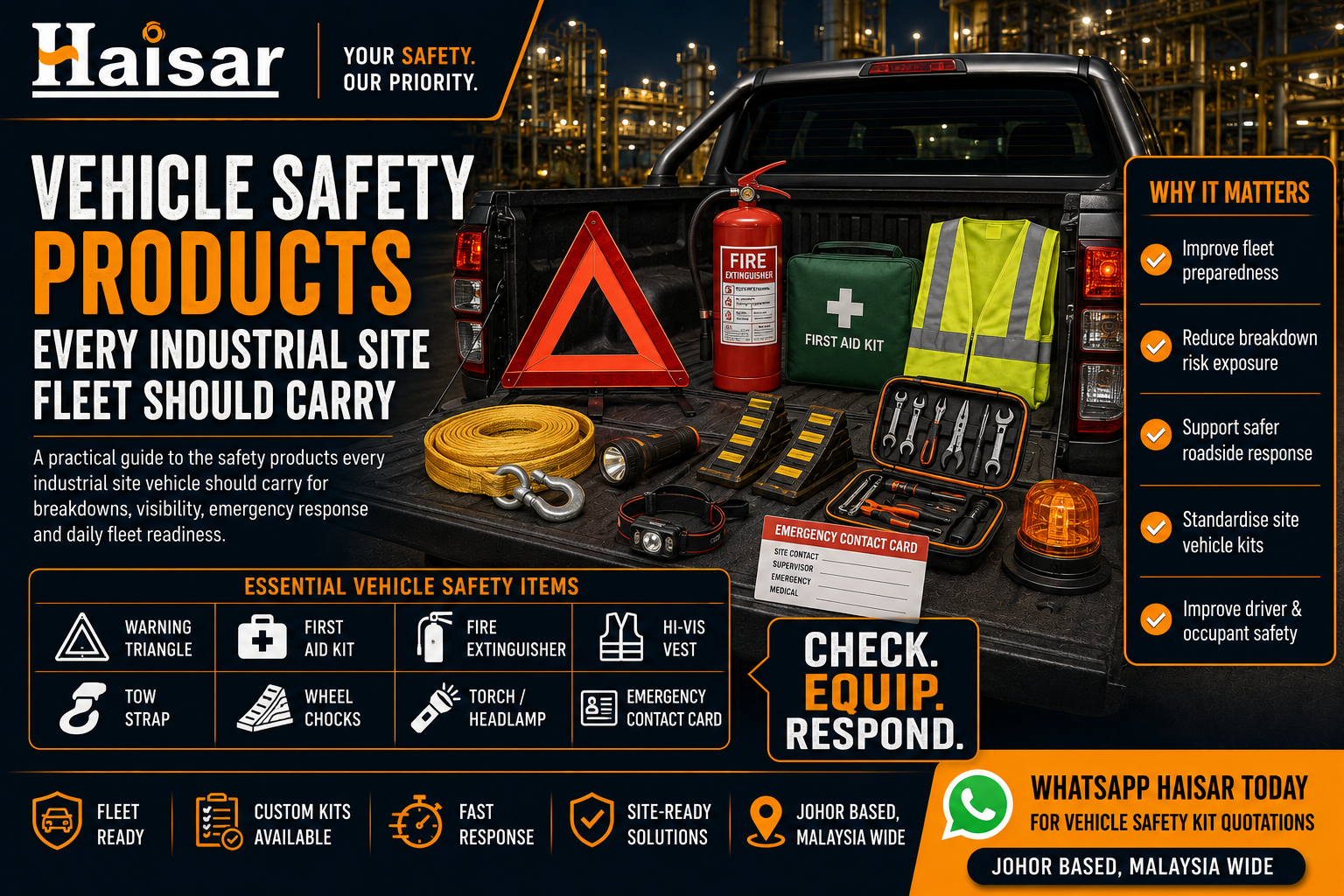
Most fleet safety conversations on industrial sites in Malaysia focus on the driver. Licensing, fatigue management, defensive driving training, and vehicle maintenance schedules all get attention because they are the obvious starting points. What gets less attention is what sits inside the vehicle itself when something goes wrong, a breakdown on a remote access road, a minor collision in a loading bay, a flat tyre at night on the edge of an industrial park, or a worker who needs to be visible to plant operators the moment they step out of the cab. A driver who is well trained but whose vehicle is not equipped for these situations is still carrying unnecessary risk.
This article covers the vehicle safety products that industrial and project site fleets in Johor should carry as standard, organised by the type of incident or task each item addresses, and grouped into practical kits that match common fleet types. The aim is to give fleet managers and procurement officers a working specification they can use to standardise equipment across light vehicles, pickups, and heavier site trucks, rather than leaving it to whatever happens to be in the glovebox.
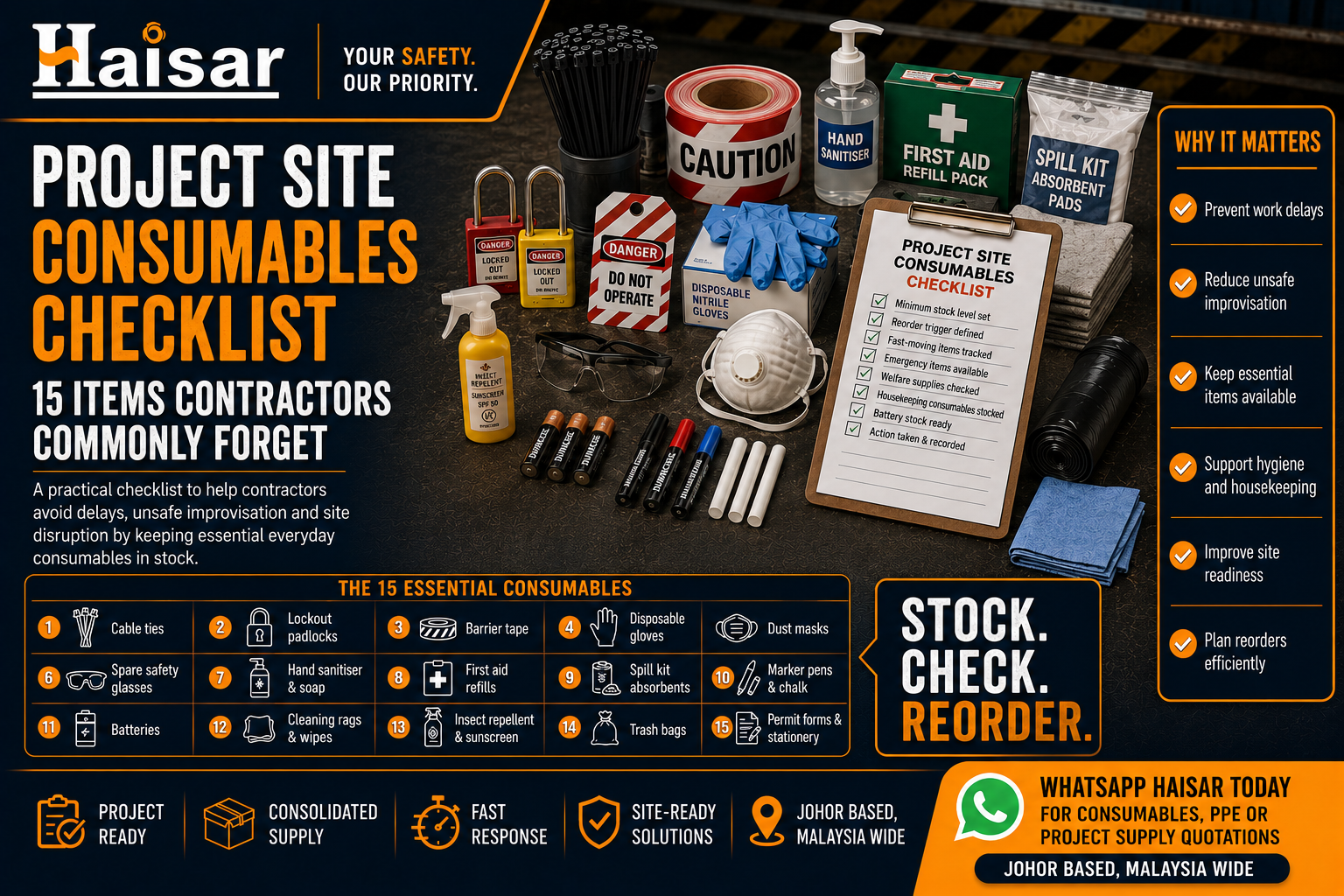
Every project mobilisation plan accounts for the big items. Helmets, boots, harnesses, gloves, signage, cabins. These get specified, quoted, and ordered with proper lead time because they show up clearly in the BOQ and because running short of them is an obvious, visible problem. What gets missed far more often is the long tail of small consumable items that nobody puts on a purchase order until the site has already run out of them, usually discovered when someone walks to the store cupboard mid-task and finds it empty.
These items are individually inexpensive. Collectively, running out of them mid-shift causes a disproportionate amount of disruption: work stops, someone has to drive to a hardware shop, and a task that should have taken twenty minutes stretches into an hour. None of that shows up as a line item anywhere, which is exactly why it keeps happening project after project. This checklist covers the fifteen consumables that experienced site managers and procurement officers in Johor flag most often as the ones that catch a team out, along with why each one matters more than its small unit cost suggests.
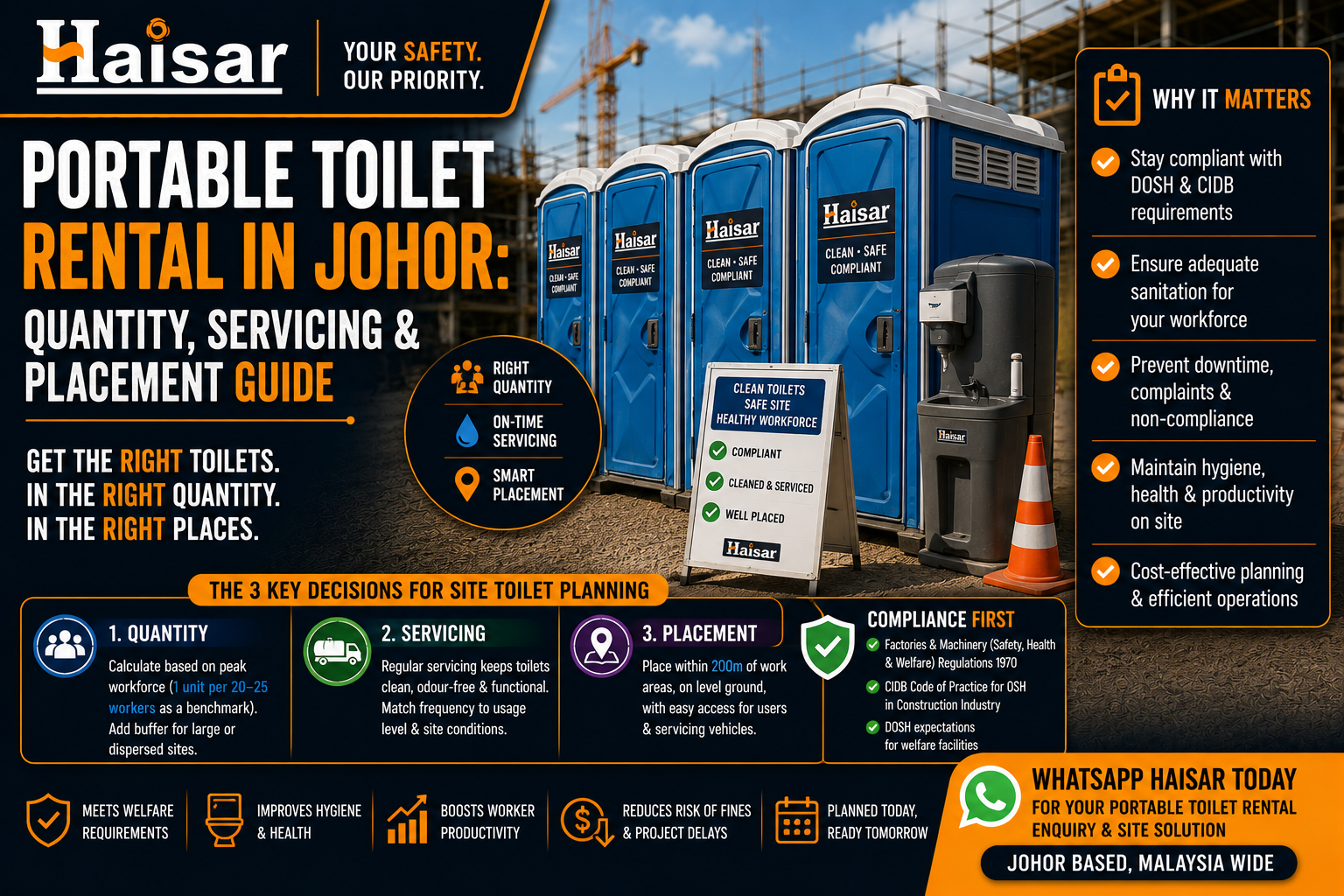
Portable toilet provision on a Malaysian project site tends to be treated as a logistics afterthought — something to sort out the week before mobilisation, in whatever quantity fits the budget line, placed wherever happens to be convenient on delivery day. The result is predictable: too few units for the peak workforce, servicing that does not keep pace with usage, and units placed so far from the work areas that workers either walk ten minutes to use them or do not bother. All three of these outcomes are welfare compliance failures, and all three are preventable with about thirty minutes of planning before the rental agreement is signed.
This guide covers the three decisions that determine whether portable toilet provision on a project site actually works: how many units you need, how often they need to be serviced, and where to put them. It also covers the regulatory context under Malaysian law that makes this a compliance question as much as a logistics one, and what to include in a rental enquiry so that the quotation you receive reflects your actual requirement rather than a default package.
