Can't find what you're looking for? Get in touch!



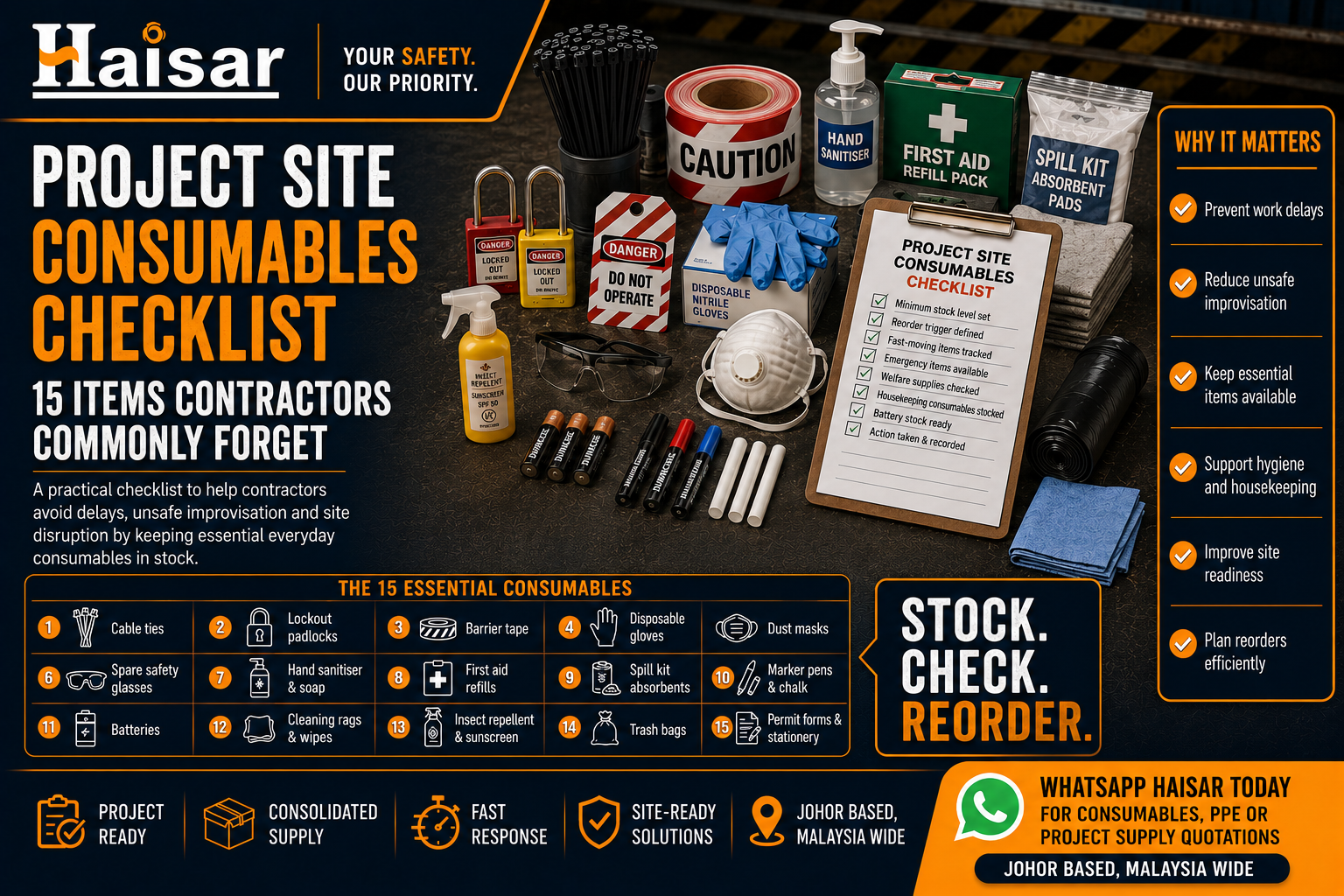
Every project mobilisation plan accounts for the big items. Helmets, boots, harnesses, gloves, signage, cabins. These get specified, quoted, and ordered with proper lead time because they show up clearly in the BOQ and because running short of them is an obvious, visible problem. What gets missed far more often is the long tail of small consumable items that nobody puts on a purchase order until the site has already run out of them, usually discovered when someone walks to the store cupboard mid-task and finds it empty.
These items are individually inexpensive. Collectively, running out of them mid-shift causes a disproportionate amount of disruption: work stops, someone has to drive to a hardware shop, and a task that should have taken twenty minutes stretches into an hour. None of that shows up as a line item anywhere, which is exactly why it keeps happening project after project. This checklist covers the fifteen consumables that experienced site managers and procurement officers in Johor flag most often as the ones that catch a team out, along with why each one matters more than its small unit cost suggests.
Why Consumables Get Forgotten in the First Place
The pattern is consistent across most projects. Procurement attention naturally gravitates toward items with a long lead time, a certification requirement, or a high unit cost, because those are the items where a mistake is expensive and visible. A missing helmet shipment delays mobilisation. A missing box of cable ties does not delay anything on paper, it just quietly slows down the work of whoever needed it, and that cost gets absorbed into the working day rather than flagged as a procurement failure.
The second reason consumables get missed is that they are used at a rate nobody tracks closely until the rate of use outpaces the rate of reorder. A box of disposable gloves that lasts three weeks on a quiet phase of work can be gone in four days once the project moves into a higher-activity phase, and if the reorder trigger was based on the old usage rate, the gap appears with no warning.
The fix is the same one that applies to any procurement category: treat consumables as a defined list with a minimum stock level and a reorder trigger, not as something that gets noticed only when it runs out. The fifteen items below are the starting point for that list.
1. Cable Ties in Multiple Sizes
Cable ties are used constantly across electrical work, signage installation, temporary fencing, hose and cable management, and general site tidiness, yet they are almost never specified in a procurement plan because nobody thinks of them as a category that needs forecasting. The problem is not just running out, it is running out of the right size. A site that stocks only standard small cable ties will improvise with multiple smaller ties bundled together when a large diameter cable needs securing, which is a worse outcome than having the correct size in stock. Stock a range from small (100mm) through to heavy duty (300mm and above), and keep UV-stable black ties for any outdoor or long-duration application, since standard white nylon ties degrade and become brittle under sustained sun exposure in Johor's climate within a matter of months.
2. Lockout Padlocks and Tags
Every electrician, mechanical technician, and anyone performing isolation work needs a personal lockout padlock with a key held only by them. Projects regularly under-order these because the initial workforce headcount used for procurement does not account for new workers joining mid-project, padlocks that go missing or get left on equipment after a worker leaves the project, or replacement tags after the originals fade or are damaged. Running short of lockout padlocks creates a genuinely dangerous workaround: workers sharing padlocks, which defeats the entire purpose of personal lockout, or proceeding with isolation work without a properly locked-out point because no padlock was available. Keep a buffer stock of at least ten percent above your current headcount of workers performing isolation work, and reorder before that buffer is consumed, not after.
3. Barrier Tape and Bunting
Barrier tape feels like the most disposable item on any site, and it is treated that way, which is exactly the problem. It gets used to cordon off hazards, mark out work zones, demarcate exclusion areas around lifting operations, and flag temporary trip hazards, and a roll that should last a week can be consumed in a day on a site with multiple simultaneous activities. Running out of barrier tape mid-shift means a hazard goes unmarked while someone searches for more, which is precisely the situation barrier tape exists to prevent. Keep both red and white danger tape and yellow and black caution tape in stock, since they communicate different levels of hazard and using the wrong colour undermines the clarity the system is meant to provide.
4. Disposable Gloves Beyond the PPE Issue
Most procurement plans for hand protection cover the durable work gloves issued to each worker, but miss the consumable disposable gloves used for short tasks involving chemical handling, cleaning, food preparation in the site canteen, or first aid response. These are used at a rate driven by task frequency rather than headcount, which makes them harder to forecast using a simple per-worker calculation. Stock nitrile disposable gloves in multiple sizes at the first aid station, the welfare canteen, and any chemical handling point, and treat the reorder for these as a separate tracking item from the personal issue work gloves given to each worker.
5. Dust Masks and Filters
Disposable dust masks for nuisance dust exposure are a different consumable from the certified respiratory protection required for hazardous atmospheres, and sites frequently run short of the everyday disposable masks because the procurement focus goes to the higher-specification respirators used for specific hazardous tasks. For general dusty conditions such as sweeping, light demolition, or working near a concrete cutting operation, FFP1 or FFP2 disposable masks need to be available in bulk and easily accessible, not locked away with the controlled respiratory protection equipment that requires sign-out.
6. Spare Safety Glasses
Safety glasses are personal issue items, but they are also the PPE item most frequently lost, scratched beyond usability, or left in a vehicle that has since left the site. A worker without a spare pair of safety glasses available on demand either works without eye protection for the time it takes to source a replacement, or stops work entirely, and neither outcome is acceptable. Keep a visible stock of spare safety glasses at the site office or store, separate from the personal issue stock allocated to each individual worker, specifically for this kind of on-the-spot replacement.
7. Hand Sanitiser and Soap
Welfare facility consumables are easy to overlook because they are not safety-critical in the way that PPE is, but running out of hand sanitiser or soap at washing facilities is both a hygiene issue and, depending on the work being performed, a compliance issue under welfare facility regulations. For sites handling chemicals, food, or working in conditions with significant dust and dirt exposure, this is not a minor convenience item. Stock at a rate proportional to workforce size and reorder against a fixed schedule rather than waiting for the dispenser to run dry.
8. First Aid Kit Replenishment Items
A first aid kit is typically procured as a complete unit at project start, but the consumable items inside it (plasters, gauze, antiseptic wipes, saline solution) get used up over the course of the project and need individual replenishment, not a full kit replacement. Many sites discover a depleted first aid kit only when an injury occurs and the kit is opened to find half the contents missing or expired. Build a periodic first aid kit check into your site routine, separate from the original procurement, and keep replenishment stock of the most commonly used items on hand rather than waiting for a full kit refresh order.
9. Spill Kit Absorbents
Spill kits are procured as a unit similarly to first aid kits, and the absorbent pads, socks, and granular material inside them get used up the first time they are deployed for an actual spill, planned drill, or minor leak cleanup. A spill kit that has been used once and not replenished is a spill kit that looks present on a shelf but is functionally empty when the next incident occurs. Treat spill kit absorbents the same way you treat first aid consumables: track usage and replenish promptly, not on the same schedule as a full equipment review.
10. Marker Pens, Chalk, and Site Marking Supplies
Surveyors, foremen, and quality control staff need marking supplies constantly for setting out, marking defects, identifying non-conforming work, and labelling materials and equipment. These are inexpensive items that get used up quickly and are rarely included in any procurement plan because nobody considers them a category worth planning for. A foreman without a working marker pen during a critical setting-out task either delays the task or improvises with whatever is available, which introduces error risk into work that depends on precision.
11. Batteries for Radios, Torches, and Gas Detectors
Battery-powered equipment is everywhere on a project site, and battery consumption is one of the most predictable yet most frequently underestimated consumable categories. Two-way radios for site communication, torches for confined space and low-light work, and personal gas detectors that require regular calibration and battery replacement all draw on the same stock of batteries, and a site that runs short during a critical communication need or before a confined space entry has a genuine operational and safety gap, not just an inconvenience. Stock the specific battery types required by your radios and detectors, since rechargeable battery packs for specialised equipment such as gas detectors often cannot be substituted with standard disposable batteries.
12. Rags, Wipes, and General Cleaning Cloths
Cleaning materials for wiping down tools, cleaning spills, and general housekeeping are consumed at a high rate on any active industrial or construction site and are almost never specified as a procurement line item because they feel too mundane to plan for. Sites that run out tend to improvise with whatever scrap material is available, which can introduce contamination risk in food handling or chemical-sensitive environments where the wrong material is used as a substitute.
13. Insect Repellent and Sun Protection
Outdoor project sites in Johor expose workers to direct tropical sun and, depending on the site location and surrounding vegetation, mosquito exposure that carries a dengue risk that is taken seriously by responsible site management. These items rarely appear on a procurement list because they are seen as personal responsibility items rather than site supplies, but a site that proactively stocks sunscreen and insect repellent at the welfare area, particularly during dengue-prone periods or for sites near vegetation, demonstrates a level of worker welfare attention that reduces sick days and supports a safer working environment.
14. Trash Bags and Site Housekeeping Bags
Waste management consumables, including general trash bags and specifically labelled bags for segregated waste such as scheduled waste from chemical handling areas, are easy to overlook until housekeeping standards slip and waste accumulates in work areas, creating both a trip hazard and a fire load risk. For sites handling any scheduled waste under the Environmental Quality (Scheduled Wastes) Regulations 2005, the correct labelling and segregation of waste bags is a compliance matter, not just tidiness, and running out of the correctly labelled bags can result in waste being improperly stored while a replacement supply is sourced.
15. Stationery and Permit Forms
Site offices run on paper-based systems for permit-to-work forms, toolbox talk attendance sheets, inspection checklists, and incident report forms, even on projects with a digital HSE management system, because field conditions often require a physical form to be filled in before it is later logged digitally. Running out of permit forms mid-shift, particularly for hot work or confined space entry permits, either halts the work that requires the permit or creates pressure to proceed without proper documentation, both of which are avoidable outcomes if the stationery supply for these specific forms is tracked and replenished proactively rather than treated as routine office stationery.
Turning This List Into a Reorder System
A checklist like this one is most useful when it becomes a working reorder sheet rather than a one-time reference document. Assign each item a minimum stock level appropriate to your site size and usage rate, identify who is responsible for checking stock against that level on a defined schedule, and set a reorder trigger that gives enough lead time to restock before the item actually runs out, not after.
For most of the fifteen items above, a weekly stock check by the site store or HSE coordinator, combined with a standing reorder arrangement with a single supplier who can deliver consolidated consumables alongside your PPE and project supplies, removes the administrative burden of managing this as a separate procurement category. The alternative, which is sending someone to a hardware shop whenever something runs out, costs more in lost time than the items themselves are worth.
When sending a consumables order to Haisar, including your current usage pattern (what runs out fastest, what your workforce size is, and how often you want to receive a top-up delivery) allows the team to set up a recurring supply arrangement rather than treating each order as a one-off request.
WhatsApp your consumables list directly to +60 12-570 7015 →
Related Reading from Haisar
- Project Mobilisation Procurement Timeline: What to Order 8, 4 and 2 Weeks Before Site Start
- First Aid Kit Requirements for Malaysian Workplaces
- Site Cabin Supply in Johor: 5 Best Layouts for Project Offices, Stores and Guard Houses
- Job-Role PPE Matrix: What Electricians, Welders, Riggers, Visitors and General Workers Need
- 27 Hidden Costs to Check Before Accepting the Cheapest PPE Quotation
Frequently Asked Questions
How do I calculate the right stock level for fast-moving consumables like cable ties or gloves? The most reliable method is tracking actual usage over a representative two to three week period early in the project, then setting your minimum stock level at roughly double that consumption rate to account for usage spikes during busier phases and any delay in delivery from your supplier. This is more accurate than guessing a quantity based on workforce headcount alone, since consumption is driven as much by the type and intensity of work as by the number of people on site. Revisit the calculation if the project moves into a significantly different phase of activity.
Should consumables be the responsibility of the site store or individual supervisors? On most well-run sites, the site store or a designated HSE or procurement coordinator owns the consumables stock list and reorder schedule, while individual supervisors flag unusual consumption or specific upcoming needs. Distributing the responsibility across multiple supervisors without a single owner tends to result in the gaps this article describes, since each supervisor assumes someone else is tracking the overall stock position.
Is it worth setting up a recurring delivery schedule for consumables rather than ordering as needed? For projects of more than a few weeks' duration with a reasonably stable workforce size, a recurring delivery arrangement, weekly or fortnightly depending on usage rate, removes the administrative overhead of raising individual purchase orders every time stock runs low and tends to result in fewer stockout situations because the resupply is scheduled rather than reactive. For short-duration projects or highly variable workforce sizes, an as-needed order with a clear minimum stock trigger may be more practical.
Are any of these fifteen items subject to specific Malaysian regulatory requirements? Several are connected to broader regulatory obligations even though the individual consumable item itself is not separately regulated. First aid kit replenishment connects to the Factories and Machinery Regulations 1970 and the OSH (First Aid) Regulations 2004, which specify minimum first aid provision. Scheduled waste bag labelling connects to the Environmental Quality (Scheduled Wastes) Regulations 2005. Lockout padlocks connect to your site's lockout and tagout procedure, which itself should be developed in line with the general duties under the OSH Act 1994. None of these regulations specify the consumable item by name, but failing to maintain adequate stock of the consumable can result in a failure to meet the underlying regulatory requirement, which is why these items deserve more procurement attention than their unit cost would suggest.
Can Haisar supply consumables alongside PPE and other project supplies in a single order? Yes. Haisar's Consumables range sits alongside PPE, project supplies, signage, and customised workwear, and orders covering multiple categories can be consolidated into a single quotation and delivery schedule. For sites that want to set up a recurring top-up arrangement for fast-moving items, sharing your expected usage pattern and workforce size allows the team to propose a delivery schedule rather than requiring a fresh order every time.
