Can't find what you're looking for? Get in touch!



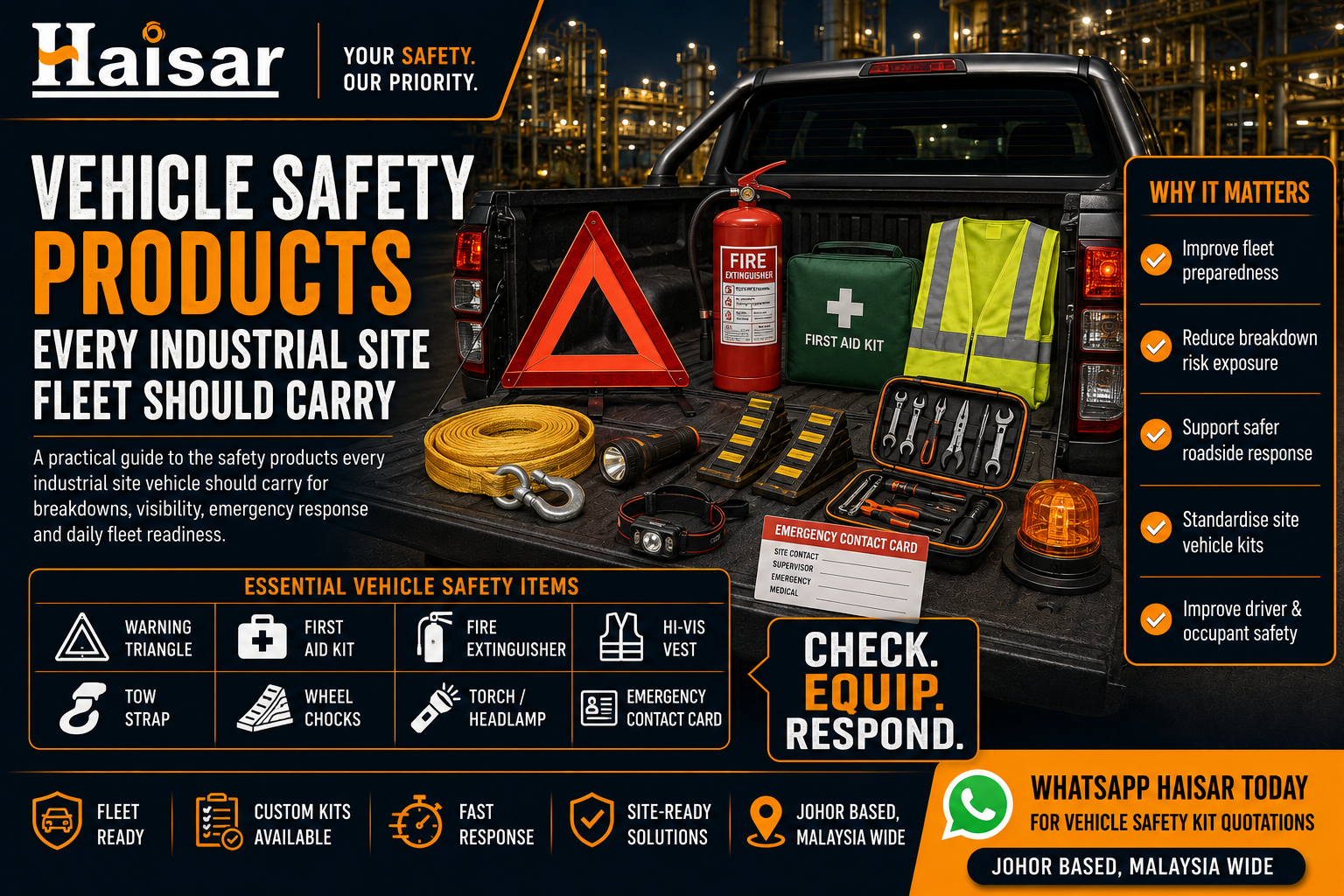
Most fleet safety conversations on industrial sites in Malaysia focus on the driver. Licensing, fatigue management, defensive driving training, and vehicle maintenance schedules all get attention because they are the obvious starting points. What gets less attention is what sits inside the vehicle itself when something goes wrong, a breakdown on a remote access road, a minor collision in a loading bay, a flat tyre at night on the edge of an industrial park, or a worker who needs to be visible to plant operators the moment they step out of the cab. A driver who is well trained but whose vehicle is not equipped for these situations is still carrying unnecessary risk.
This article covers the vehicle safety products that industrial and project site fleets in Johor should carry as standard, organised by the type of incident or task each item addresses, and grouped into practical kits that match common fleet types. The aim is to give fleet managers and procurement officers a working specification they can use to standardise equipment across light vehicles, pickups, and heavier site trucks, rather than leaving it to whatever happens to be in the glovebox.
Why Vehicle Safety Equipment Gets Overlooked
Vehicle safety items fall into an awkward gap in most procurement planning. They are not PPE in the conventional sense, so they do not get captured by the PPE matrix or the personal issue process. They are not part of the vehicle's mechanical specification, so they are not covered by the maintenance contract or the vehicle purchase agreement. They sit in a category of their own, and on many fleets that category is simply nobody's responsibility, which means it gets addressed only after an incident exposes the gap.
The second reason this category gets missed is that the consequences of missing equipment are usually delayed rather than immediate. A vehicle without a warning triangle does not cause a problem on a normal day. It causes a problem on the one day a breakdown happens on a poorly lit access road and the absence of a warning triangle contributes to a second vehicle striking the stopped one. That gap between cause and consequence is exactly why this category tends to be under-specified until an incident forces a review.
Visibility and Breakdown Warning Equipment
A vehicle that breaks down or is involved in a minor incident on a site access road, an internal haul road, or a public road approaching the site needs to make itself visible to other traffic immediately, particularly in low light or poor weather conditions common during Johor's monsoon season.
A reflective warning triangle is the most basic and most commonly missing item in this category. It needs to be placed at an appropriate distance behind the stopped vehicle to give approaching traffic adequate warning time, and a vehicle without one relies entirely on hazard lights, which are far less effective in heavy rain or at a distance. Two triangles, one for each direction of approach on a two-way road, is the better standard for any vehicle that regularly travels on internal site roads with traffic in both directions.
A high visibility vest stored in the vehicle, separate from any vest the driver might already be wearing on site, ensures that anyone who exits the vehicle to manage a breakdown or incident, including a passenger or a colleague who arrives to assist, is immediately visible rather than standing in dark work clothes beside a stopped vehicle on a road with moving traffic. This is a different requirement from the vest a worker wears as personal PPE, since the vehicle-stored vest needs to be available to whoever exits the vehicle, not tied to one specific person's PPE issue.
LED hazard lights or a magnetic amber beacon, particularly for vehicles that operate after dark or in low-visibility weather, provide a level of warning to approaching traffic that standard vehicle hazard lights do not match, especially on internal haul roads where ambient lighting is poor and approaching plant or trucks may not see a stationary vehicle until very close.
First Aid and Emergency Response Equipment
A vehicle-based first aid kit is a different specification from a fixed site first aid kit and should not be assumed to be covered simply because the site office has a compliant kit. Vehicles travelling to remote work areas, between sites, or off the main compound are often further from the nearest fixed first aid point than a standard response time would assume, and the vehicle kit needs to be adequate for that gap.
A compact vehicle first aid kit with the standard contents required under Malaysian first aid provision guidelines, dressings, bandages, antiseptic, and basic trauma supplies, should be present in every vehicle that travels between work locations or off the main site compound. For fleets operating in more remote parts of Johor or on larger sites where the nearest fixed first aid point may be a significant distance away, a more comprehensive kit including a higher grade of trauma dressing is a reasonable addition.
A fire extinguisher rated for vehicle use, typically a small dry powder or CO2 extinguisher suitable for an engine fire or fuel-related incident, is a basic requirement that is frequently missing from light vehicles and pickups even though it is standard on most heavier site trucks. Engine bay fires, while uncommon, escalate quickly, and a vehicle without an extinguisher gives the driver no option beyond abandoning the vehicle.
Tools and Equipment for Self-Recovery
Vehicles operating on industrial sites, particularly on unsealed haul roads, in laydown areas, or during wet conditions, face a higher likelihood of getting stuck, suffering a flat tyre, or needing basic roadside attention than vehicles operating purely on sealed public roads. Equipping vehicles to handle these situations without waiting for external recovery reduces downtime and reduces the time a stranded vehicle and its occupants are exposed on a road or in an active work area.
A functioning spare tyre, jack, and wheel brace seem obvious, but fleet audits regularly find vehicles where the spare tyre is itself flat or where the jack does not match the vehicle's current configuration after a vehicle swap or reassignment within the fleet. Confirming the spare tyre and recovery tools are present and functional should be part of a routine vehicle check, not assumed at the point of vehicle handover and never verified again.
A tow strap or recovery rope rated for the vehicle's weight is a low-cost item that turns a stuck vehicle into a five-minute recovery with help from another site vehicle, rather than a wait for a specialist recovery service. For sites with unsealed roads or areas prone to becoming soft after rain, this is a practical addition rather than a rarely used item.
Wheel chocks are an item that belongs in every vehicle that may be parked on a slope, including for routine deliveries to site offices or stores that are commonly positioned on slightly elevated ground for drainage reasons. A vehicle parked without chocks on even a modest gradient, particularly during loading or unloading when the parking brake may not be fully engaged or the vehicle is on uneven ground, presents a real roll-away risk.
Communication Equipment for Remote or Poor Coverage Areas
Mobile phone coverage across most of Johor's industrial corridors is reliable, but project sites in more remote areas, inside large industrial compounds with significant structural shielding, or in basement and underground work areas can have coverage gaps that leave a vehicle occupant unable to call for help in an emergency.
A two-way radio, where the site already operates a radio communication system, should be standard equipment in any vehicle that travels to areas of the site where mobile coverage is unreliable, allowing communication with the site office or security regardless of phone signal. For fleets without an existing radio system but operating in genuinely remote locations, a satellite communication device for emergency use is a more significant investment but a reasonable one for sites where breakdown or incident response time would otherwise be measured in hours rather than minutes.
A printed emergency contact card kept in the vehicle, listing the site emergency contact, the nearest hospital or clinic, and the relevant authorities, is a simple addition that removes any dependency on a phone with signal or charge to access this information during an actual emergency.
Driver and Occupant Protection Items
Beyond the equipment that responds to an incident, some items reduce the likelihood of certain incidents occurring or reduce their severity if they do.
The hi-vis seat belt cover, a simple fluorescent and reflective accessory that fits over a standard seat belt, is a low-cost addition that improves the visibility of a vehicle occupant from outside the vehicle, particularly relevant for site vehicles that are frequently boarded and exited in areas with plant movement, since it signals at a glance that the seat belt is in use and adds a visibility element to the vehicle's exterior presentation in low light.
A torch or headlamp kept in the vehicle, ideally one that is rechargeable or uses commonly available batteries that are also stocked elsewhere on site, supports any roadside task that occurs after dark, from checking under the bonnet to inspecting a tyre, without relying on a phone torch that drains battery and provides limited illumination.
Sun protection items, including a sun shade for the windscreen and basic provisions such as drinking water kept in the vehicle, address the practical reality of vehicles parked in direct tropical sun for extended periods and drivers undertaking longer journeys between sites without guaranteed access to refreshment, both of which are genuine considerations in Johor's climate.
Building Fleet Kits by Vehicle Type
Different vehicle types in a typical industrial site fleet face different operating conditions, and the equipment specification should reflect that rather than applying one universal kit across every vehicle regardless of its actual use.
Light vehicles and sedans used for site visits, client transport, and inter-office travel on sealed roads need the baseline kit: warning triangle, first aid kit, fire extinguisher, vest, and basic recovery items including a functional spare tyre and jack. These vehicles spend most of their time on public roads where breakdown assistance is readily available, so the kit can be lighter than for vehicles operating in more remote or off-road conditions.
Pickups and utility vehicles used for moving materials and personnel around the site compound and to nearby work areas need the baseline kit plus a tow strap, wheel chocks, and a more comprehensive first aid kit, since these vehicles more frequently travel on unsealed internal roads and operate closer to active work zones with plant movement.
Heavy site trucks and vehicles travelling to remote work locations or between dispersed project sites need the full specification including communication equipment for areas with uncertain mobile coverage, a more substantial first aid kit, dual warning triangles, and recovery equipment suitable for the vehicle's weight, since a breakdown for these vehicles is more likely to occur further from immediate assistance and to involve a longer wait for resolution.
Maintaining the Kits Once They Are in Place
Equipping a fleet with the right items at the outset solves only part of the problem. Vehicle safety kits are subject to the same attrition as any other consumable and equipment category: first aid items expire, fire extinguishers need periodic inspection and recharge, batteries in torches and radios go flat, and items go missing when a vehicle is reassigned to a different driver or used for an unplanned task that draws on the kit's contents without anyone replacing what was used.
A simple periodic check, ideally tied to an existing routine such as a scheduled vehicle service or a monthly fleet safety inspection, confirms that each vehicle's kit is complete and functional rather than assuming it remains so after the initial fit-out. Assigning the kit check to whoever is already responsible for vehicle maintenance avoids creating an entirely separate inspection process and keeps the responsibility clear.
When sending a vehicle safety kit enquiry to Haisar, specifying the fleet composition (how many light vehicles, pickups, and heavy trucks, and their typical operating environment) allows the quotation to reflect the right kit specification for each vehicle type rather than a single generic kit applied across the whole fleet.
Related Reading from Haisar
- Spill Kits Malaysia: Types, Uses and Where to Buy
- First Aid Kit Requirements for Malaysian Workplaces
- Project Site Consumables Checklist: 15 Items Contractors Commonly Forget
- Safety Vest Malaysia: Standards, Colours and Compliance Guide
- Project Mobilisation Procurement Timeline: What to Order 8, 4 and 2 Weeks Before Site Start
Frequently Asked Questions
Is vehicle safety equipment legally required for industrial site fleets in Malaysia? Requirements vary depending on the vehicle type, its registration, and the specific road and workplace regulations applicable. Vehicles registered for road use are subject to the Road Transport Act 1987 and its related requirements regarding equipment such as warning triangles. Beyond the public road requirements, the broader obligation under the Occupational Safety and Health Act 1994 to provide a safe system of work supports equipping site vehicles adequately for the conditions they operate in, even where a specific item is not separately mandated by name. For the current specific requirements applicable to your fleet and vehicle registration class, confirm with the Road Transport Department (JPJ) and a qualified safety adviser.
Should the vehicle safety kit be different for a company-owned vehicle versus a rented or short-term hire vehicle? Short-term hire vehicles are sometimes overlooked in fleet safety planning because they are not part of the permanent fleet inventory, but they face the same operating risks as owned vehicles for the duration of their use on site. A portable vehicle safety kit that can be transferred between hire vehicles as they rotate through the fleet, rather than relying on whatever the hire company happens to provide, ensures consistent coverage regardless of vehicle ownership status.
How often should vehicle first aid kits and fire extinguishers be checked? First aid kit contents should be checked at least quarterly for expired items, and immediately after any use to confirm replenishment, consistent with the general first aid kit maintenance practice applied to fixed site kits. Fire extinguishers require periodic visual inspection for pressure and physical condition, with formal servicing intervals depending on the extinguisher type, typically following the same servicing schedule as fixed site extinguishers. Tying both checks to an existing vehicle maintenance schedule, such as a service interval or monthly fleet inspection, is the most reliable way to ensure this happens consistently.
What is the difference between the vehicle-stored first aid kit and a worker's personal first aid provisions? A vehicle-stored first aid kit is a fixed asset attached to the vehicle and available to any occupant or anyone responding to an incident involving that vehicle, regardless of which specific worker happens to be driving on a given day. It is separate from any first aid kit maintained at a fixed site location and separate from personal items a worker might carry. Treating it as vehicle equipment rather than personal issue equipment ensures it remains with the vehicle through driver changes and reassignments.
Can Haisar supply vehicle safety kits as a single bundled item rather than individual components? Yes. Haisar's Vehicle Safety range can be configured into bundled kits matched to the vehicle types in your fleet, light vehicle, pickup, or heavy truck, rather than requiring separate orders for each component. Providing your fleet composition and typical operating environment in your enquiry allows the team to recommend the appropriate kit configuration and quantity for each vehicle category.
