Last reviewed: July 2026

Safety helmets are not interchangeable. The correct helmet depends on the hazards identified at the workplace, including falling objects, side impact, electrical exposure, work at height, heat, restricted spaces and the need to attach eye, face or hearing protection. A helmet that carries a recognised certification may still be unsuitable when its design, electrical class, retention system or accessories do not match the task.

This guide helps HSE teams, contractors, facility managers and procurement departments choose industrial head protection for Malaysian workplaces. It explains commonly recognised standards, helmet types, inspection and replacement principles, and the information to include in a quotation request.

 WhatsApp us for a quick quote 

MSA Safety Helmets: Essential Head Protection for Dangerous Jobs - Industrial  Safety and Health Knowledge and Resources

Need safety helmets for a project or workplace?
Browse Haisar head-protection products or request a quotation on WhatsApp.


Quick Answer: How to Choose a Safety Helmet

  • Start with a documented hazard and task assessment rather than choosing by colour, price or appearance.
  • Specify a recognised helmet standard and obtain the relevant product certification or test documentation.
  • Check whether protection is required against top impact, side impact, electrical contact, heat, molten metal, rain or work-at-height loss of the helmet.
  • Choose vented or unvented construction based on the hazards; ventilation can affect electrical and splash protection.
  • Verify fit, suspension, chinstrap, user weight range and compatibility with face shields, earmuffs, lamps or other accessories.
  • Inspect the shell, suspension and retention system before use, and replace the product according to manufacturer instructions or immediately after damage or a significant impact.

Why Correct Head Protection Matters

The Occupational Safety and Health Act 1994 requires employers to provide and maintain safe systems of work, suitable information, instruction, training and supervision, and a workplace without avoidable risks so far as is practicable. Where a risk assessment identifies a residual risk of head injury, suitable personal protective equipment forms part of the control system. Employees must also use protective equipment provided for their safety and comply with workplace instructions.

Head protection should not replace higher-level controls. Falling-object risks should first be reduced through measures such as secure storage, toe boards, tool tethering, barriers, exclusion zones and controlled lifting. The helmet provides an additional layer of protection when the hazard cannot be fully eliminated.

Official references: Occupational Safety and Health Act 1994 (updated text) and DOSH personal protective equipment information.

Industrial Safety Helmet, Safety Helmet or Bump Cap?

Industrial Safety Helmet or Hard Hat

An industrial safety helmet is designed and tested to protect against specified workplace head hazards such as impact and penetration. Depending on its standard and optional ratings, it may also provide electrical, flame, lateral-deformation or other performance characteristics. The markings and user instructions must be checked to confirm what the particular model protects against.

Safety Helmet with Chinstrap

Modern industrial safety helmets may use a secure multi-point chinstrap and a brimless or short-brim design. These features can improve retention, upward vision and compatibility with work-at-height equipment. However, the presence of a chinstrap alone does not prove that the helmet is suitable for work at height. The complete product must carry the appropriate certification and be used in the configuration specified by its manufacturer.

Bump Cap

A bump cap is intended for low-severity contact with fixed objects, such as a worker bumping their head under shelving or machinery. It is not designed as protection against falling or projected objects and must not replace an industrial safety helmet where impact or penetration hazards exist. SIRIM QAS lists EN 812 among recognised bump-cap standards.

Safety Helmet Standards Commonly Used in Malaysia

A standard describes test and performance requirements. Certification provides evidence that a particular product has been assessed against a stated standard. SIRIM QAS International’s PPE certification guidance identifies standards used for industrial safety helmets, including MS 183:2001, ANSI/ISEA Z89.1:2014 and BS EN 397:2012+A1:2012. Buyers should confirm the exact standard and edition shown on the helmet, certificate and technical data sheet rather than relying on a generic “SIRIM,” “ANSI” or “EN” marketing claim.


Standard / framework

What it addresses

Buyer’s check

MS 183:2001

Malaysian specification for industrial safety helmets (first revision).

Confirm product certification, marking and scope.

BS EN 397

Industrial safety helmets; includes mandatory impact and penetration tests and may include optional properties.

Check optional ratings and chinstrap configuration on the product.

ANSI/ISEA Z89.1

Industrial head protection classified by impact Type I or Type II and electrical Class G, E or C.

Select both the impact type and electrical class required by the risk assessment.

EN 812

Industrial bump caps for minor contact with stationary objects.

Not a substitute for an industrial safety helmet.

EN 12492

Helmets for mountaineers; some professional helmets are dual-certified or configured for specialised work-at-height use.

Use only where the product certification and task assessment support the application.

Certification reference: SIRIM QAS guideline on certification of personal protective equipment. DOSH also provides an approved and recognised PPE list that includes head protection.


Understanding ANSI Type I, Type II and Electrical Classes

Eliminating Confusion When It Comes to Working with Voltage-Rated Gloves &  Leather Protectors to Protect Against Electric Shock

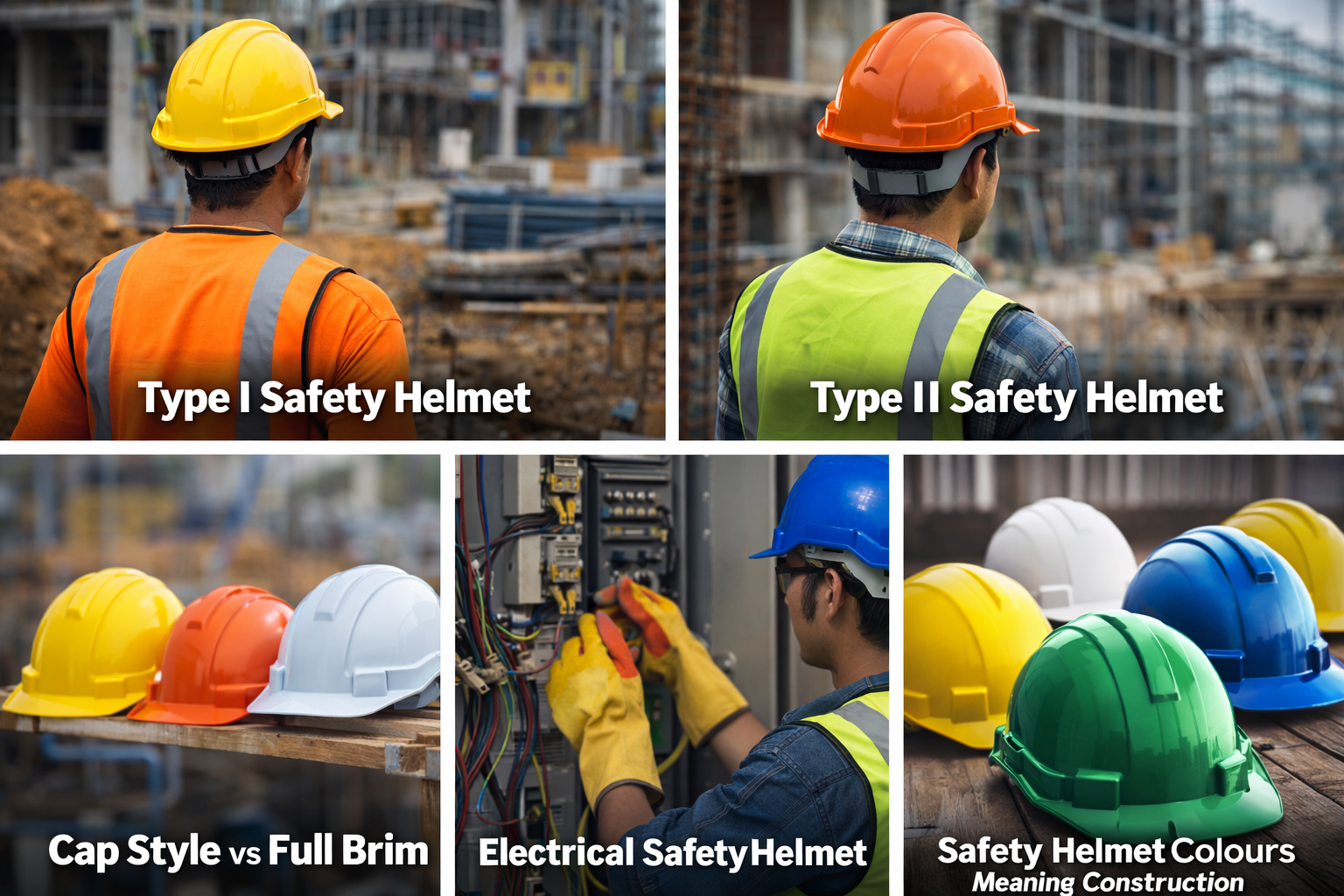
Type I

Type I under ANSI/ISEA Z89.1 is intended primarily for impact to the top of the head. This classification should only be used when the helmet is actually marked and certified to the ANSI standard.

Type II

Type II is tested for protection against impact to the top and sides of the head. It may be appropriate where workers could strike structures, be exposed to moving equipment, or experience lateral impact. A Type II designation is not automatically equivalent to every European or Malaysian helmet standard.

Electrical Classes G, E and C

ANSI-certified helmets may also be marked Class G, Class E or Class C. These classes describe different electrical-performance levels. A vented Class C helmet does not provide electrical protection. Do not select a helmet for electrical work based only on its plastic appearance; verify the exact class, voltage limitations, test standard and manufacturer instructions.

How to Select a Safety Helmet by Hazard

Hazard / task

Suitable direction

Critical check

Falling objects from above

Certified industrial safety helmet with appropriate top-impact and penetration protection

Check shell, suspension and standard marking.

Possible side impact

Helmet specifically certified for lateral or Type II impact protection

Do not assume all helmets provide side-impact protection.

Electrical exposure

Unvented helmet with the required electrical rating

Confirm rating, voltage limits and accessory compatibility.

Work at height

Helmet with suitable retention/chinstrap and certification for the intended work environment

Assess helmet loss, snagging, fall and rescue risks.

Hot outdoor work without electrical hazard

Vented certified helmet or full-brim design where suitable

Balance airflow with impact, rain, sun and site requirements.

Low overhead clearance only

EN 812-certified bump cap where falling-object risk is absent

Not acceptable for construction falling-object hazards.

Face and hearing protection required

Helmet system with manufacturer-approved slots and accessories

Use compatible visor carriers, earmuffs and chinstraps.

Step-by-Step Helmet Selection Process

  1. Identify the hazards: Review falling objects, overhead structures, lateral impacts, electrical exposure, heat, chemicals, molten metal, work at height and restricted access.
  2. Define the required standard: Use the client specification, HIRARC, approved product list and applicable project standard to state the exact certification required.
  3. Choose the construction: Select vented or unvented, brim or full brim, ratchet or pin-lock suspension, and the required chinstrap or retention system.
  4. Check fit and size: Confirm the adjustment range fits all intended users and that the suspension sits correctly without unsafe caps or objects underneath.
  5. Confirm accessory compatibility: Use only manufacturer-approved visors, earmuffs, lamps, neck shades, badges and chinstraps.
  6. Review documentation: Obtain the model number, standard marking, certificate or test report, technical data sheet, manufacturer instructions and traceability details.
  7. Trial before bulk purchase: For large orders, conduct a user trial covering fit, comfort, heat, visibility and compatibility with other PPE.

Vented vs Unvented Safety Helmets

Vented Helmets

Ventilation can improve comfort in Malaysia’s hot and humid conditions. Vented helmets may suit construction, logistics or maintenance work where the relevant certification permits ventilation and there is no electrical or splash hazard requiring a closed shell.

Unvented Helmets

Unvented helmets may be needed for specified electrical protection, molten-metal splash, flames or environmental exposure. The required protection must be confirmed from the product marking and technical documentation. An unvented shell does not automatically mean that a helmet has an electrical rating.

Chinstraps and Work at Height

A chinstrap can help keep a helmet on the head during climbing, movement or a fall. At the same time, a retention system can create a snagging or strangulation hazard in some ground-based environments. EN 397 and EN 12492 use different chinstrap-performance approaches, and some professional helmets offer adjustable configurations for different work environments.

The employer should therefore select the complete helmet system through a task-specific risk assessment and follow the manufacturer’s instructions. For work at height, confirm that the helmet and chinstrap are certified and configured for that purpose rather than adding a generic strap to an unrelated hard hat.

Further reading: Petzl professional helmet selection guidance and Haisar’s Working at Height in Malaysia guide.

Fit, Suspension and Compatibility

  • The suspension should be correctly assembled, adjusted and seated at the position specified by the manufacturer.
  • The helmet should remain stable when the user bends, looks upward or moves normally.
  • The shell should not rest directly on the head; the suspension creates the designed clearance and energy-management space.
  • Do not wear baseball caps, thick beanies or objects beneath the helmet unless the manufacturer specifically approves them.
  • Use the correct suspension, sweatband and chinstrap for the exact helmet model. Similar-looking parts are not necessarily compatible.
  • Verify that earmuffs, face shields, lamps and other accessories do not interfere with the fit, electrical rating or certification.

Inspection, Replacement and Service Life

There is no single replacement period that applies to every safety helmet. Service life depends on the manufacturer, product material, date of first use, frequency of use and exposure to sunlight, heat, chemicals and impact. Follow the specific user instructions and site inspection programme.

Before-Use Inspection

  • Cracks, dents, cuts, deformation or penetration marks on the shell
  • Fading, chalking, brittleness or other signs of ultraviolet or heat degradation
  • Chemical contamination, paint, adhesive or unknown substances
  • Torn, stretched, frayed or incorrectly fitted suspension components
  • Damaged ratchet, buckles, clips, chinstrap or accessory slots
  • Missing or illegible standard markings, model identification or date information
  • Unapproved drilling, painting, engraving, heating or modification

Replace or Quarantine Immediately When

  • The helmet has sustained a significant impact, even when damage is not obvious.
  • The shell or suspension is cracked, deformed, cut, brittle or chemically damaged.
  • The helmet’s history is unknown or traceability has been lost.
  • The manufacturer’s replacement criteria or maximum service life has been reached.
  • An inspection identifies a defect that could affect protection or retention.

Manufacturer guidance from 3M advises inspection of the shell and suspension before each use and immediate replacement when wear, damage, abuse or degradation is found. Exposure to sunlight, heat, cold and chemicals can require more frequent replacement. Read the 3M Hard Hats 101 technical bulletin.

Cleaning, Storage and Modifications

  • Clean the helmet only with methods and products permitted by the manufacturer, commonly mild soap and water.
  • Do not use petrol, solvents, aggressive cleaners or unapproved disinfectants.
  • Store helmets away from direct sunlight, excessive heat, chemicals and heavy objects that may deform the shell.
  • Do not leave helmets for long periods on vehicle dashboards or in other high-temperature locations.
  • Do not drill ventilation holes, cut the brim or alter the suspension.
  • Apply labels, stickers, reflective material or company branding only when the helmet manufacturer permits the adhesive and location.
  • Do not paint the shell unless the manufacturer has approved the paint system for that exact product.

Safety Helmet Colours in Malaysia

Malaysia does not use one universal national helmet-colour code for every workplace. Contractors, factories, petrochemical facilities and project owners may use different colours to identify roles, visitors, supervisors, emergency teams or trades. The site PPE specification and induction rules should therefore control colour selection.

For bulk procurement, obtain the project colour matrix before ordering. Colour should support identification but must never be treated as evidence of the helmet’s certification, electrical class or protective performance.

Safety Helmet Procurement Checklist

RFQ field

Information to provide

Work activity and hazards

Falling objects, side impact, electrical, height, heat, chemicals, molten metal or low-clearance bump hazards

Required standard

State the exact standard, type, class and optional properties required

Helmet design

Vented/unvented, brim/full brim, shell material and colour

Suspension and fit

Ratchet or pin-lock, size range, sweatband and user trial requirements

Retention

Two-point or multi-point chinstrap and required certification/configuration

Accessories

Visor, earmuffs, lamp, face shield, neck shade, reflective markings or identification

Documentation

Technical data sheet, certification/test evidence, instructions, model and traceability

Quantity and logistics

Sizes, colours, delivery location, required date, phased delivery and replenishment

Branding

Approved logo or sticker method that does not affect certification

Safety Helmet Options from Haisar

Haisar Supply & Services supports contractors, factories, HSE teams and procurement departments sourcing safety helmets and related PPE in Johor and across Malaysia. Product availability and certification vary by model, so quotation requests should state the required standard, hazard, electrical class, colour, suspension, chinstrap and accessories.

Relevant Haisar pages:

Request a Safety Helmet Quotation
Send Haisar the required standard, application, quantity, colour, accessories and delivery location. WhatsApp +60 12-570 7015 or use the quotation form.


Frequently Asked Questions

Does every safety helmet need a SIRIM sticker?

Do not rely on a sticker alone. Confirm the exact product certification, applicable standard, model and documentation required by DOSH, the client or the project. SIRIM QAS certification is an important local conformity route, while some projects specify recognised international standards.

What is the difference between Type I and Type II helmets?

Under ANSI/ISEA Z89.1, Type I is primarily tested for top impact, while Type II includes top and lateral impact requirements. Only use these labels for products actually certified to the ANSI standard.

Can a vented helmet be used for electrical work?

Not unless the product is specifically marked and certified for the required electrical protection. Vented helmets commonly do not provide an electrical class. Check the exact model and manufacturer instructions.

Is a bump cap acceptable on a construction site?

A bump cap may be suitable only for minor contact with fixed objects where there is no falling-object or penetration hazard. It is not a substitute for an industrial safety helmet.

How often should a safety helmet be replaced?

There is no universal period. Follow the manufacturer’s instructions and replace the helmet immediately after significant impact, damage, degradation, unknown history or when its defined service-life criteria are reached.

Can I put a company logo or sticker on a helmet?

Only use branding methods, labels and adhesives permitted by the manufacturer. Unapproved paint, solvent-based ink, drilling or adhesives may weaken the shell or affect certification.

What helmet colour should a safety officer wear?

Colour codes are normally set by the project owner or company. Check the site colour matrix before ordering; colour does not determine the helmet’s protective rating.

Which helmet is suitable for work at height?

Select a helmet and chinstrap system certified and configured for the task. Consider helmet retention, snagging, electrical hazards, impact direction, rescue and compatibility with fall-protection equipment.

Conclusion

The best safety helmet is not the most expensive or the most modern-looking model. It is the certified helmet that matches the hazards, fits the wearer, remains compatible with other PPE and is inspected and maintained according to the manufacturer’s instructions. Malaysian employers and procurement teams should document the required standard, impact protection, electrical class, ventilation, retention and accessories before purchasing in bulk.

Haisar Supply & Services can support product sourcing and quotation requirements. Final PPE selection should be confirmed by the employer’s risk assessment, project specification and competent safety personnel.

General guidance notice: This article provides general procurement and safety information. It does not replace a site-specific risk assessment, project specification, manufacturer instructions, product certificate or advice from the relevant Malaysian authority or competent person.

Official and Technical References

  1. DOSH - Occupational Safety and Health Act 1994 (updated text)
  2. DOSH - Personal Protective Equipment information
  3. DOSH - Approved and recognised PPE list
  4. SIRIM QAS - Guideline on certification of personal protective equipment
  5. 3M - Head Protection: Hard Hats 101 technical bulletin
  6. Petzl - How to choose a professional helmet