Can't find what you're looking for? Get in touch!



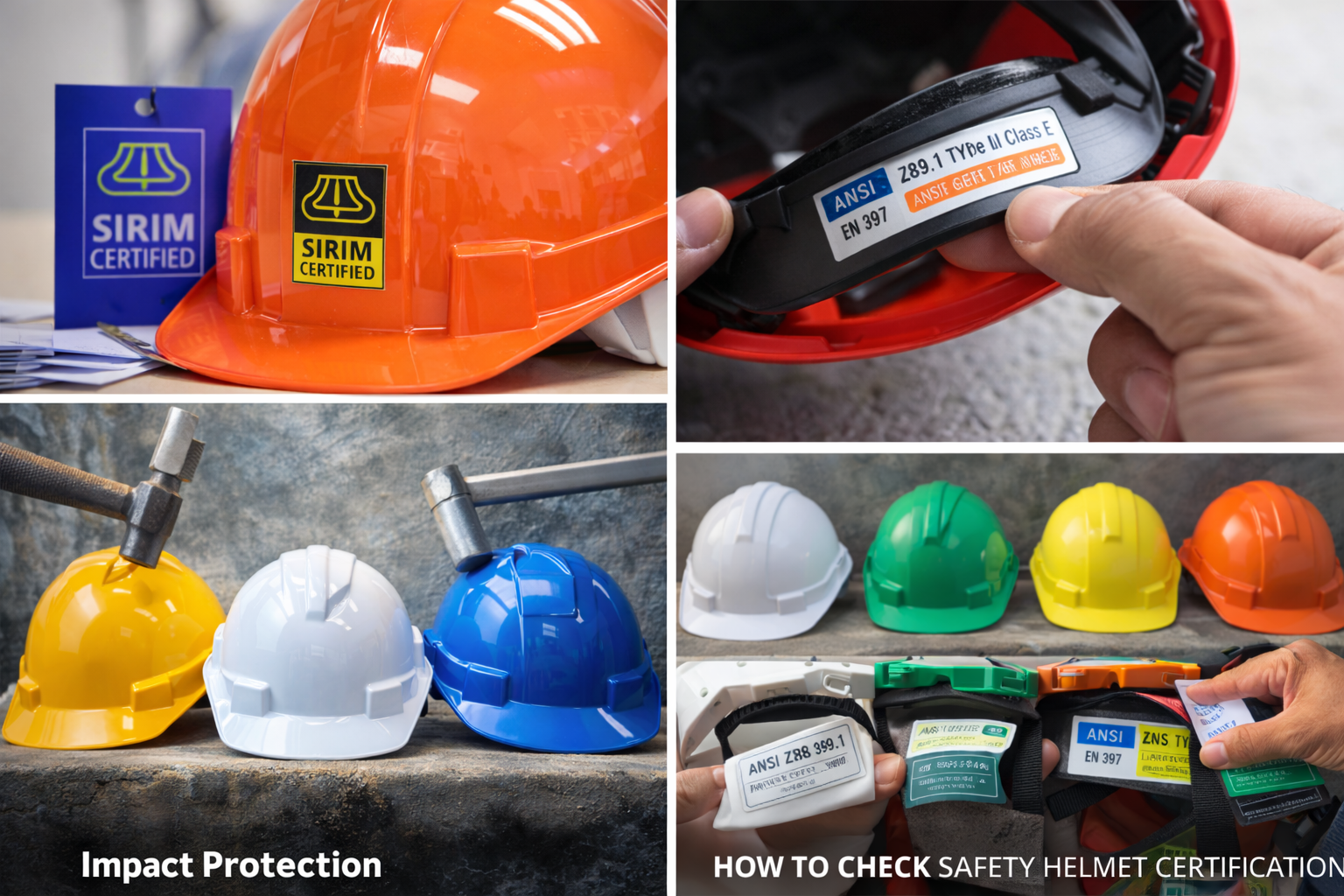
When buying safety helmets for construction, factory, engineering, or industrial work, many companies focus first on price, design, or comfort. But one of the most important things to check is whether the helmet meets the right safety standard.
A safety helmet may look strong on the outside, but if it does not meet a recognized certification standard, it may not provide the level of protection workers actually need. This is why understanding safety helmet standards in Malaysia is so important.
For contractors, project managers, procurement teams, and safety officers, choosing certified helmets is not just about compliance. It is about protecting workers, reducing liability, and making sure PPE performs properly in real site conditions.
In this guide, you will learn:
- what safety helmet standards mean
- what SIRIM certification is
- which international helmet standards are commonly used in Malaysia
- the difference between ANSI, EN, and AS/NZS standards
- how to check if a helmet is certified
- common mistakes buyers should avoid
Why Safety Helmet Standards Matter

Safety helmets are designed to protect workers from serious head injuries caused by:
- falling objects
- impact from structures or equipment
- penetration hazards
- electrical contact in certain environments
- side impact in higher-risk settings
A recognized safety standard helps confirm that the helmet has been tested for specific performance requirements. These standards are important because they help ensure the helmet can:
- absorb impact energy
- resist penetration
- remain stable during wear
- provide reliable protection under expected conditions
Without proper standards, there is no strong assurance that the helmet can perform as required on an actual job site.
For employers, using certified safety helmets also helps support:
- better workplace safety practices
- compliance with project requirements
- stronger confidence during inspections and audits
- reduced risk of injury-related claims
What Are Safety Helmet Standards?
Safety helmet standards are technical requirements used to test and classify protective helmets. These standards define how a helmet should perform under different conditions.
Depending on the certification, a helmet may be tested for:
- impact resistance
- shock absorption
- penetration resistance
- flammability
- electrical insulation
- chin strap strength
- lateral protection
- stability and retention
When a helmet complies with a standard, it means the product has been tested according to those requirements.
This is why standards matter more than appearance. Two helmets may look similar, but their protective performance can be very different.
What Is SIRIM Certification?
In Malaysia, SIRIM is one of the most recognized names for product testing and certification.
SIRIM refers to the local certification and standards system that helps verify whether a product meets relevant safety and quality requirements. For many businesses and regulated environments, SIRIM-certified products give stronger confidence that the equipment is suitable for Malaysian market expectations and project standards.
In the context of safety helmets, SIRIM certification helps show that:
- the helmet has been assessed against recognized requirements
- the product is suitable for use in local safety-focused applications
- the supplier is offering equipment with a more reliable compliance profile
For some buyers, especially those working on government-related projects, public sector work, large industrial jobs, or safety-sensitive procurement, SIRIM can be an important factor during selection.
Why SIRIM Matters for Safety Helmet Buyers in Malaysia
SIRIM matters because it provides local market trust.
For many Malaysian businesses, buying a SIRIM-certified safety helmet offers several advantages:
- stronger confidence in compliance
- easier approval in regulated environments
- better trust with procurement teams
- improved credibility for contractors serving larger projects
- reduced risk of buying low-quality PPE
Even when international certifications are accepted, many buyers still prefer SIRIM-supported products because they align more closely with local expectations.
For companies buying in bulk, this becomes even more important because one wrong purchasing decision affects an entire workforce.
International Safety Helmet Standards Commonly Used in Malaysia
Besides SIRIM, many safety helmets sold in Malaysia also follow recognized international standards. These are widely used in industrial, engineering, and construction sectors, especially when companies work with international brands or multinational project requirements.
The most common international standards include:
- ANSI Z89.1
- EN 397
- AS/NZS 1801
Each standard comes from a different region and may use different testing methods or classification systems.
ANSI Z89.1 Standard
ANSI Z89.1 is a widely recognized American standard for industrial head protection.
This standard is commonly used for:
- construction
- general industry
- engineering work
- industrial PPE procurement
ANSI helmets are often classified by Type and Class.
Helmet Types
- Type I – protection from top impact only
- Type II – protection from top and side impact
Helmet Classes
- Class G – general electrical protection
- Class E – higher electrical protection
- Class C – conductive helmets, usually without electrical protection
ANSI helmets are popular because the standard is clear, widely recognized, and often used by international PPE brands.
EN 397 Standard
EN 397 is a European standard for industrial safety helmets.
It is commonly used for:
- construction
- manufacturing
- warehousing
- site and factory operations
EN 397 generally focuses on:
- shock absorption
- resistance to penetration
- flame resistance
- chin strap performance
- basic structural safety requirements
Many helmets imported into Malaysia from European or international suppliers may follow EN 397.
This standard is especially common in industrial and general workplace environments where European-certified PPE is accepted.
AS/NZS 1801 Standard
AS/NZS 1801 is a recognized standard from Australia and New Zealand for occupational protective helmets.
It is often seen in:
- engineering environments
- infrastructure projects
- industrial operations
- companies using Australian or regionally aligned safety products
This standard is respected for workplace PPE and is commonly accepted in projects where Australian safety requirements influence procurement or supplier choice.
In Malaysia, some industrial buyers and contractors are familiar with AS/NZS-certified helmets and may accept them depending on project needs.
SIRIM vs International Standards: What Is the Difference?
The main difference is not that one is always “better” than another. The real difference is in market acceptance, project requirements, and compliance preference.
SIRIM
- local confidence in Malaysia
- strong for buyers who prioritize local compliance
- useful for regulated or government-linked projects
- trusted in local procurement decisions
International Standards
- widely recognized across global industries
- useful for multinational companies
- common with established PPE brands
- accepted in many industrial and commercial applications
In practice, many businesses in Malaysia buy helmets that are backed by both strong product quality and recognized certification, whether local or international.
The right choice depends on:
- your project requirement
- your customer or site compliance needs
- the type of industry you serve
- your internal safety standards
ANSI vs EN vs AS/NZS: Which One Should You Choose?
Many buyers are confused when comparing different international helmet standards. The best choice depends on your work environment and the certification expectations of your project.
Choose ANSI if:
- you need clear Type I / Type II classification
- your supplier offers American-standard PPE
- your project accepts US-based specifications
- you need options for electrical classes
Choose EN if:
- your supplier carries European-certified products
- your site uses industrial helmets for general work
- you prefer commonly available international PPE in many global brands
Choose AS/NZS if:
- your project references Australian or regional standards
- your supplier offers helmets aligned with Australian workplace safety norms
Choose SIRIM-focused products if:
- your project requires strong local compliance confidence
- your buyer or procurement team prefers Malaysian certification support
- you want easier acceptance in local market conditions
In many cases, the best choice is not about the most famous standard. It is about choosing a certified helmet that matches both the hazard level and the project requirement.
How to Check if a Safety Helmet Is Certified
Before purchasing safety helmets, buyers should always verify certification instead of relying only on supplier claims.
Here are practical ways to check:
1. Inspect the Product Marking
Certified helmets usually include markings on the helmet shell or inside the helmet showing:
- brand or manufacturer
- model reference
- production information
- standard reference
2. Ask for Product Documentation
A reliable supplier should be able to provide:
- product specification sheets
- compliance details
- certification-related documentation where relevant
3. Buy from a Trusted Supplier
Established suppliers are more likely to offer genuine PPE with proper supporting information.
4. Check the Build Quality
While appearance alone is not enough, poor finishing, unclear labels, and incomplete product details can be warning signs.
5. Confirm Suitability for Your Site
A helmet can be certified but still not suitable for your environment if you need side-impact protection, electrical safety, or secure chin strap use.
Certification is important, but correct application matters just as much.
Common Mistakes Buyers Make
Many businesses make avoidable mistakes when buying safety helmets.
Choosing the cheapest option only
Low-cost helmets may save money up front but create bigger risks later if quality and compliance are poor.
Assuming all certified helmets are the same
Different standards test different things, and not every certified helmet is suitable for every job.
Ignoring project requirements
Some projects may require specific compliance expectations, especially in government, industrial, or contractor-based work.
Not checking for authenticity
Some buyers rely too much on packaging claims without checking whether the product and supplier are credible.
Overlooking worker comfort
A certified helmet that is uncomfortable may still be worn incorrectly or inconsistently.
Buying without understanding hazard type
The right standard is important, but the right helmet type for your hazard is equally important.
Which Safety Helmet Standard Is Right for Your Business?
The answer depends on what kind of work you do.
For general construction and industrial work
A recognized certified helmet from a trusted supplier is usually the most important starting point.
For government-related or compliance-sensitive projects
SIRIM-supported options may provide stronger local acceptance.
For multinational, export-linked, or internationally managed environments
ANSI, EN, or AS/NZS-certified products may already fit project expectations.
For electrical work
You must go beyond general certification and make sure the helmet is appropriate for electrical risk.
For work at height or active movement
You may need helmets designed for more secure retention, not just basic top impact protection.
The best decision comes from matching:
- site hazards
- project requirements
- procurement preference
- worker comfort
- supplier credibility
Why Certification Alone Is Not Enough
A certified helmet is a strong starting point, but it still needs to be:
- genuine
- suitable for the specific hazard
- worn correctly
- maintained properly
- replaced when damaged or aged
This is why businesses should not treat standards as a box-ticking exercise. PPE works best when product quality, correct selection, and worker usage all come together.
A high-quality certified helmet can still fail in practice if:
- it is the wrong type for the job
- it has expired or been damaged
- it is worn loosely
- it is bought from an unreliable source
Where to Buy Certified Safety Helmets in Malaysia
If you are sourcing safety helmets for construction, factory, engineering, or industrial use, choose a supplier that can support both product quality and compliance confidence.
A good supplier should offer:
- reliable product range
- proper PPE guidance
- bulk order support
- consistent stock availability
- products suitable for local and industrial requirements
This is especially important for companies buying for multiple workers, sites, or long-term projects.
Get Certified Safety Helmets from Haisar Supply & Services
If your business needs reliable safety helmets for workplace use, Haisar Supply & Services can support your PPE requirements with dependable supply options for contractors, factories, and industrial buyers.
We help businesses source safety equipment that fits real site needs, including construction and industrial applications across Johor and Malaysia.
Haisar Supply & Services
- Sales: +60 17-707 0025
- WhatsApp: +60 12-570 7015
- Website: haisar.com
Contact us to find the right certified safety helmet solution for your team.
Frequently Asked Questions
What is the main safety helmet standard used in Malaysia?
In Malaysia, buyers commonly look for locally trusted certification support such as SIRIM, while also using international standards like ANSI, EN, and AS/NZS depending on the project and supplier.
Is SIRIM required for all safety helmets in Malaysia?
Not every buyer will require the same certification, but SIRIM is highly important for many local procurement and compliance-focused environments.
Are ANSI helmets accepted in Malaysia?
Yes, many industrial and commercial buyers accept ANSI-certified helmets, especially when using internationally recognized PPE brands.
What is the difference between ANSI and EN helmet standards?
ANSI uses classifications such as Type I and Type II, while EN 397 follows a different testing and certification structure commonly used in Europe.
How do I know if a safety helmet is genuine and certified?
Check product markings, ask for documentation, and buy from a trusted PPE supplier with a strong reputation.
Is certification enough when choosing a safety helmet?
No. Certification is important, but the helmet must also match the hazard, fit the worker properly, and be used and maintained correctly.
Understanding safety helmet standards in Malaysia is essential for making better PPE decisions.
Whether you are buying for a construction site, factory, maintenance team, or industrial project, the right helmet should do more than look professional. It should meet recognized standards, match the actual risk on site, and come from a supplier you can trust.
SIRIM gives strong local confidence, while international standards such as ANSI, EN, and AS/NZS are also widely used depending on the project and brand. The best choice is the one that meets your site requirements, supports compliance, and gives workers reliable protection.
For any business serious about safety, certified helmets are not just a purchasing option. They are part of responsible workforce protection.
