Can't find what you're looking for? Get in touch!



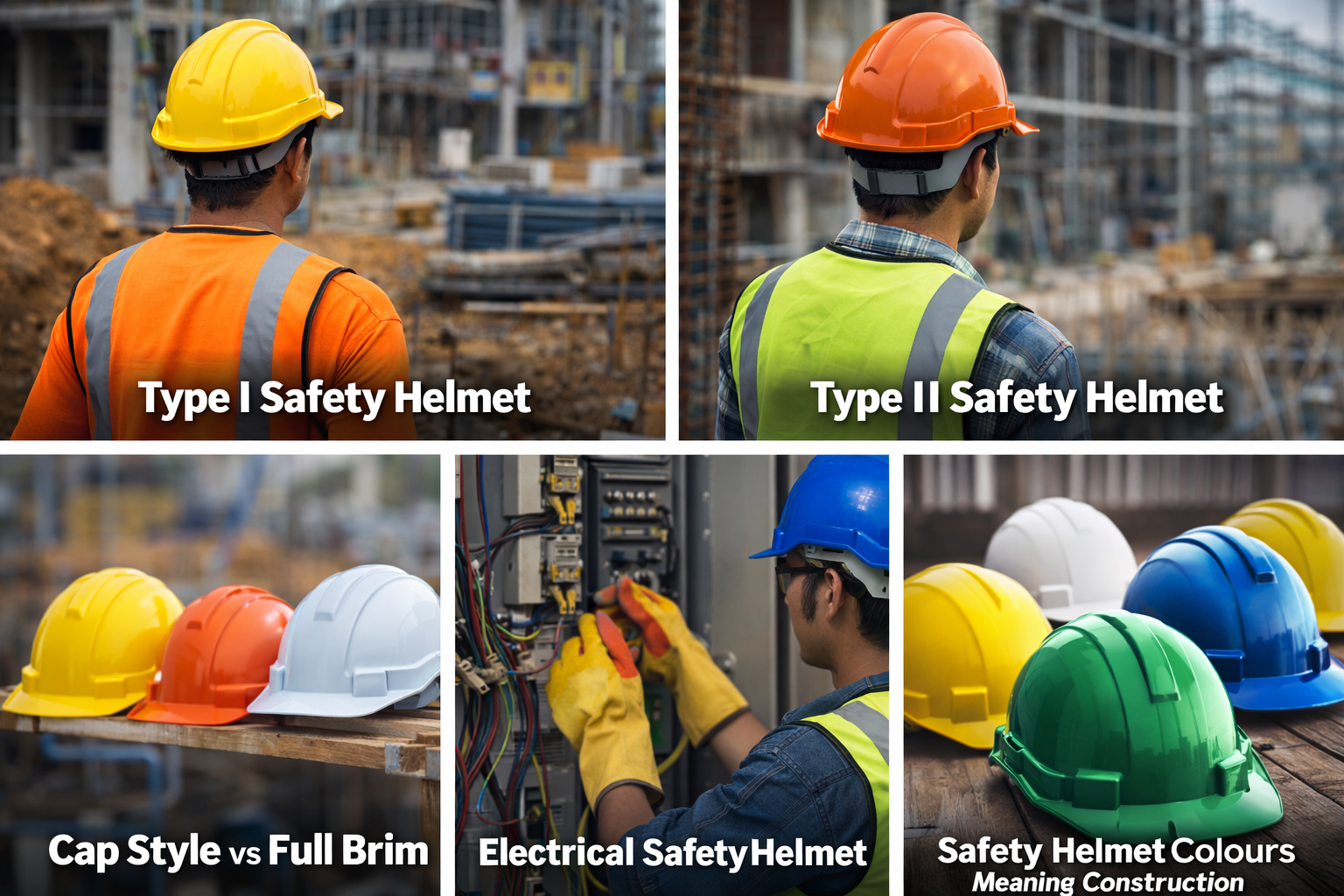
Construction sites are among the most hazardous workplaces in any industry. Workers are constantly exposed to risks such as falling tools, moving materials, low head clearance, flying debris, and sometimes even electrical hazards. Because of this, wearing the right safety helmet is one of the most basic yet most important safety requirements on site.
However, many people use the term “hard hat” generally without understanding that there are actually different types of safety helmets used in construction, and each one is designed for a different level of protection or work environment.
Choosing the right helmet is not just about compliance. It helps reduce injuries, improve worker confidence, and ensure better safety performance across the site.
In this guide, you will learn:
- the main types of safety helmets used in construction
- the difference between helmet styles and protection classes
- how helmet colours are commonly used on site
- how to choose the right construction helmet for different jobs
- common mistakes businesses should avoid when buying helmets
Why Safety Helmets Matter in Construction
Construction work involves many head injury risks that cannot be ignored. Workers may be exposed to:
- falling objects from height
- accidental impact against beams, pipes, or structures
- slips and falls
- electrical contact in certain environments
- moving equipment and materials
A safety helmet helps absorb impact energy and reduce the severity of injury. In many cases, it can prevent a serious accident from becoming fatal.
That is why safety helmets are considered an essential part of construction PPE alongside safety boots, safety gloves, high-visibility clothing, and fall protection equipment.
What Is a Construction Safety Helmet?
A construction safety helmet, often called a hard hat, is a protective head device designed to shield workers from impact, penetration, and in some cases electrical hazards.
Most construction helmets include:
- a hard outer shell
- an internal suspension system
- a headband for fit adjustment
- optional accessories such as chin straps, face shields, and earmuff attachments
The outer shell protects against external force, while the suspension system helps reduce the shock transferred to the head.
Main Types of Safety Helmets Used in Construction
There are several ways to classify construction safety helmets. The most useful way is by impact protection type, helmet style, and special use category.
1. Type I Safety Helmets
Type I helmets are designed to protect the head from impacts that come from the top.
This is the most common type used on construction sites. It is suitable where the main danger comes from overhead falling objects such as tools, materials, or debris.
Best for:
- general construction work
- building projects
- roadwork
- basic site operations
Advantages:
- widely available
- lightweight
- suitable for everyday site use
- cost-effective for bulk purchase
For many construction companies, Type I helmets are the standard starting point for general site protection.
2. Type II Safety Helmets
Type II helmets provide protection from both top impact and side impact.
These helmets are designed for environments where workers may be exposed not only to falling objects but also to lateral blows. This makes them more suitable for higher-risk construction sites, industrial zones, and projects with tighter spaces or more complex operations.
Best for:
- high-risk construction work
- infrastructure projects
- heavy industrial construction
- areas with side-impact hazards
Advantages:
- better overall head protection
- improved safety in more demanding environments
- useful for projects with multiple risk points
Type II helmets usually provide a higher level of protection than standard top-impact helmets.
3. Cap Style Safety Helmets
Cap style helmets look like a traditional hard hat with a short front brim.
They are one of the most common styles in construction because they are lightweight, practical, and easy to use with other PPE such as face shields or earmuffs.
Best for:
- general building works
- contractors
- indoor and outdoor construction projects
Benefits:
- lightweight design
- good upward visibility
- comfortable for long hours
- common and easy to replace
For many construction workers, cap style helmets are the most practical option for daily use.
4. Full Brim Safety Helmets
Full brim helmets provide a brim that extends around the entire helmet, not just the front.
This design offers extra protection from sun, rain, dust, and small falling debris. It is especially useful for workers operating outdoors for long periods.
Best for:
- outdoor construction sites
- road construction
- exposed work zones
- hot and rainy site conditions
Benefits:
- better protection from weather
- more coverage around the head and neck area
- improved comfort in outdoor environments
Full brim helmets are often preferred for projects where workers spend most of the day under direct sun or harsh weather.
5. Electrical Safety Helmets
Some construction environments involve electrical hazards, such as working near live wires, electrical panels, or temporary power systems. In such cases, workers may require electrical safety helmets made from non-conductive materials.
These helmets are designed to reduce the risk of electrical shock when used in suitable environments and according to safety guidelines.
Best for:
- electrical contractors
- utility-related construction work
- maintenance near power systems
- construction with electrical risk exposure
Important note:
Not every construction worker needs an electrical safety helmet, but where electrical risk exists, this type becomes essential.
6. Climbing-Style Safety Helmets
Modern construction sites are increasingly using climbing-style safety helmets, especially for work at height. These helmets often include a chin strap as a standard feature and are designed to stay secure during movement, climbing, and elevated work.
Best for:
- scaffolding work
- rope access work
- tower work
- elevated installation work
- confined or high-mobility tasks
Benefits:
- secure fit
- better stability during movement
- useful for workers who look up or bend frequently
- often more comfortable in active work settings
This style has become more popular on advanced worksites where mobility and helmet retention are important.
Type I vs Type II Safety Helmets
One of the most common questions in construction safety is the difference between Type I and Type II helmets.
| Helmet Type | Main Protection | Best For |
|---|---|---|
| Type I | Top impact only | General construction |
| Type II | Top and side impact | Higher-risk construction and industrial work |
In simple terms, if your site mainly involves overhead hazards, a Type I helmet may be suitable. If there is a chance of side impact, or the work environment is more demanding, Type II provides stronger protection.
Cap Style vs Full Brim Helmets
Another common comparison is between cap style and full brim helmets.
| Helmet Style | Best Feature | Best For |
|---|---|---|
| Cap Style | Lightweight and practical | General site work |
| Full Brim | Better weather and debris coverage | Outdoor construction |
The right choice depends on where and how the helmet will be used. For indoor or standard site work, cap style is often enough. For outdoor worksites, full brim helmets can improve comfort and protection.
Safety Helmet Colours in Construction
On many construction sites, helmet colour is used to help identify worker roles quickly. While colour systems can differ between companies, some common practices include:
- White – engineers, supervisors, managers, or site visitors
- Yellow – general labourers and workers
- Blue – technical operators or electricians
- Green – safety personnel or new workers in some sites
- Red – emergency staff or fire-related roles in certain projects
- Orange – road crews or high-visibility work groups
It is important to note that there is no single universal colour code used everywhere. Each company or project may apply its own internal rule. Still, colour coding helps improve communication and organization on busy construction sites.
How to Choose the Right Safety Helmet for Construction Work
Choosing the right helmet should be based on job risk, site conditions, and worker needs.
1. Assess the Site Hazards
Start by identifying the actual risks:
- overhead materials
- side impact hazards
- electrical exposure
- outdoor weather exposure
- work at height
The helmet should match the environment, not just the budget.
2. Check Safety Standards
Always choose helmets that meet recognized safety standards. Depending on your site and project requirements, this may include local or international compliance standards.
Certified helmets provide more confidence in protection quality and reliability.
3. Consider Comfort and Fit
A helmet that is uncomfortable is less likely to be worn properly. Look for:
- adjustable fit
- lightweight design
- breathable suspension
- secure chin strap if needed
Comfort directly affects worker compliance.
4. Think About Compatibility with Other PPE
Construction workers often wear multiple PPE items together. Make sure the helmet works well with:
- safety glasses
- earmuffs
- face shields
- high-visibility clothing
- respiratory protection where required
5. Buy from a Reliable Supplier
A trusted supplier helps ensure:
- product quality
- consistent stock
- proper certification
- bulk supply for projects
- better support for repeat orders
Common Mistakes to Avoid
When buying or managing construction helmets, companies often make mistakes that reduce safety performance.
Choosing based only on price
Cheap helmets may reduce cost in the short term but can increase risk and replacement issues later.
Ignoring the type of hazard
Not every helmet is suitable for every site. General helmets may not be enough for electrical or high-risk work.
Overlooking comfort
If workers find helmets too heavy, too hot, or poorly fitted, they may wear them incorrectly.
Failing to replace damaged helmets
A cracked or impacted helmet should not continue in use.
Using one helmet type for all roles
Different teams on the same site may need different levels of protection.
When Should Construction Safety Helmets Be Replaced?
Safety helmets should be replaced when:
- they have received a strong impact
- cracks, dents, or visible damage appear
- the suspension system becomes loose or worn
- the helmet shows signs of ageing due to heat, sunlight, or heavy use
- the manufacturer’s recommended service life has been reached
Even if damage is not obvious, old helmets should not remain in service indefinitely.
Why Choosing the Right Helmet Helps More Than Compliance
A good construction helmet does more than meet a site requirement. It also helps:
- reduce injury risk
- improve worker confidence
- support site discipline
- improve compliance during audits and inspections
- protect company reputation
- reduce downtime caused by accidents
For contractors and project managers, PPE is not just a safety cost. It is part of operational performance.
Where to Get Construction Safety Helmets in Malaysia
If your business needs construction safety helmets in bulk, it is important to work with a supplier that understands site requirements and can provide consistent PPE support.
When choosing a supplier, look for:
- reliable product quality
- certification support
- bulk supply capability
- fast delivery
- experience with construction and industrial customers
A good supplier can help you choose the right helmet type based on your project needs rather than offering a one-size-fits-all solution.
Get Construction Safety Helmets from Haisar Supply & Services
If you are looking for reliable safety helmets for construction and industrial work, Haisar Supply & Services can support your PPE requirements with dependable supply and bulk order options.
We provide safety equipment solutions for contractors, factories, and project teams across Johor and Malaysia.
Haisar Supply & Services
- Sales: +60 17-707 0025
- WhatsApp: +60 12-570 7015
- Website: haisar.com
Contact us to find the right safety helmet solution for your site.
Frequently Asked Questions
What are the main types of safety helmets used in construction?
The main types include Type I helmets, Type II helmets, cap style helmets, full brim helmets, electrical safety helmets, and climbing-style helmets.
What is the difference between Type I and Type II helmets?
Type I helmets protect from top impact only, while Type II helmets protect from both top and side impacts.
Which safety helmet is best for outdoor construction?
Full brim helmets are often better for outdoor construction because they provide extra protection from sun, rain, and debris.
Are electrical safety helmets necessary on all construction sites?
No. They are mainly needed where there is electrical risk, such as work near power systems or electrical installations.
How often should construction helmets be replaced?
Helmets should be replaced after impact, when damaged, or when they reach the end of their recommended service life.
Final Thoughts
Understanding the different types of safety helmets used in construction is important for choosing the right protection for your workforce.
Not all construction helmets are the same. Some are designed for general site work, while others offer added protection for side impact, electrical hazards, outdoor exposure, or work at height.
The best choice depends on the hazards present, the type of work being done, and the comfort needs of the workers who wear them every day.
For construction companies, choosing the right helmet is a simple but powerful step toward building a safer, more professional, and more compliant worksite.
