Can't find what you're looking for? Get in touch!



Short answer: There is no single price for safety gloves in Malaysia, and unlike helmets or boots the spread is not really a quality ladder - it is a hazard match. A disposable glove and a chemical-resistant gauntlet are not different grades of the same product, they solve different problems, and pricing a chemical task against a disposable glove's unit cost is not a saving, it is the wrong product. This page breaks the price down by the hazard category your HIRARC actually identifies, then you can ask us for current figures against your specific standard and quantity.
Buyers searching for a glove price are usually doing one of two things: checking a supplier's quotation against what a documented HIRARC assessment says a task actually needs, or budgeting an annual glove spend across a workforce that goes through several categories at once - disposable for general handling, cut protection on one line, chemical gauntlets on another. Both need the same thing: an understanding of which category the hazard calls for, not a single per-pair number to compare everything against.
As with our other equipment pricing guides, this is written as ratios and cost drivers rather than fixed figures, because a published glove price goes stale fast. The ratios and the logic hold; ask us for the current amount against your actual standard and quantity.
What actually drives the price
Of those six, two deserve emphasis because they are where buyers most often mismatch price to hazard rather than economise deliberately.
Certification specific to the hazard, not a general claim. As our glove standards guide covers in depth, an EN 374 chemical rating is specific to the chemicals actually tested, not a universal guarantee, and ANSI and EN cut ratings do not convert directly into each other. A quotation that claims a rating without a certificate to match it is not a price advantage, it is a compliance gap.
Cuff length and coating on chemical gauntlets. A 30cm neoprene gauntlet uses considerably more material than a wrist-length mechanical glove, and the price difference reflects that, not just the chemical-resistant coating itself.
Four hazard categories, priced by task
| Category | What you get | Right for | Watch out for |
|---|---|---|---|
| Disposable | Nitrile or latex, powder-free, single-use | General handling, food contact, low-risk brief-exposure tasks | Not a substitute for a rated glove once cut, chemical, or sustained-contact hazard is present |
| Mechanical / multi-purpose | General-purpose knit or leather-palm glove for grip and light abrasion resistance | General industrial handling with no specific documented hazard beyond routine wear | Confirm whether the task actually needs a rated cut or chemical glove before defaulting here |
| Cut protection | EN 388 cut-rated seamless liner (HPPE or aramid) with a PU or nitrile palm coatingAsk for the ISO 13997 letter grade, not just the Coup-test level, for genuinely high-risk cutting tasks | Blade contact, sharp edges, glass or metal handling, sheet metal work | Match the cut level to the actual hazard — the highest level available is not always the right pick, and costs more for no benefit if over-specified |
| Chemical-resistant gauntlet | EN 374 rated neoprene or nitrile, extended cuff length (commonly 30cm) | Chemical splash, immersion, or handling tasks where the CSDS calls for it | The rating is chemical-specific — check the actual chemical list on the certificate against what your workers handle, not just the letter grade |
Not sure which category your task needs? Send us the HIRARC output or describe the task and we will match it to a category — including saying so if you are over-specified. Ask for a recommendation →
Ordering across a mixed glove programme
Because most sites run more than one glove category at once disposable at the gate, mechanical for general handling, cut protection on specific lines, chemical gauntlets at wet benches the real saving usually comes from consolidating the whole programme into one quarterly or annual order rather than chasing volume in a single category. Sending us the full breakdown across categories, not just the biggest line item, generally gets a better outcome than negotiating each category separately.
Sizing matters here too, in a smaller way than footwear but not negligibly: a workforce with mixed hand sizes ordering to a single default size wastes both fit and money on the sizes that go unused. Most of our lines run sizes 7 through 12; confirm your actual size spread before the order goes out.
The number that matters: cost per pair actually worn
Unit price on the box is the wrong comparison, because a glove not worn for the full task protects nobody, and a glove replaced too early or too late both cost more than the number on the box suggests.
| Factor | Why it changes the annual figure |
|---|---|
| Reusable vs disposable economics | A reusable HPPE-lined cut glove, laundered correctly, is generally cheaper per use than repeatedly replacing a cheaper disposable option for a task that actually needs cut protection — the comparison only works out when the category is matched to the hazard in the first place. |
| Fit and comfort compliance | A rated glove a worker quietly removes because it is too hot or the wrong size protects nobody, and means effectively buying it twice once for the audit file, once for the worker who actually needs the protection. |
| Condition-based replacement | Holes, coating breakdown, unusual stiffness, persistent odour, or a stretched cuff each trigger replacement regardless of a calendar interval see the full inspection checklist for what to check pre-shift. |
| Correct laundering | Machine-drying degrades nitrile coatings and HPPE fibres well before their rated lifespan a documented 40°C, mild-detergent, air-dry process protects the investment in reusable gloves. |
| Wrong-category use | Using a mechanical glove for a chemical task, or a disposable glove for a cutting task, is not a saving; it is a documented hazard-mismatch that costs more in an incident or an audit finding than the price difference ever saved. |
Run those together and the honest annual figure comes from getting the category right per task, not from finding the cheapest glove per box and hoping it covers everything.
What a suspiciously cheap glove is missing
- A rating specific to the hazard claimed. Not a general “heavy duty” label, an actual EN 388 cut level or EN 374 chemical type printed on the packaging.
- A verifiable certificate. EN ISO 21420 as the base standard, plus the specific EN 388 or EN 374 test data for the category. Ask us to supply it on request.
- The correct test method for the claim. A high cut level claimed on the older Coup test alone, with no ISO 13997 letter grade, is not verifiable for genuinely high-risk cutting work.
- Chemical resistance matched to the actual chemical, not a general claim. An EN 374 Type A rating is only valid against the specific chemicals it was tested with.
- A liner that actually delivers the claimed protection. A glove claiming cut resistance without an HPPE or aramid liner is describing the coating, not the protection.
- A real size range for your workforce. A supplier who only stocks a narrow band of sizes is not equipped for a full-site rollout, whatever the unit price looks like.
What we stock
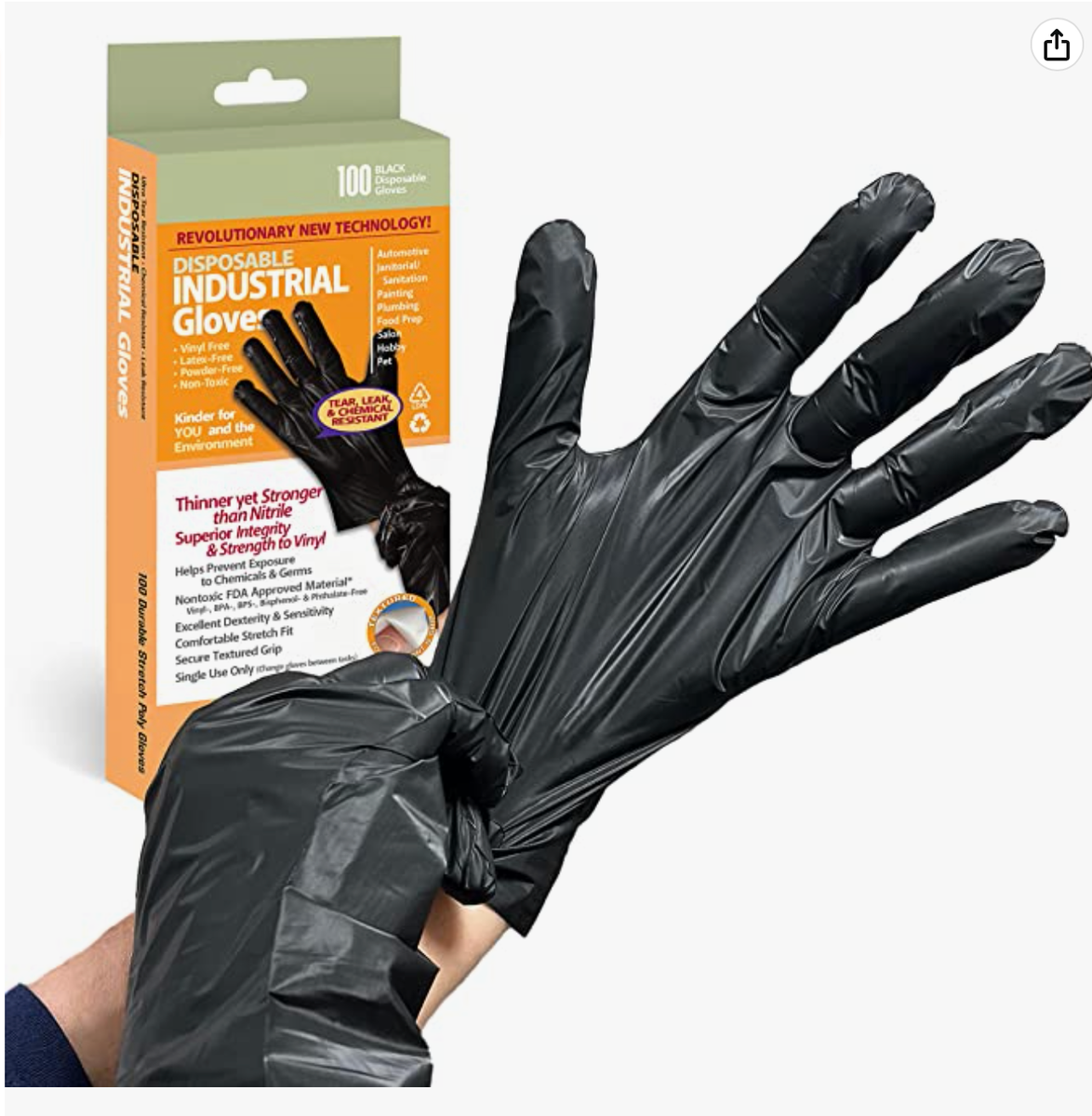
Disposable Nitrile Powder-Free, Heavy Duty
Single-use nitrile for general handling and low-risk tasks. The entry point not a substitute for a rated glove once cut or chemical exposure is present.
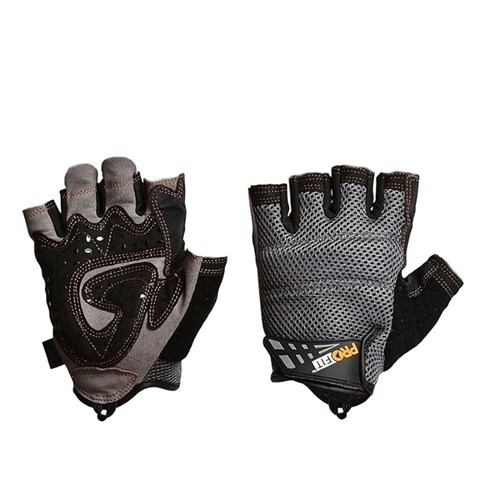
Profit Fingerless Glove
General-purpose grip and light abrasion resistance for routine industrial handling with no specific documented cut or chemical hazard.

Prosense C5, Cut Level D, PU Palm
13-gauge EN388:2016 Cut Level D seamless liner with a breathable grey PU dip for comfort and dexterity. Sizes 7 through 12.

Prochem 30cm Neoprene Gauntlet
Heavy-duty neoprene with a soft cotton flock lining, resistant to most solvents, mild acids, oils and fats. 30cm length, 12 pairs per pack.
The full range also covers synthetic nitrile dipped gloves for combined impact and cut, leather gloves for welding and heat-adjacent work, cold-resistant gloves for cold-chain work, and voltage-rated insulating gloves for electrical work a separate product category tested to IEC 60903, not EN 388 or EN 374.
Get a real number against your programme
Tell us the hazard categories your HIRARC has identified and the quantity per category. We will come back with current pricing across the whole programme, not one category at a time.
Haisar Supply & Services Sdn Bhd · No. 7501, Jalan Enggang 19, Bandar Putra, 81000 Kulai, Johor · Seremban branch 011-3307 7509 · contact details
Pricing questions
How much do safety gloves cost in Malaysia?
It depends entirely on the hazard category, and the categories are not a simple upgrade path from cheap to expensive. Across the four categories described above the range is roughly 3.5-fold, from disposable to a 30cm chemical gauntlet. Send us your HIRARC output or task list and we will give you a current figure across the categories you actually need, rather than a stale published number.
Which glove category do I actually need?
That comes from a documented HIRARC assessment of the specific task, not from habit or what is already in the store. As a working rule: disposable for general low-risk handling, mechanical for routine industrial grip, cut protection for blade or sharp-edge contact, and chemical-resistant gauntlets for splash or immersion tasks matched to the specific chemical on the CSDS. See our full glove selection guide for the standards behind each.
Are cut level 5 and ISO cut level F the same thing?
No. Level 5 comes from the older Coup (blade) test under EN 388; Level F comes from the newer ISO 13997 (TDM) test, which is more reliable for high-performance materials because the Coup blade dulls quickly against them. For genuinely high-risk cutting work, ask for the ISO 13997 letter grade specifically.
How do you price a bulk order across several glove categories?
By quantity per category and by consolidating the whole programme into one order rather than negotiating each category separately. Send us the breakdown across disposable, mechanical, cut and chemical categories along with your size spread, and we will quote against the full picture.
Can chemical-resistant gloves be reused, or are they single-use?
Our neoprene and nitrile gauntlets are reusable when laundered and inspected correctly — check for stiffness, cracking or discolouration before each use, which can indicate chemical degradation from the inside. Replace immediately after any use in a task or with a chemical the glove was not rated for.
Can you supply EN 388 or EN 374 certification documents?
Yes, on the lines that carry them. Ask at quotation stage and the documentation is issued with the delivery order, so your audit file is complete before a client or a DOSH inspector asks for it.
