Can't find what you're looking for? Get in touch!



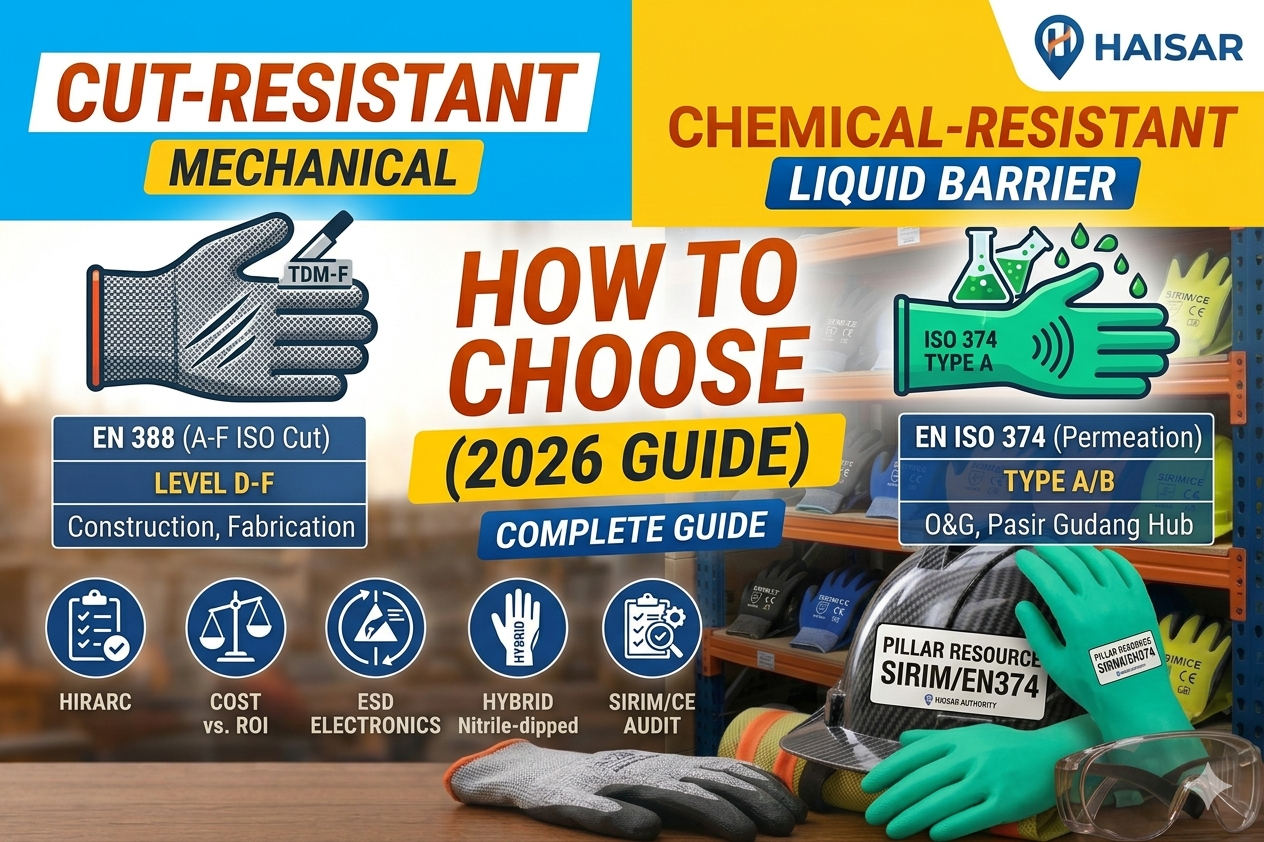
Chemical hazards are often described as "silent killers." Unlike a cut, which causes immediate pain and bleeding, a chemical burn or permeation event might go unnoticed for minutes or even hours. Repeated exposure to acids, fuels, or industrial solvents can cause systemic health issues, including chronic dermatitis or long-term organ toxicity. The right chemical glove creates a solid, non-porous polymer barrier that prevents the chemical from ever reaching the skin.
Selecting the Right Polymer
The core of chemical protection is the polymer material. No single material protects against every chemical. Selecting the wrong one can lead to a "breakthrough" event where the chemical passes through the glove material on a molecular level, even if the glove appears intact.
- Nitrile: The most popular industrial standard in Johor and throughout Malaysia. Nitrile offers excellent resistance to oils, greases, and many acids. It is also 3x more puncture-resistant than natural rubber latex.
- Neoprene: Highly flexible and resistant to a wider range of chemicals, including alcohols and many acids. It is a preferred choice for mixed-chemical environments.
- Butyl: A heavy-duty polymer providing the strongest barrier against highly corrosive acids and specialized gas handling.
- PVC (Vinyl): A cost-effective solution for light cleaning and basic oil resistance, but not suitable for high-risk chemical exposure.
Understanding the EN ISO 374 Standard
Chemical gloves are rated based on two critical factors: Permeation (how long a chemical takes to move through the material at a molecular level) and Degradation (how the material physically breaks down on contact).
Look for the beaker symbol on the glove to identify the protection type:
- Type A (High Protection): Tested against at least 6 different chemicals from a standardized list with a breakthrough time of at least 30 minutes each.
- Type B (Medium Protection): Tested against at least 3 chemicals for at least 30 minutes.
- Type C (Light Protection): Tested against at least 1 chemical for at least 10 minutes.
Part 3: Side-by-Side Comparison – Cut vs. Chemical
The following table highlights the distinct differences between these two categories. Using a cut-resistant glove for chemicals is a critical safety failure, as the knitted construction allows liquids to pass directly to the skin. Similarly, using a standard chemical glove for sharp metal handling often leads to punctures that compromise the liquid barrier.
|
Feature |
Cut-Resistant Gloves |
Chemical-Resistant Gloves |
|
Primary Goal |
Stop blades, sharp metal edges, and abrasions |
Prevent liquid absorption and molecular permeation |
|
Governing Standard |
EN 388 (Mechanical) |
EN ISO 374 (Chemical) |
|
Breathability |
High — usually knitted fiber construction |
Low — solid polymer liquid barrier |
|
Key Materials |
HPPE, Aramid (Kevlar), Stainless Steel mesh |
Nitrile, Neoprene, Butyl, PVC, Viton |
|
Best Sector Use |
Construction, Metalwork, Fabrication, Glass |
Oil & Gas, Lab Work, Industrial Cleaning, Refineries |
|
Maintenance |
Can often be laundered to extend life |
Single-use or limited reuse; must be discarded if stiff |
Hybrid Solutions: When One Glove Isn't Enough
In many modern Malaysian worksites, hazards are overlapping. For example, a maintenance worker in a factory may need to handle sharp machine parts that are covered in heavy industrial grease or solvents. In 2026, the industry has moved toward Hybrid PPE.
These gloves combine a high-level cut-resistant liner (like HPPE) with a full chemical-resistant polymer dip (typically Nitrile or Neoprene). This eliminates the need for "double gloving"—wearing a cut glove over a chemical glove which often reduces hand dexterity and significantly increases heat stress in the tropical climate.
Part 4: Compliance, Maintenance & FAQ
The Importance of the 5-Year Shelf Life
Even the best safety gloves have an expiration date. Polymers like Nitrile and Neoprene can degrade over time, especially when stored in high-heat environments like unventilated shipping containers or warehouses. In 2026, safety auditors look for the "Date of Manufacture" on the packaging. Most industrial gloves have a shelf life of 5 years; after this, the material may become brittle and fail during a hazard event.
Inspection Checklist for Malaysian Industrial Sites
Before every shift, workers should be trained to perform a 10-second inspection:
- Visual Check: Are there any visible holes or snags? (For chemical gloves, perform an air-inflation test by rolling the cuff toward the fingers to check for leaks).
- Texture Check: Does the glove feel "stiff," "brittle," or "sticky"? These are signs of chemical degradation.
- Coating Check: Is the palm coating peeling away from the fiber liner? This indicates the glove has reached its friction limit.
- Odor/Hygiene: In Malaysia’s climate, perspiration can lead to bacterial growth inside knitted liners. Ensure gloves are dry and clean before use.
Frequently Asked Questions (FAQ)
Q: Can I use leather gloves for chemical handling?
A: No. Leather is a porous, natural material. It will soak up chemicals and hold them against the worker's skin, often causing more severe burns than if no glove were worn at all.
Q: Does a "Nitrile-Dipped" glove protect me from chemicals?
A: Not necessarily. A "palm-dipped" glove provides grip and light oil resistance on the palm, but the back of the hand is usually open-knit fiber. For chemical protection, you must use a "fully-coated" glove that carries the EN ISO 374 certification.
Q: Is SIRIM certification required for industrial gloves?
A: While the Department of Occupational Safety and Health (DOSH/JKKP) recognizes international standards like EN and ANSI, ensuring your supplier provides SIRIM-verified test reports is the most reliable way to pass a local site audit and avoid legal complications.
Q: How do I know the "Breakthrough Time" for a specific chemical?
A: Every reputable chemical glove manufacturer provides a "Permeation Chart." This chart tells you exactly how many minutes the glove will last against specific chemicals like Sulphuric Acid or Toluene. You should always request this chart from your supplier during the procurement phase.
Making the Right Choice for Your Workplace
Choosing between cut-resistant and chemical-resistant gloves is a decision that impacts both human lives and business continuity. In 2026, the standard for safety is higher than ever. By understanding the material science, decoding the EN standards, and matching the glove to your site-specific HIRARC, you protect your most valuable asset: your workers.
Investing in high-performance gloves is not just a cost; it is a strategy to reduce the Total Cost of Ownership. High-quality Nitrile or HPPE gloves last significantly longer than "budget" alternatives, leading to less waste, fewer disposal fees, and most importantly zero accidents.
Secure Your Site with a Safety Audit
Don't risk a RM500,000 fine or a work stoppage due to improper PPE selection. Professional glove audits aligned with the OSHA 2022 requirements are available across Johor and Malaysia to help you navigate these complexities.
- Sales: +60 17-707 0025
- WhatsApp: +60 12-570 7015
- Website: www.haisar.com
