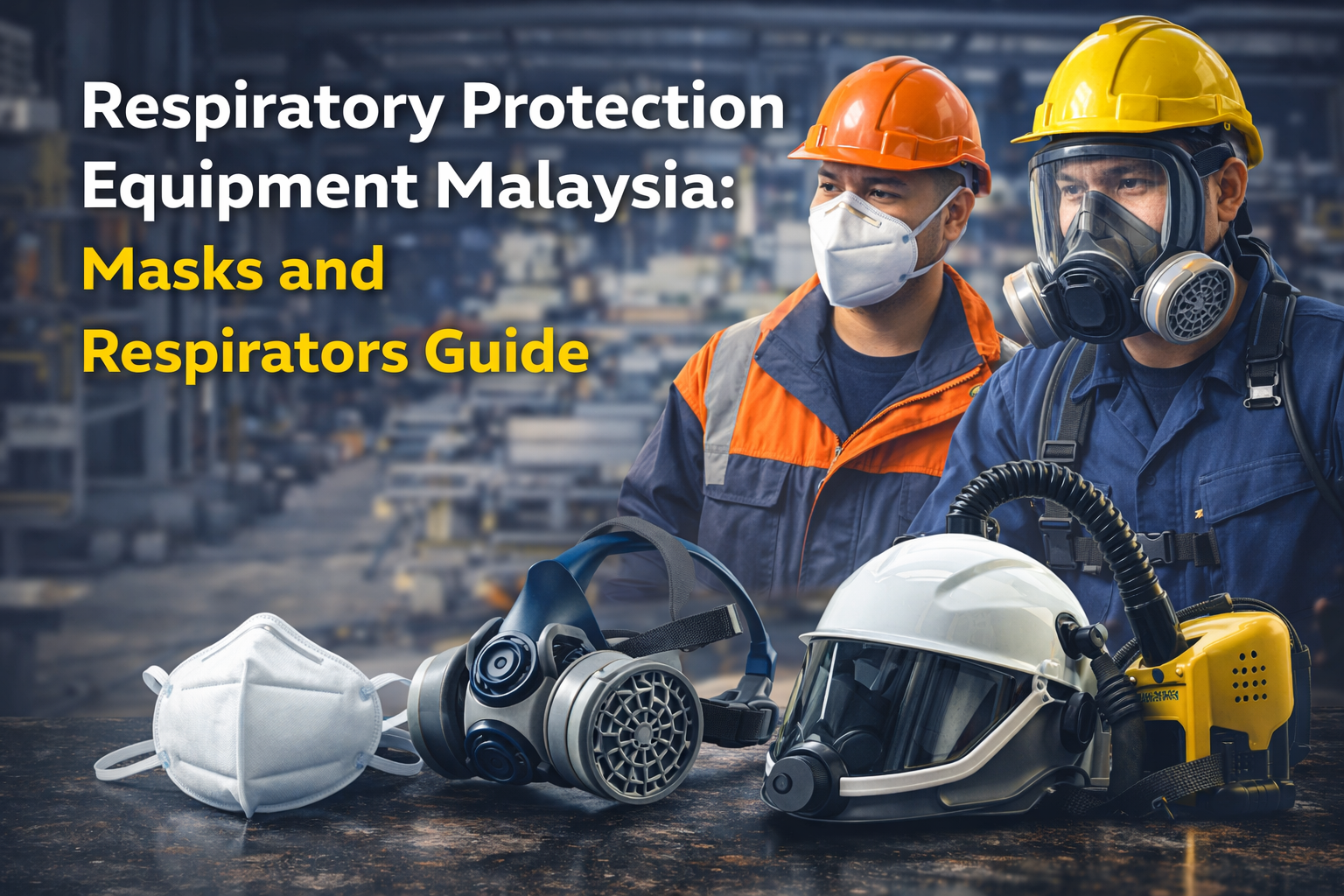
Airborne hazards are one of the most dangerous yet often overlooked risks in industrial workplaces. Workers in construction sites, factories, workshops, and chemical facilities are frequently exposed to dust, fumes, gases, and airborne particles that can harm their respiratory system over time.

Respiratory protection equipment plays a critical role in safeguarding workers from these invisible dangers. In Malaysia, businesses across industries rely on respirators and safety masks as part of their personal protective equipment (PPE) programs.

Companies that prioritize safety typically source their equipment from experienced PPE suppliers in Johor, ensuring workers are equipped with certified and reliable respiratory protection.

This guide explains the types of respiratory protection equipment used in Malaysia, where they are required, and how businesses can choose the right protection for their workforce.

 WhatsApp us for a quick quote 

Why Respiratory Protection Is Important in Industrial Workplaces

Beyond the Cut: Why Silica Dust Control is Non-Negotiable in Miami's Concrete  Industry

Unlike visible hazards such as sharp objects or heavy machinery, airborne risks are often invisible. However, prolonged exposure can lead to serious health problems.

Common workplace airborne hazards include:

  • dust from construction and cement work
  • fumes from welding and machinery
  • chemical vapors
  • smoke and fine particles
  • biological contaminants

Without proper respiratory protection, workers may suffer from:

  • lung diseases
  • breathing difficulties
  • long-term health complications

Industries that maintain strong safety standards usually combine respirators with other PPE such as helmets, gloves, and eyewear sourced from trusted industrial safety equipment suppliers in Johor, ensuring full-body protection.

Types of Respiratory Protection Equipment in Malaysia

SHOPMASK™ - Mask Guide | Everything you need to know about N95 respirators,  dust, anti-pollution & surgical masks and other protective accessories like  P95, R95, N99, R99, P99, N100, P100, R100, FFP2

Different work environments require different levels of respiratory protection.

Disposable Dust Masks

Disposable masks are lightweight and designed for short-term use.

They are commonly used in:

  • construction sites
  • woodworking
  • general maintenance work

These masks help protect against dust and non-toxic particles but are not suitable for chemical exposure.

N95 and Filtering Facepiece Respirators

N95 respirators are one of the most widely used respiratory protection devices.

They provide:

  • high filtration efficiency
  • protection against airborne particles
  • better fit compared to standard masks

These respirators are commonly used in:

  • construction
  • healthcare
  • manufacturing

Many businesses in Malaysia rely on these masks as part of their PPE programs supplied by reliable PPE suppliers in Johor.

Half-Face Respirators

Technician coworkers are working in dangerous condition wearing chemical masks.

Half-face respirators cover the nose and mouth and use replaceable filters.

They provide protection against:

  • dust
  • fumes
  • certain chemicals

These respirators are widely used in:

  • industrial factories
  • automotive workshops
  • painting and coating work

Full-Face Respirators

Safety Carbon Monoxide Respiratory Protection Full Face Chemical Resistant Gas  Mask - Full Face Mask, Full Mask | Made-in-China.com

Full-face respirators provide complete protection for both the respiratory system and the eyes.

They are used in environments with:

  • hazardous chemicals
  • toxic gases
  • high-risk industrial exposure

These respirators are commonly used in:

  • chemical plants
  • oil and gas industries
  • heavy industrial environments

Powered Air Purifying Respirators (PAPR)

PAPR systems use a powered fan to filter air before it is inhaled.

They provide:

  • higher comfort
  • continuous airflow
  • enhanced protection

These systems are used in high-risk environments where extended respiratory protection is required.

Industries That Require Respiratory Protection in Malaysia

Personal Protection Equipment (PPE) for Oil and Gas Personnel - HSI

Construction Industry

Construction workers are exposed to dust, cement particles, and debris daily.

Respirators are essential for protecting workers from inhaling harmful particles during:

  • drilling
  • cutting
  • demolition

Companies often combine respirators with other PPE sourced from trusted construction safety equipment suppliers in Johor.

Manufacturing Industry

Factories expose workers to airborne particles, fumes, and industrial chemicals.

Workers in manufacturing plants rely on respiratory protection to maintain safe working conditions.

Businesses that prioritize safety often obtain their PPE from experienced factory safety equipment suppliers in Johor.

Oil and Gas Industry

Workers in oil and gas environments face exposure to hazardous gases and vapors.

Advanced respirators such as full-face masks and PAPRs are commonly used in these settings.

Chemical and Laboratory Environments

Laboratories and chemical plants require high-level respiratory protection to prevent inhalation of toxic substances.

These workplaces often combine respirators with gloves and eye protection for full safety coverage.

How to Choose the Right Respiratory Protection Equipment

Identify the Type of Hazard

The first step is understanding what workers are exposed to:

  • dust
  • fumes
  • gases
  • chemicals

Different hazards require different levels of respiratory protection.

Choose the Correct Filter Type

Respirators use filters to block harmful particles.

Common filter types include:

  • particulate filters
  • gas filters
  • combination filters

Selecting the correct filter ensures effective protection.

Ensure Proper Fit

Respirators must fit securely to prevent air leakage.

Poor fit reduces effectiveness and increases risk.

Fit testing is often required in industrial environments.

Consider Comfort and Usability

Workers must wear respirators for long periods.

Important features include:

  • lightweight design
  • adjustable straps
  • breathable materials

Comfort ensures consistent usage.

Check Safety Standards

Respirators should meet recognized safety standards such as:

  • NIOSH certification
  • EN standards
  • ISO standards

Businesses working with trusted industrial safety equipment suppliers in Johor usually receive certified products.

Safety Regulations in Malaysia

Workplace safety in Malaysia is regulated by organizations such as the Department of Occupational Safety and Health (DOSH).

Employers are responsible for:

  • providing suitable PPE
  • ensuring workers are protected
  • maintaining safe working conditions

Respiratory protection is required in environments where airborne hazards are present.

Why Choosing the Right PPE Supplier Matters

Selecting the right respiratory equipment is important, but working with the right supplier is equally critical.

Reliable suppliers help businesses:

  • select suitable respirators
  • ensure product compliance
  • maintain supply consistency
  • support bulk orders

Many companies in Johor rely on experienced PPE suppliers in Johor who understand the safety requirements of local industries.

Conclusion

Respiratory protection equipment is essential for safeguarding workers from airborne hazards in construction, manufacturing, and industrial environments across Malaysia.

By understanding the different types of respirators and selecting the right equipment, businesses can significantly reduce health risks and improve workplace safety.

Partnering with a trusted industrial safety equipment supplier in Johor ensures access to high-quality PPE that meets safety standards and protects workers effectively.

Frequently Asked Questions

What is respiratory protection equipment?

Respiratory protection equipment includes masks and respirators designed to protect workers from inhaling harmful airborne particles, gases, and fumes.

When should workers use respirators?

Workers should use respirators when exposed to dust, chemicals, fumes, or hazardous airborne particles.

What is the difference between N95 masks and respirators?

N95 masks filter airborne particles, while respirators provide higher levels of protection and may include replaceable filters.

Which industries require respiratory protection in Malaysia?

Construction, manufacturing, oil and gas, and chemical industries commonly require respiratory protection.

Where can businesses buy respirators in Johor?

Companies typically purchase respiratory protection equipment from experienced PPE suppliers in Johor.