Can't find what you're looking for? Get in touch!



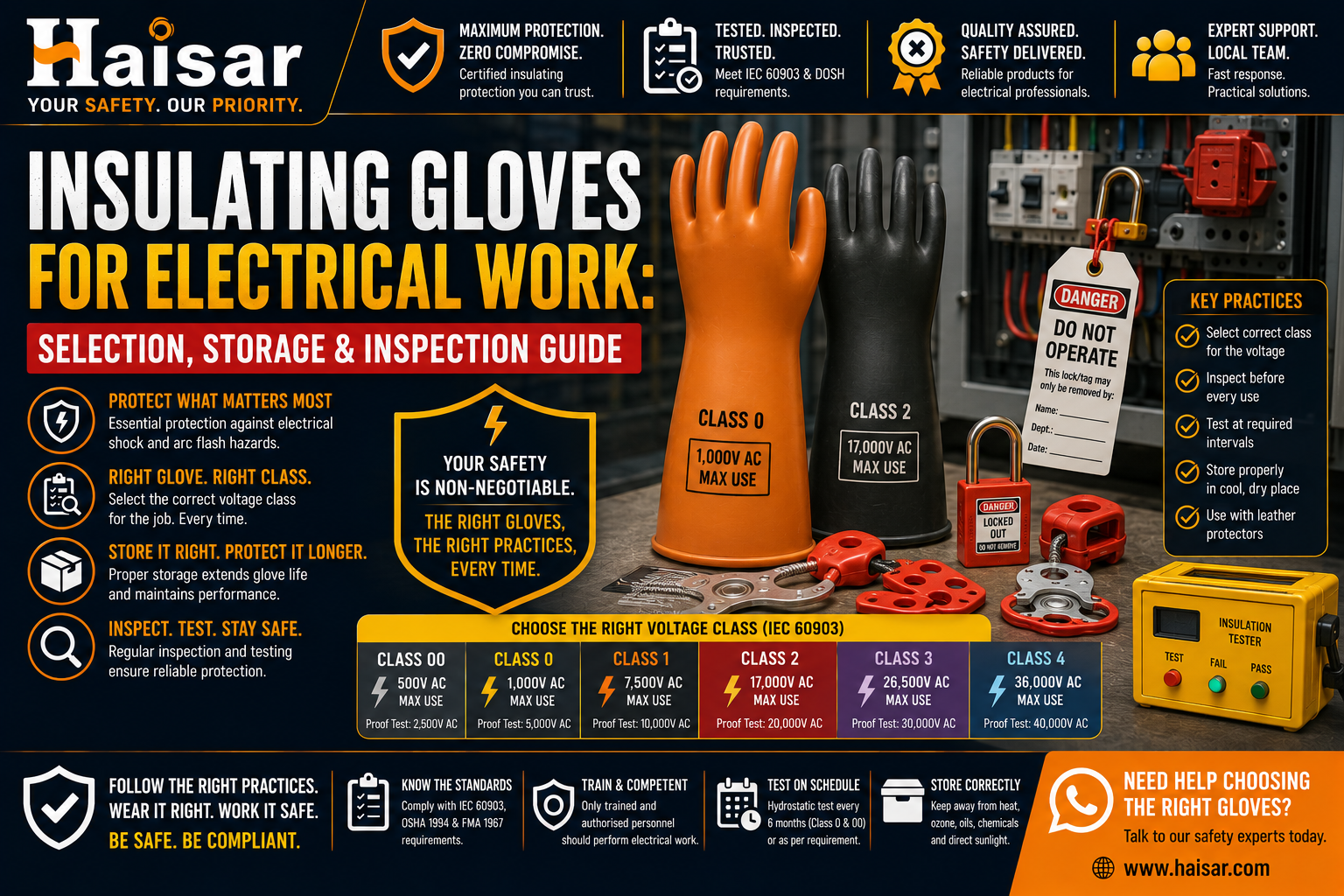
Insulating rubber gloves are the most safety-critical item of hand protection an electrical worker will ever wear. Unlike a cut-resistant glove that protects against a laceration, or a chemical glove that protects against a burn, an insulating glove protects against electrocution. A failure in the glove does not result in a minor injury that prompts a trip to the first aid room. It can result in a fatality.
This is why insulating rubber gloves are subject to a more rigorous selection, storage, and inspection regime than almost any other category of PPE. The glove that performed correctly during testing six months ago may not be safe today if it has developed an undetected pinhole defect, if it has been exposed to oils or solvents that degrade the rubber, or if it has simply exceeded the maximum interval since its last pressure test.
This guide covers everything electricians, electrical contractors, and HSE teams in Malaysia need to know about insulating rubber gloves: how to select the correct voltage class, how to store gloves correctly to preserve their dielectric integrity, and the inspection and testing regime that determines whether a glove can be trusted with a worker's life.
Why Insulating Gloves Are Different From Other PPE
Most PPE failure is visible. A torn cut-resistant glove is obviously torn. A cracked safety helmet is obviously cracked. A failure in an insulating rubber glove's protective capability is frequently invisible. A pinhole defect smaller than a millimetre, undetectable by casual visual inspection, can allow sufficient current to pass through the glove to cause a fatal shock at higher voltage classes. This is why insulating gloves require a specific testing regime, electrical pressure testing, that other PPE categories do not require, and why visual inspection alone is never sufficient to confirm an insulating glove is safe for use.
The other distinguishing characteristic of insulating gloves is that their protective performance degrades progressively from the moment of manufacture, accelerated by use, exposure to oils and solvents, UV exposure, temperature extremes, and ozone exposure. A glove that was perfectly serviceable when issued may no longer provide adequate insulation eighteen months later, even with no obvious external damage, simply through natural rubber degradation.
Voltage Classes: Selecting the Correct Glove
Insulating rubber gloves are classified by their maximum working voltage under IEC 60903, the international standard adopted in Malaysia for electrical insulating gloves. Selecting the correct class for the system voltage being worked on is the foundational decision in electrical glove specification.
Class 00 is rated for a maximum use voltage of 500V AC, with a proof test voltage of 2,500V AC. Appropriate for low-voltage work on systems up to 500V, including some control circuit and instrumentation work.
Class 0 is rated for a maximum use voltage of 1,000V AC, with a proof test voltage of 5,000V AC. This is the standard class for general low-voltage electrical work in Malaysian industrial and commercial facilities, covering standard 230V and 415V distribution systems that represent the majority of low-voltage electrical work across Johor's factories, data centres, and commercial buildings.
Class 1 is rated for a maximum use voltage of 7,500V AC, with a proof test voltage of 10,000V AC. Used for medium voltage work at the lower end of the MV range.
Class 2 is rated for a maximum use voltage of 17,000V AC, with a proof test voltage of 20,000V AC. This is the standard class for work on 11kV switchgear and distribution systems, a common voltage level in Malaysian industrial facility electrical infrastructure and TNB distribution networks.
Class 3 is rated for a maximum use voltage of 26,500V AC, with a proof test voltage of 30,000V AC. Appropriate for 22kV and similar medium-to-high voltage applications.
Class 4 is rated for a maximum use voltage of 36,000V AC, with a proof test voltage of 40,000V AC. The highest standard class, used for work on 33kV systems common in Malaysian utility and large industrial facility infrastructure.
The critical selection principle. The glove class must be rated for a maximum use voltage that exceeds the system voltage being worked on, not merely equal to it. A worker on an 11kV system requires Class 2 gloves rated to 17,000V AC, providing a safety margin above the nominal system voltage. Selecting a glove class based on the nominal voltage alone without the margin built into the standard's class definitions is a specification error.
For Malaysian electrical contractors and facility electrical teams working across multiple voltage levels, maintaining the correct glove class for each task is an operational discipline, not a one-time procurement decision. A team that performs both low-voltage panel work and 11kV switchgear maintenance needs both Class 0 and Class 2 gloves available, correctly identified, and not interchanged.
Glove Materials and Construction
Insulating rubber gloves are manufactured from natural rubber, synthetic rubber compounds, or a combination, selected for dielectric performance, flexibility, and resistance to the specific working environment.
Natural rubber gloves provide excellent flexibility and dexterity, which is valuable for detailed electrical work requiring fine motor control. Natural rubber has good dielectric properties but lower resistance to oils, ozone, and UV exposure than synthetic alternatives.
Synthetic rubber (neoprene or similar) gloves provide better resistance to oils, greases, and ozone exposure, making them more durable in industrial environments where the gloves may contact hydraulic fluid, lubricants, or other contaminants during electrical maintenance work that involves nearby mechanical equipment.
Glove length. Insulating gloves are manufactured in different lengths, measured from the fingertip to the cuff edge, ranging from approximately 270mm for standard work through to 410mm and longer for work where the arm must reach further into equipment or where greater coverage of the forearm is required. Longer gloves are typically used at higher voltage classes where the arc flash and approach distance considerations require greater coverage.
Leather protector gloves. Insulating rubber gloves must always be worn with leather over-gloves, known as protector gloves, during use. The leather protector shields the rubber insulating glove from cuts, abrasion, and punctures that would compromise the dielectric integrity of the rubber. An insulating glove used without a leather protector is exposed to mechanical damage that significantly increases the risk of an undetected defect developing during use. The protector gloves are sized to fit over the insulating glove without restricting hand movement and dexterity.
Storage Requirements for Insulating Gloves
Correct storage is as important as correct selection for maintaining the dielectric integrity of insulating rubber gloves between uses. Poor storage practices are a significant contributor to premature glove degradation in Malaysian industrial environments.
Protect from direct sunlight and UV exposure. UV radiation degrades rubber over time, causing it to become brittle and lose flexibility. Gloves stored in direct sunlight, including gloves left on a vehicle dashboard or stored near a window, degrade faster than gloves stored in a dark or low-light environment.
Protect from ozone exposure. Ozone causes rubber to crack and deteriorate. Common ozone sources in industrial environments include electrical equipment that generates corona discharge, certain electric motors, and some types of lighting. Storing insulating gloves away from electrical switchgear rooms, motor rooms, and areas with ozone-generating equipment extends glove service life.
Avoid contact with oils, greases, and solvents. Petroleum-based products degrade rubber compounds and reduce dielectric performance. Gloves must be stored away from oil and grease contamination and must not be used for tasks involving direct handling of petroleum products without confirming the glove material's chemical resistance is adequate for the contact involved.
Maintain a stable, moderate temperature. Extreme heat accelerates rubber ageing. Extreme cold can make rubber stiff and more susceptible to cracking during use. Malaysian ambient conditions are generally warm and humid, and storage in air-conditioned environments rather than uncontrolled site cabins or vehicle storage compartments preserves glove condition significantly better.
Store flat or loosely folded, not creased. Sharp creases in rubber gloves, particularly at the fingers and palm, create stress points where cracking is more likely to develop over time. Purpose-designed glove storage bags or boxes that hold the gloves in a natural, uncreased shape are the correct storage method. Many manufacturers supply gloves with a dedicated storage bag for this purpose, and using it consistently extends glove service life.
Keep separate from sharp tools and equipment. Storing insulating gloves loose in a tool bag alongside screwdrivers, pliers, and other tools creates puncture risk during storage and transport. Dedicated, padded storage compartments separate from sharp tools prevent this avoidable damage.
Powder and talc inside the glove. Some manufacturers apply a light dusting of talc inside new gloves to ease donning. Excessive moisture or sweat accumulation inside a glove over repeated use without adequate drying between uses can promote degradation. Allow gloves to dry fully between uses and store only when dry.
Inspection Requirements: Before Every Use
Visual inspection before every use is the first line of defence against using a defective insulating glove, though visual inspection alone is not sufficient to confirm dielectric integrity, which is covered in the pressure testing section below.
The air inflation test. Before each use, the glove should be inflated with air, either by rolling the cuff to trap air inside and squeezing, or using a dedicated hand pump inflation device, and then checked visually and by listening for escaping air while gently flexing the inflated glove near the ear. This simple field test can reveal pinholes and small defects that would not be visible on a dry visual inspection alone, though it is less sensitive than a formal electrical pressure test.
Visual inspection for surface damage. Check the entire glove surface for cuts, punctures, embedded foreign material, swelling, discolouration, and any area where the rubber appears thinner or different in texture from the surrounding material. Pay particular attention to the fingers, the area between fingers, and the palm, which are subject to the most mechanical stress during use.
Check for chemical contamination. Discolouration, swelling, or a tacky surface texture can indicate chemical contamination that has begun to degrade the rubber. Any glove showing these signs must be removed from service.
Check the cuff and overall flexibility. A glove that has become stiff, brittle, or shows cracking at the cuff or finger creases has likely suffered UV or ozone degradation and should be removed from service even if no through-defect is immediately apparent.
Inspect the leather protector gloves. The protector gloves must also be inspected before use. Damaged protector gloves expose the insulating glove beneath to the mechanical damage they are designed to prevent.
Any doubt means removal from service. The standard operating principle for insulating glove inspection is that any doubt about the condition of the glove means it must not be used. There is no acceptable risk tolerance for using a glove of uncertain integrity for live electrical work.
Electrical Pressure Testing: The Mandatory Periodic Requirement
Visual and air inflation inspection before each use is necessary but not sufficient. Insulating rubber gloves must undergo formal electrical pressure testing at intervals not exceeding six months to verify that the dielectric integrity of the rubber meets the requirements of its voltage class.
What pressure testing involves. The glove is filled with water or immersed in a conductive medium and subjected to a test voltage corresponding to its class for a specified duration. The test verifies that no current leakage occurs through the glove material above the acceptable threshold for that voltage class. This is a laboratory or specialist testing process requiring calibrated equipment, not a field test that can be performed informally on site.
The six-month maximum interval. Regardless of how lightly used a glove has been, it must not be used beyond six months since its last successful pressure test. Many Malaysian electrical contractors and facility electrical teams maintain a glove rotation system where each glove carries a test date label, and gloves are withdrawn from active use and sent for retesting before the six-month interval expires, with a replacement glove issued from a tested stock to avoid any gap in availability.
Testing after any suspected exposure to excessive electrical stress. Beyond the routine six-month interval, any glove that has been exposed to a fault condition, an arc event, or any situation where it may have been subjected to electrical stress beyond its rated capacity must be pressure tested before being returned to service, regardless of how recently the routine test was conducted.
Documentation and traceability. Pressure test certificates for every glove in service must be maintained and available for inspection. For PETRONAS contractor operations, TNB contractor work, and any regulated industrial electrical work in Malaysia, the test certificate is the documentary evidence that the glove meets the required standard. A glove without a current test certificate, regardless of its visual condition, should not be used for live electrical work.
New glove certification. New insulating gloves are supplied with a manufacturer's test certificate confirming the factory testing performed before sale. This initial certificate establishes the six-month clock for the first periodic retest, not an indefinite validity period.
Replacement Triggers and Service Life
Beyond the routine pressure testing cycle, certain conditions require immediate glove replacement regardless of test status.
Any visible defect identified during inspection. Cuts, punctures, swelling, discolouration, or any abnormality found during pre-use visual or air inflation inspection requires immediate removal from service and replacement, not a decision to continue using the glove until the next scheduled test.
Failed pressure test. A glove that fails its periodic pressure test must be destroyed or clearly marked as non-serviceable and removed from the available stock. It must not be returned to a general storage area where it could be mistakenly issued for use.
Exposure to chemical contamination. Gloves contaminated by oils, solvents, or other chemicals that are known to degrade rubber should be assessed and, in most cases, replaced rather than relied upon for continued service even after cleaning.
Age-based replacement. While insulating gloves do not have a single universal age-based expiry independent of testing, many organisations apply a practical maximum service life guideline, commonly three to five years from manufacture, beyond which gloves are retired from service regardless of test results, reflecting the cumulative effect of ageing on rubber compounds.
Visible wear from leather protector use. Gloves showing wear patterns consistent with extensive protector glove friction, particularly at the fingertips and palm, warrant closer inspection and a lower threshold for replacement decisions.
Practical Glove Management for Malaysian Electrical Teams
For electrical contractors, facility maintenance teams, and HSE departments managing insulating glove inventories across Malaysian industrial sites, the following practical disciplines support a compliant and reliable programme.
Maintain a glove register. Track each glove by a unique identifier, its voltage class, its date of manufacture, its date of last pressure test, and its next due test date. A simple spreadsheet or a dedicated PPE management system both work, provided the register is actively maintained and checked before issue.
Issue gloves with a visible test date. Many organisations use a coloured tag or label system where the colour indicates the testing period, allowing a quick visual check that a glove is within its valid test window without needing to consult the register for every issue.
Establish a retest rotation before expiry. Send gloves for retesting two to four weeks before the six-month expiry to avoid a gap where no tested glove of the required class is available. Maintain enough gloves in the rotation that the testing cycle does not create equipment shortages.
Separate gloves by voltage class in storage. Clear physical separation and labelling of Class 0 gloves from Class 2 gloves and other classes prevents the wrong class being issued for a task by mistake, particularly under time pressure.
Train workers in field inspection technique. The air inflation test and visual inspection technique should be part of every electrical worker's basic competency, reinforced through periodic refresher training, not assumed knowledge from initial onboarding.
Haisar Supply and Services: Electrical Insulating Gloves Supplier in Malaysia
Haisar Supply and Services supplies voltage-rated insulating rubber gloves across all classes from Class 00 through Class 4 for electrical contractors, facility maintenance teams, and industrial operations across Johor and peninsular Malaysia. Our range covers natural rubber and synthetic rubber constructions, multiple glove lengths, and matching leather protector gloves sized for use over each insulating glove.
We supply with current manufacturer test certificates for all insulating gloves and can advise on the correct voltage class for your specific electrical system voltage. Our team can also advise on establishing a pressure testing rotation and glove management programme appropriate for your electrical team's operational requirements.
Get a Quote for Insulating Gloves
Contact our team with your system voltage, workforce size, and glove management requirements and we will recommend the correct class, construction, and quantity for your electrical safety programme in Johor and across Malaysia.
Browse Electrical Safety and Hand Protection Products at haisar.com
Haisar Supply and Services Sdn Bhd (985158-T) | Kulai, Johor, Malaysia | www.haisar.com
