Can't find what you're looking for? Get in touch!



- Introduction
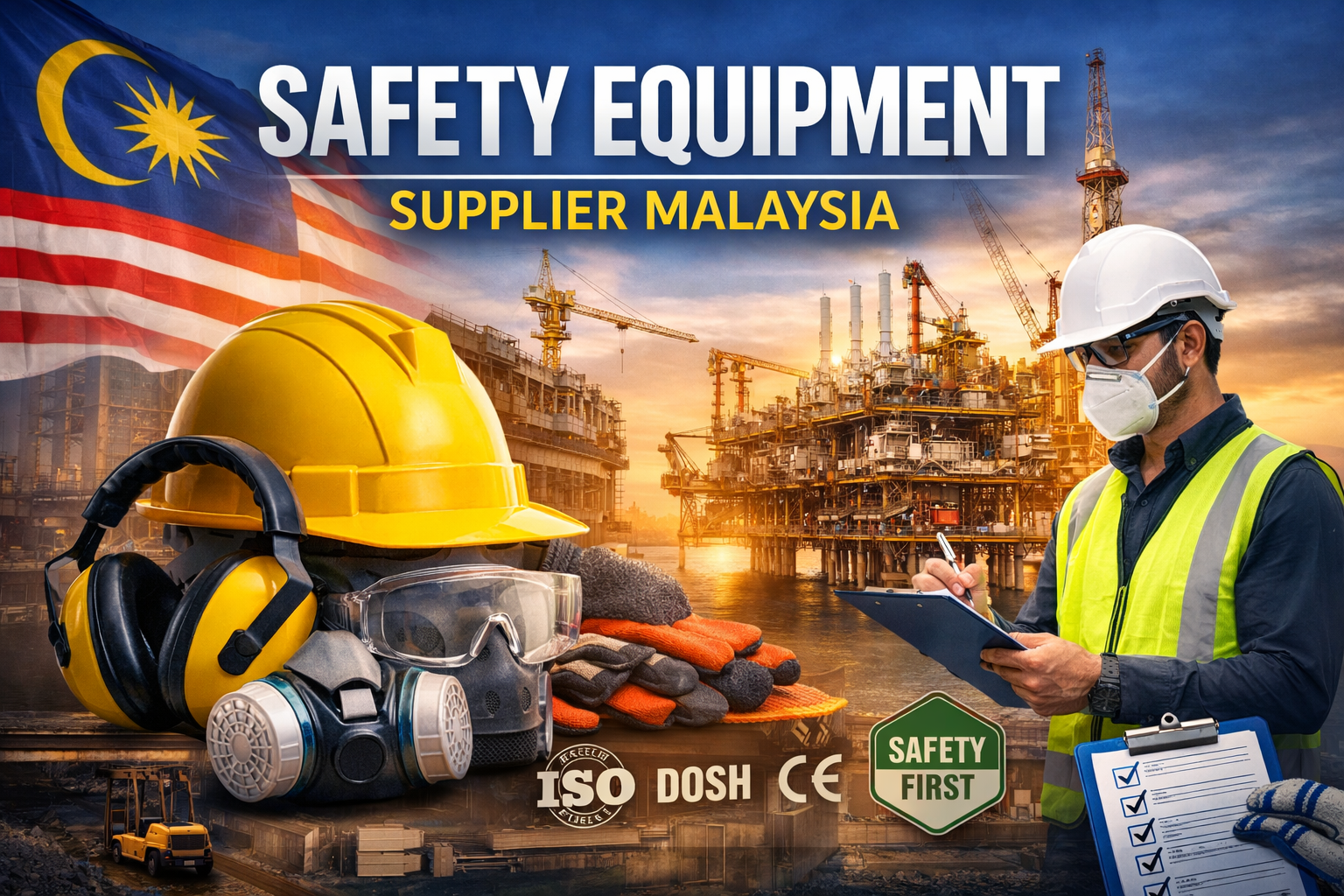
Looking for a safety equipment supplier in Malaysia? Learn what suppliers do, the latest OSHA (Act 514) compliance updates, penalties, and how to choose reliable PPE and industrial safety products plus tips for quotes and tenders. If you manage safety or procurement, you already know this: safety gear isn’t “extra.” It’s the seatbelt of your workplace. A reliable safety equipment supplier in Malaysia helps you protect people, pass audits, and keep projects moving without last-minute panic buying or compliance gaps.
- What Is a Safety Equipment Supplier in Malaysia?
A safety equipment supplier is a business that sources, stocks, and supports workplace protection products things like PPE, fall arrest systems, eye/face protection, respiratory gear, and safety signage. Many suppliers also do the “behind-the-scenes” work that matters just as much: helping you pick the right spec, providing documentation, and advising on standards.
Think of a supplier like a good mechanic not just selling parts, but making sure the parts actually fit your “machine” (your site, your hazards, your workforce, your SOPs). A strong safety gear supplier Malaysia typically supports multiple industries and understands local compliance expectations, so you don’t end up with the wrong glove rating, the wrong respirator filter, or missing paperwork during inspection.
- Why Businesses Need Reliable Safety Equipment Suppliers

A reliable supplier saves you from three painful problems:
- Risk: Wrong or low-quality gear can fail at the worst moment.
- Delays: Out-of-stock PPE can stop work, especially for high-risk tasks like confined space entry or work at height.
- Non-compliance: Missing certificates, unclear standards, or poor documentation can turn a small issue into a big penalty.
In practice, many teams don’t just need a shop. They need a partner who can support purchases across sites, provide consistent brands and sizing, and respond fast when a project ramps up. That’s why companies often look for a ppe distributor Malaysia with both product depth and technical support—especially when they must meet tender requirements or internal audit standards.
- Malaysia-Specific Workplace Safety Laws & Penalties
Malaysia’s workplace safety framework has become stricter and broader in recent years, especially with updates tied to the Occupational Safety and Health Act 1994 (Act 514) and the Occupational Safety and Health (Amendment) Act 2022 (Act A1648).
4.1 OSHA updates apply broadly
One of the biggest shifts: the amended OSHA applies to all places of work throughout Malaysia, including public services and statutory authorities, with limited exceptions. osh-isis.com+1
Just as important: the Amendment Act was set to come into operation on 1 June 2024 (not “someday later”). Skrine - Advocates & Solicitors+1
What this means on the ground:
Even if your workplace used to sit outside the “usual” industrial list, the baseline duties (policy, hazard control, training, cooperation, PPE use) now matter across the board. So the supplier you choose can’t be “just a store”—they need to understand compliance expectations across different work environments.
Also, enforcement is not theoretical. Malaysia’s Department of Occupational Safety and Health (DOSH) carries out enforcement activities to ensure safety and health at work. Dosh
4.2 Mandatory safety roles and risk assessments
Two practical requirements that often affect purchasing and documentation:
- A) Risk assessment is now explicitly required
Under Section 18B, employers, self-employed persons, or principals must conduct a risk assessment for safety and health risks and implement controls where needed. The Act even defines risk assessment as evaluating hazards and deciding control measures. osh-isis.com
This matters for procurement because your risk assessment should drive your PPE and safety equipment choices. For example:
- If you identify splash risk from chemicals, you may need chemical goggles + face shield + chemical-resistant gloves (not basic cotton gloves).
- If your assessment flags silica dust exposure, you may need a respirator program and the right filter class—plus fit testing where applicable.
- B) Safety roles: SHO, OSH Coordinator, and Safety & Health Committee
- Some workplaces must appoint a Safety and Health Officer (SHO) under Section 29, depending on class/type published by the Minister. osh-isis.com
- If your workplace is not in the class that requires an SHO, and you have five or more employees, you must appoint an Occupational Safety and Health Coordinator (Section 29A). osh-isis.com
- If you employ 40 or more persons, you must establish a Safety and Health Committee (Section 30), or if directed by the Director General. osh-isis.com
A good supplier supports these requirements by providing training guidance, product selection aligned to hazards, and documentation you can use in committee discussions or audits.
4.3 Designated plants require Certificates of Fitness
If you operate certain higher-risk “plants” (think boilers, pressure equipment, hoisting systems), the law now expects a tighter control approach.
The amended OSHA includes provisions to prescribe plant requiring a Certificate of Fitness (CF) (Section 27B) and rules that you must not operate prescribed plant without a CF (Section 27D). osh-isis.com
In practice, suppliers often support this area by providing compliant accessories, inspections support contacts, and correct specification for parts that affect safety (like pressure relief components, safety hooks, harness anchor devices, etc.). DOSH resources also highlight CF needs for equipment like steam boilers and pressure vessels and outline the CF process. Health and Safety Department+1
4.4 Penalties for non-compliance are stricter
This is where many companies get surprised.
- A) Core duty breaches can be very costly
If a person contravenes key duty sections (including sections 15, 16, 17, 18, 18A, or 18B), the penalty can be a fine up to RM500,000 or imprisonment up to two years, or both (Section 19). osh-isis.com - B) Ignoring official notices can add daily fines
Failing to comply with an improvement or prohibition notice can bring up to RM500,000 and/or up to two years’ imprisonment, plus a further RM2,000 per day for continuing offences. osh-isis.com - C) Plant operation without compliance can escalate
Operating prescribed plant without a CF can be an offence and if you ignore a prohibition notice related to plant operation, penalties can reach the same RM500,000 / two years osh-isis.com
Bottom line: compliance isn’t just “paperwork.” It’s operational. A supplier that understands documentation, standards, and audit-readiness becomes a real business advantage.
- Industries That Rely on Safety Equipment Suppliers in Malaysia

5.1 Construction and Infrastructure
Construction teams need consistent PPE, high-visibility gear, head protection, and strong fall protection systems especially with frequent contractor movement and changing site hazards.
5.2 Manufacturing and Industrial Facilities
Manufacturing sites often deal with machine hazards, noise, chemicals, hot work, and repetitive tasks. Reliable restocking and correct specs matter because one wrong glove or visor can disrupt production.
5.3 Oil, Gas, and Energy Sector
Higher-risk environments demand tighter PPE control: flame-resistant clothing, gas detection support, respiratory protection, and strict compliance documentation for audits and client requirements.
5.4 Warehousing, Logistics, and Transportation
These workplaces often need safety shoes, cut-resistant gloves, high-vis vests, and traffic safety controls. Because turnover can be high, you need easy sizing, quick delivery, and training support.
- Types of Safety Equipment Supplied in Malaysia

6.1 Personal Protective Equipment (PPE)
PPE is your “last line of defense,” like an umbrella in heavy rain it helps, but you still need hazard controls. A good supplier helps you match PPE to hazards, not preferences.
For a quick checklist of what most workplaces should have, see PPE essentials.
If you want to browse product categories directly, explore a full PPE range.
6.2 Head, Eye, and Face Protection
Helmets, safety goggles, face shields, welding shields these protect against impact, splash, and flying particles. The key is choosing the right rating and fit for real work conditions.
6.3 Hand and Foot Protection
Gloves and safety footwear come in many grades. A reliable supplier won’t just ask “size?” they’ll ask “what hazard?” (chemical, cut, heat, vibration, slip risk).
6.4 Respiratory Protection Equipment
Respirators are not one-size-fits-all. You must match filters to hazards (dust vs. organic vapors vs. acid gases). A supplier can help you avoid costly “wrong filter” mistakes.
6.5 Fall Protection and Height Safety Gear
Working at height needs harnesses, lanyards, lifelines, anchor points, and rescue planning not just a harness. If you handle height work, check dedicated fall protection solutions.
- Safety Standards and Certifications in Malaysia
7.1 DOSH and Malaysian Regulatory Requirements
DOSH is central to workplace safety enforcement and compliance support in Malaysia. Dosh
In practice, your supplier should help you maintain records like product datasheets, certificates, and traceability so you can show that your PPE is suitable for the hazards identified.
7.2 International Standards (ISO, ANSI, EN)
Many safety products in Malaysia align with international standards:
- ISO standards (often management systems and product-specific standards)
- ANSI standards (common in eye/face and other protective equipment)
- EN standards (common in gloves, footwear, fall protection, respirators)
You don’t need to memorize every code. You just need a supplier who can explain, in plain language, what the standard means for protection and whether it fits your job risks.
7.3 Product Testing and Compliance Documentation
This is where strong suppliers stand out. They can provide:
- Certificates and test reports (where applicable)
- Product datasheets and usage limitations
- Guidance on storage, expiry, and replacement planning
This support is especially valuable during safety equipment tender supplier Malaysia evaluations, where documentation often decides who passes pre-qualification.
- Benefits of Working With a Local Safety Equipment Supplier
A local partner usually gives you:
- Faster delivery when urgent PPE runs low
- Better support for on-site needs (sizing, trials, substitutions)
- Local compliance familiarity (common DOSH expectations, audit patterns)
- Easier communication for quotation revisions, tender timelines, and emergency restocking
If your teams work across multiple sites, a local supplier can also standardize brands and specs so workers don’t get a different glove type every month.
- How to Choose the Right Safety Equipment Supplier in Malaysia
9.1 Product Quality and Certification
Ask for product documentation and clarity on standards. If a supplier avoids documentation questions, treat that as a red flag.
9.2 Industry Experience and Track Record
Suppliers who understand your industry can recommend practical options (e.g., heat-resistant gloves that still allow dexterity, or safety shoes suited for oily floors).
9.3 Range of Products and Custom Solutions
The best suppliers support both daily PPE and specialized items. This reduces vendor juggling and improves consistency.
9.4 Stock Availability and Delivery Capability
Stock is a compliance issue. If your respirators are out of stock when needed, work may stop or worse, people work unprotected. Ask about lead times and backup options.
9.5 Technical Support and After-Sales Service
A good supplier helps with product training, correct use, and replacements. This is also where you’ll get smoother safety equipment quotation Malaysia workflows because the supplier already knows your specs and usage patterns.
- Common Mistakes When Selecting a Safety Equipment Supplier
10.1 Focusing Only on Price
Cheap gear can become expensive fast through frequent replacement, worker complaints, or injury risk. Focus on value, not sticker price.
10.2 Ignoring Compliance and Documentation
In audits and tenders, missing documents can disqualify you even if the product is “good.” Build documentation into your buying process.
10.3 Overlooking Supplier Support and Training
PPE fails when people don’t wear it properly. Supplier-led toolbox talks and user guidance reduce misuse and improve adoption.
- How Safety Equipment Suppliers Support Workplace Compliance
Strong suppliers support compliance by:
- Aligning product recommendations with your risk assessment (Section 18B). osh-isis.com
- Providing documentation for audits and tenders
- Helping standardize PPE rules across contractors and sites
- Advising on replacement cycles (so expired items don’t slip into use)
- Supporting critical categories like prescribed plant compliance and CF-related requirements where relevant osh-isis.com
- Trends in the Malaysian Safety Equipment Market
12.1 Smart and Connected PPE
Some sites now use smart helmets, connected gas detectors, and wearables that track exposure or fatigue—helpful for high-risk operations.
12.2 Increased Focus on ESG and Worker Welfare
Safety is increasingly tied to ESG reporting and client expectations. Staying compliant is not only about avoiding penalties—it’s about reputation and worker retention.
12.3 Demand for Industry-Specific Safety Solutions
Instead of “generic PPE,” companies want solutions tailored to tasks: chemical handling kits, hot work sets, confined space packages, height safety systems, and more.
- Cost Considerations When Purchasing Safety Equipment
Cost is more than the unit price. Consider:
- Replacement frequency (durability matters)
- Fit and comfort (poor fit reduces usage)
- Training time and misuse reduction
- Downtime risk from stockouts
A good supplier helps you control total cost by standardizing specs and forecasting usage. When you need a clean comparison for management, request a detailed safety equipment quotation Malaysia that breaks down standards, pack sizes, and lead times.
- How to Build a Long-Term Partnership With a Safety Equipment Supplier
Treat your supplier like part of your safety system:
- Share your hazard profile and risk assessment outcomes
- Standardize preferred brands and specs
- Schedule quarterly reviews (usage, incidents, new site needs)
- Keep documentation organized for audits and tender submissions
This makes future purchases faster and more consistent especially when projects scale up suddenly.
- Why Choose Haisar Supply and Services as Your Safety Equipment Supplier in Malaysia
If you want a supplier that can support both day-to-day PPE and project-based needs, Haisar Supply and Services is positioned as a practical option especially if you value clear product categories, compliance-friendly documentation, and fast quotation support.
When you’re ready to price a bundle, tender list, or restock plan, you can get a quote and request the items by category (PPE, working at height, etc.). This is helpful for teams who need a quick turnaround for procurement approvals or tender submissions.
- Frequently Asked Questions
16.1 What certifications should safety equipment have in Malaysia?
Look for products that clearly state the relevant standard (ISO/EN/ANSI, depending on the category) and come with supporting documentation (datasheets, test reports where applicable). For regulated areas like prescribed plant, follow DOSH requirements and official processes. Dosh+1
16.2 Is imported safety equipment acceptable under Malaysian law?
Imported products can be acceptable if they are fit for purpose, meet relevant standards, and you can support them with proper documentation. The key is suitability to hazard and traceable compliance not where the product was made.
16.3 How often should PPE be replaced in industrial settings?
It depends on usage and hazard level. Disposable items (like many masks) may be daily/weekly. Helmets, harnesses, and respirators follow manufacturer guidance, inspection schedules, and wear conditions. A supplier can help you build a replacement plan tied to site reality.
16.4 Can safety equipment suppliers provide on-site assessments?
Many suppliers can support walk-throughs or basic needs assessments, especially for PPE selection and standardization. For formal risk assessment duties, ensure your internal team or competent persons handle requirements under Section 18B. osh-isis.com
16.5 What is the difference between PPE distributors and manufacturers?
Manufacturers produce the equipment. Distributors (including many suppliers) source and supply multiple brands, keep stock, and provide after-sales support. A strong distributor adds value through selection advice and compliance documentation.
16.6 How do suppliers ensure product compliance with DOSH standards?
They typically provide standards-based product specs, documentation, and guidance aligned to audit needs. DOSH enforces and promotes compliance across workplaces. Dosh
16.7 Are customized PPE solutions available for specific industries?
Yes common examples include custom sizes, branding, chemical-specific glove programs, or industry-specific PPE sets (hot work, confined space, height safety kits).
16.8 What factors affect the cost of safety equipment in Malaysia?
Quality grade, standard ratings, durability, certification/documentation, order volume, and lead time all affect cost. Bundled purchasing and standardization often reduce overall spend.
What is the Act 514 law of Malaysia?
Act 514 is the Occupational Safety and Health Act 1994, Malaysia’s core law for workplace safety and health. It sets out duties for employers, employees, and others to protect safety and health at work. legal.usm.my
What are the safety legislation and regulation in Malaysia?
Malaysia’s OSH framework includes Acts (like OSHA), plus regulations, orders, and guidelines under DOSH oversight. DOSH also publishes lists of regulations under Act 514 and carries out enforcement activities. Dosh+1
Who is responsible for providing safety equipment?
Under OSHA’s self-regulation approach, employers (and relevant responsible parties) must protect workers and manage risks including providing appropriate protective equipment and controls as part of safe work arrangements. legal.usm.my+1
What is the OSHA policy in Malaysia?
In Malaysia, “OSHA policy” usually refers to your workplace safety and health policy. Under Section 16, employers and self-employed persons must prepare and review a written safety and health policy statement and communicate it to employees (with certain exceptions as may be prescribed). legal.usm.my
