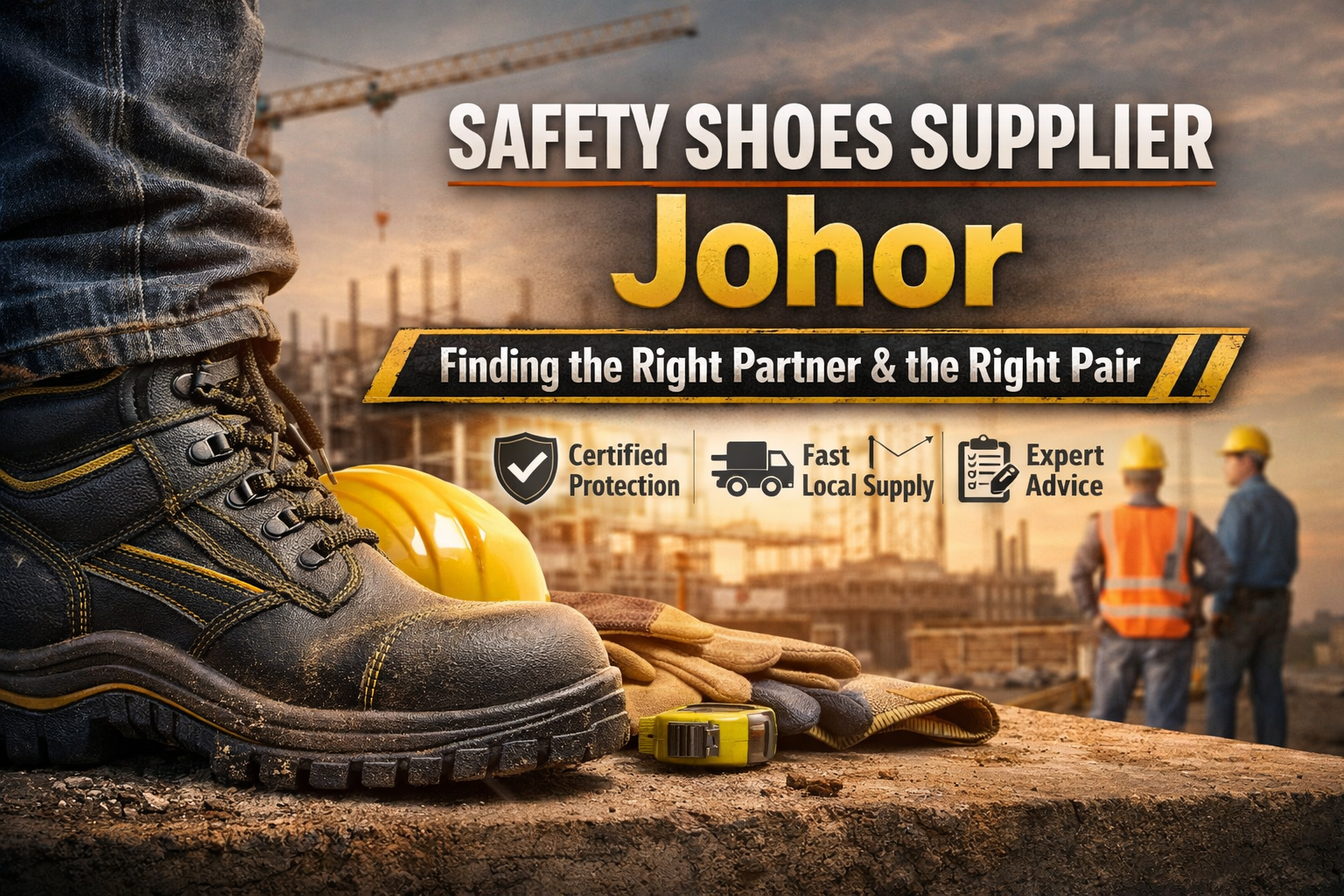
1. Why finding a reliable safety shoes supplier in Johor matters
In Johor, projects move fast. When schedules tighten, small problems become expensive problems especially when they involve safety. Safety shoes are not “just footwear.” They are PPE that protects your people from slips, sharp objects, heavy drops, and site conditions that change by the hour.
A reliable safety shoes supplier helps you do two things at once: reduce injury risk and keep work moving. The right supplier also saves you from last-minute “size-not-available” panic, inconsistent models, and paperwork that does not stand up to audits.
This guide walks you through what to look for both in the shoes and in the supplier so you can buy once, standardize well, and avoid repeat issues.
WhatsApp us for a quick quote
1.1 Who this guide is for

If you are responsible for safety footwear decisions whether for a small crew or multiple sites this is for you. You already know the basics of PPE and compliance. What you usually need is practical clarity:
- Which safety ratings match which hazards
- Which shoe types work for Johor’s common site conditions
- How to buy for teams without sizing chaos
- How to compare suppliers beyond “cheapest price”
Think of this as a field guide: short explanations, clear checklists, and buying steps you can apply immediately.
1.2 Common buying mistakes in Johor projects
Most problems come from a few repeat mistakes:
Mistake 1: Buying by price only. A cheaper pair that fails early (or causes discomfort) can cost more through replacements, downtime, and complaints.
Mistake 2: Not matching hazards to the rating. Many teams buy “any safety shoe,” then discover it is wrong for wet floors, sharp debris, or outdoor work.
Mistake 3: No sizing plan. Bulk buying without fit trials leads to exchanges, delays, and wasted stock.
Mistake 4: Mixing too many models. When everyone wears a different shoe, reorders become messy and inconsistent.
Mistake 5: Weak documentation. If the supplier cannot provide clear compliance info, it creates audit headaches later.
- What a safety shoes supplier does
A good safety shoes supplier is more than a store that sells boots. In practice, the supplier should help you:
- Translate hazards into specifications (rating, outsole type, toe cap, midsole protection, water resistance)
- Offer the right categories and sizes consistently (so you can standardize)
- Support bulk purchasing (fit trials, exchanges, reorder planning)
- Deliver fast and reliably across Johor locations
- Back the product with warranty guidance and after-sales support
- Provide documentation you can keep for safety files and procurement records
If you want a quick starting point for available options, browse the Feet Protection category to see typical safety footwear ranges and types.
- Key industries in Johor that need safety shoes
Johor’s economy is built on active worksites each with different “foot risks.” The right supplier understands these environments and can recommend models that match them.
3.1 Construction and infrastructure
Construction sites often combine: uneven ground, wet patches, sharp debris, and heavy tools. Shoes usually need strong grip, toe protection, and puncture resistance, plus ankle support if the ground is rough.
3.2 Manufacturing and factories
Factories can involve: smooth floors, oil exposure, machine edges, and long standing hours. Comfort matters here because fatigue leads to mistakes. You typically need slip resistance, durable uppers, and good cushioning.
3.3 Warehousing and logistics
Warehouses involve: fast movement, pallet handling, and repetitive walking. Footwear needs to feel light but still protect from falling loads and slippery zones especially near loading bays.
For deeper role-by-role guidance, you can link readers to a supporting reference like By Industry.
- Benefits of buying from a local Johor supplier
Buying locally is not only about convenience. It reduces operational risk.
4.1 Faster delivery and stock availability
Local supply means fewer “waiting days” when something runs out. If a site expands headcount, you can restock faster. This matters because safety shoes are not optional if you cannot issue proper footwear, work slows down or stops.
A local supplier also tends to understand which sizes move fastest and can keep practical stock levels, not just “display items.”
4.2 On-site sizing and fitting support
Sizing is where bulk orders succeed or fail. Two people can wear the same size number but need different width or fit style. A supplier that supports fit trials helps you avoid a painful cycle of returns.
A good approach is simple:
- Run a short sizing session for each crew group
- Test 1–2 approved models
- Confirm comfort after a few hours of wear
It is like choosing a helmet: it must fit properly, or it becomes a problem instead of protection.
4.3 Easy warranty and replacement process
Footwear is used hard. If a sole separates, stitching tears, or defects appear early, you want a clean process: clear warranty terms, quick assessment, and fast replacement.
Local support usually means you can resolve issues without long shipping delays or back-and-forth arguments. This reduces friction for both procurement and site supervisors.
4.4 Better support for urgent site needs
When a project timeline shifts, you may need extra pairs immediately—especially common sizes. A nearby supplier can often support urgent top-ups and help you avoid site delays.
- How to choose the right safety shoes for your work
Selecting safety shoes is like selecting a tool: you match the tool to the job. Below is a simple, repeatable method.
If you want an additional reference for features and selection tips, link to a broader guide such as Safety Shoes Guide.
5.1 Step 1: Match shoes to site hazards
Start with hazards, not brands. Ask:
- Are floors often wet or oily?
- Is there sharp debris like nails, metal scraps, or rebar?
- Do workers face heavy drops or rolling objects?
- Is work mostly outdoor or indoor?
- Are there hot surfaces, welding sparks, or heat exposure?
Then translate hazards into features:
- Wet/oily floors → high slip resistance, suitable outsole compound
- Sharp debris → puncture-resistant midsole
- Heavy drops → toe protection and strong upper
- Outdoor works → durable build and water resistance
- Hot work → heat-resistant outsole when required
A practical tip: walk the site. If your shoes slip during a quick check, your team will slip during a long shift.
5.2 Step 2: Choose the right safety rating (S1, S1P, S2, S3)
Safety ratings help you standardize. In simple terms:
- S1: Basic protection (often includes toe protection and anti-static features) for drier indoor environments.
- S1P: S1 + puncture resistance (useful for sites with sharp debris).
- S2: Adds water resistance (often better for wet conditions, depending on design).
- S3: Stronger all-round choice for many sites—commonly includes toe protection, puncture resistance, and better outsole properties.
Think of ratings like vehicle categories: a sedan can handle city roads, but you do not send it into a muddy construction zone when you need a 4x4.
5.3 Step 3: Pick toe protection (steel vs composite)
Toe protection is often non-negotiable.
- Steel toe: Classic choice, strong and widely used.
- Composite toe: Lighter and does not conduct electricity the same way steel can; often preferred when weight and comfort are priorities.
Selection is usually about site needs and comfort expectations, not “which is better.” If workers complain about weight and fatigue, composite toe options can reduce resistance to wearing the shoes properly.
5.4 Step 4: Check outsole needs (slip, oil, heat)
Outsoles are your “tire grip.” If the outsole fails, the shoe fails.
Key checks:
- Slip resistance for smooth floors, rain, and oily zones
- Oil resistance for workshops and industrial areas
- Heat resistance for hot work conditions (when applicable)
- Tread pattern that suits the environment (deep tread for rough ground; stable tread for smooth surfaces)
A simple analogy: you would not use racing tires on a muddy road. Same idea.
5.5 Step 5: Prioritize comfort for long shifts
Comfort is not a luxury comfort is compliance. If shoes are painful, workers will loosen laces, swap footwear, or stop wearing them properly.
Look for:
- Good cushioning and support
- Breathable materials for humid days
- Correct sizing and width options
- Weight that suits long walking/standing roles
A good supplier helps you test fit and choose models that people will actually wear.
- Types of safety shoes commonly supplied in Johor
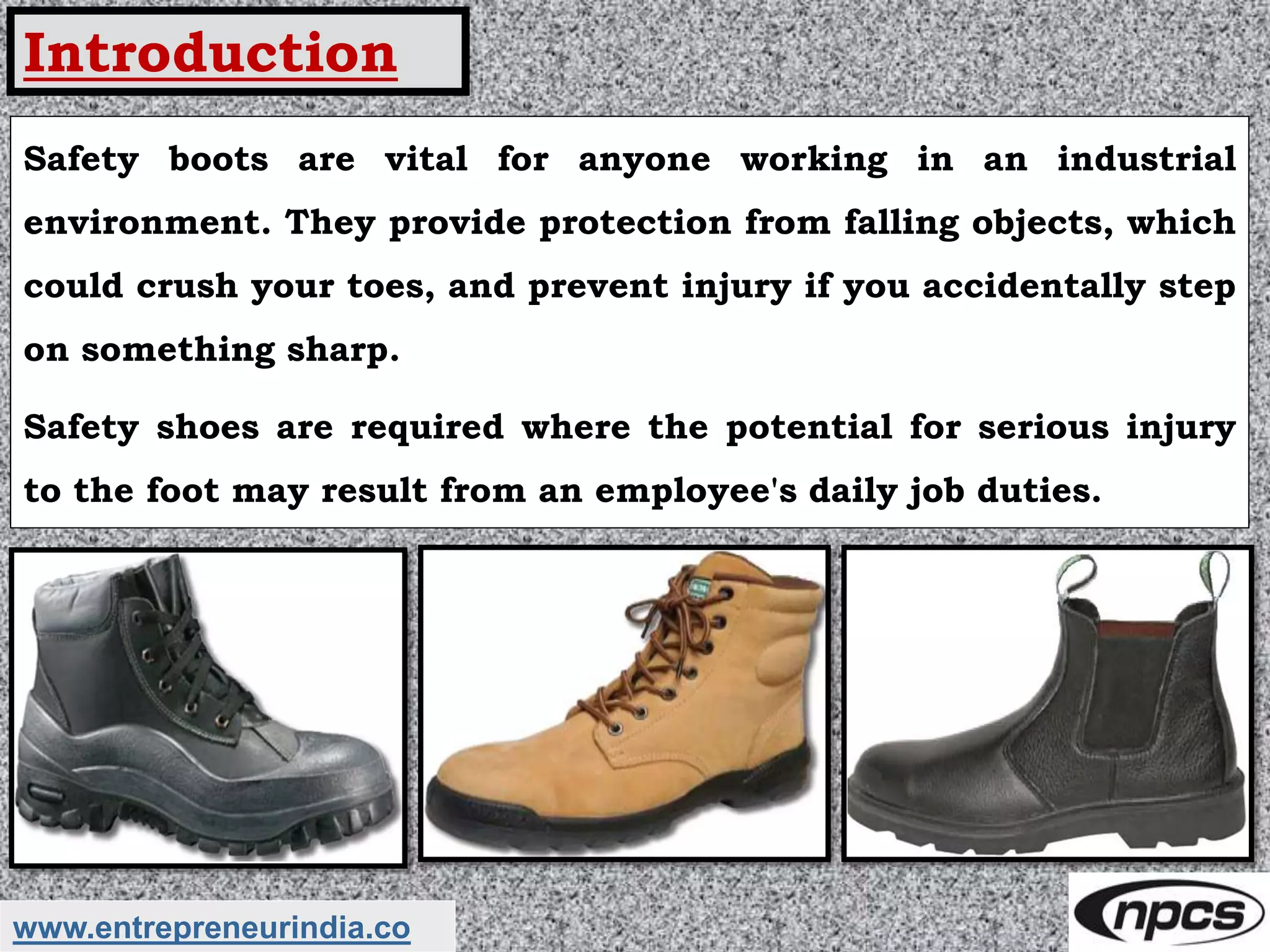
Most suppliers in Johor offer these practical categories. Choosing the right type helps you standardize and simplify reorders.
6.1 Low cut safety shoes
Best for many indoor roles: factories, warehouses, and logistics. Low cut shoes often feel lighter and allow easier movement. They are useful when:
- The ground is mostly even
- The job involves lots of walking
- Ankle support is not the main concern
They can still include toe protection and puncture resistance, depending on model and rating.
6.2 Mid cut safety shoes
Mid cut options balance flexibility and ankle support. They often fit mixed environments some indoor work, some outdoor walking. Mid cut is popular when:
- Floors vary (smooth inside, rough outside)
- Work includes carrying loads and climbing
- You want added ankle stability without “heavy boot” fatigue
6.3 High cut safety boots
High cut boots are common for heavy-duty and outdoor work. They provide stronger ankle support and often pair well with rough terrain. They suit:
- Construction and infrastructure sites
- Outdoor maintenance work
- Wet or uneven ground conditions
High cut does not automatically mean “better,” but it often means “more support” for challenging ground.
6.4 Waterproof and outdoor safety boots
For outdoor sites during rainy periods, waterproof boots reduce discomfort and skin issues caused by constant wet socks. Look for:
- Water-resistant uppers
- Sealed seams (when available)
- Outsole grip designed for wet ground
Be realistic: “water resistant” is not always “fully waterproof.” A good supplier should explain the difference clearly.
6.5 ESD and anti-static safety shoes
These are important in environments with sensitive electronics or where static control matters.
- Anti-static helps reduce static build-up in general environments.
- ESD footwear is designed for more controlled static discharge conditions.
If you see searches like “ESD safety shoes Johor” or “anti-static safety shoes Malaysia,” it usually signals controlled work areas or electronics-related processes.
- What to check before you buy (quality checklist)
Before you commit especially for bulk purchases use this checklist. It reduces surprises after delivery.
7.1 Certification and compliance labels
Ask for clear, consistent information:
- Safety rating (S1/S1P/S2/S3)
- Slip resistance markings (where applicable)
- Any ESD/anti-static identification
- Product documentation that matches the model delivered
A practical rule: if the supplier cannot explain the rating simply, treat it as a red flag.
7.2 Material quality and stitching
Look at the shoe like you would look at a safety harness details matter:
- Clean stitching without gaps
- Strong bonding between upper and sole
- Durable toe area protection
- Material that matches the environment (e.g., tougher uppers for rough sites)
7.3 Midsole puncture protection (steel vs fabric)
If your site has nails, sharp metal, or debris, puncture resistance matters.
- Steel midsole: traditionally strong; can add weight.
- Fabric/kevlar-type midsole: lighter; can improve comfort, depending on design.
Either can work if it matches the hazard profile and the shoe rating.
7.4 Grip test: outsole pattern and compound
Do a simple, practical check:
- Press the outsole; it should not feel overly hard and slippery
- Look at tread pattern; does it fit your floor type?
- Consider where the job happens (oil, rain, smooth epoxy floors)
It is like checking a ladder’s feet: if the base slips, the rest does not matter.
7.5 Size accuracy and fitting policy
For bulk orders, confirm:
- Size chart consistency across models
- Exchange process (time window, conditions)
- Whether the supplier supports fit trials
- How they handle odd sizes and special requests
A supplier with a clear exchange process saves you time and reduces friction with site teams.
- How to compare suppliers in Johor
Supplier comparison should be more than “who is cheapest.” Use a balanced scorecard: range, reliability, support, and speed.
8.1 Stock range and brand options
A good supplier can offer:
- Low/mid/high cut options
- Common safety ratings
- Multiple fit styles (to suit different feet)
- Continuity for repeat orders (same model availability)
A wide range matters because one shoe does not fit every job role.
8.2 Pricing: contract vs retail
Ask for clarity:
- Retail vs bulk pricing tiers
- Contract pricing for repeat orders
- What is included (delivery, exchange support, documentation)
Sometimes the best deal is not the lowest unit price—it is the lowest total friction.
8.3 Delivery coverage (JB, Kulai, Pasir Gudang, Pontian, etc.)
Delivery is where plans succeed or fail. Confirm:
- Delivery cut-off times
- Typical lead times by location
- Options for urgent restocks
- Packaging and labeling (helpful for distribution to crews)
8.4 After-sales support and returns
Support matters after the invoice is paid. Check:
- Warranty handling
- Exchange process
- Responsiveness to issues
- Clear communication (no guessing games)
8.5 Ability to handle bulk orders
Bulk capability is a real difference-maker. Ask if they can:
- Support fit trials
- Consolidate sizes and labeling
- Provide reorder support
- Keep steady stock for your approved models
If you want supporting context for evaluating broader PPE supply reliability, a relevant internal reference is PPE Supplier.
- How to buy safety shoes for a team (bulk purchase guide)
Bulk buying can be smooth or painful. Here is a process that keeps it smooth.
9.1 Step 1: Collect job roles and hazard profiles
Group people by work type:
- Heavy site work (construction/outdoor)
- Indoor production/factory work
- Warehouse/logistics
- Mixed role supervisors
Then match each group to hazard needs. This helps you avoid buying one “average” shoe that fits no one.
9.2 Step 2: Run a sizing day and fitting trial
Do a short fitting session:
- Confirm size and width
- Let workers walk and bend
- If possible, trial for a few hours
This reduces exchange rates and complaints. It also shows you respect comfort and compliance both matter.
9.3 Step 3: Standardize 2–3 approved models
Aim for a short approved list:
- Model A for heavy outdoor work
- Model B for indoor production
- Model C for warehouse/light duty (optional)
This makes reorders simple. It also helps with consistent appearance and predictable budgeting.
9.4 Step 4: Plan for spares and replacements
Plan spares like you plan spare helmets:
- Keep a buffer of common sizes
- Set a replacement rule (e.g., heavy wear roles replace earlier)
- Track issues (sole wear, toe damage, upper tears)
9.5 Step 5: Set a reorder system
Set a simple system:
- Who approves reorders
- Minimum stock level by size
- Monthly or quarterly review
- Preferred delivery schedule
This turns footwear into a controlled supply chain item, not a last-minute scramble.
- Delivery, lead times, and service expectations in Johor
Delivery is part of safety performance. If footwear arrives late, compliance suffers.
10.1 Same-day vs next-day delivery scenarios
Same-day delivery may work when:
- The supplier has local stock
- The sizes are common
- The request is placed early
Next-day is more realistic for:
- Larger quantities
- Multiple site locations
- Mixed sizes and models
Clarify cut-off time. A “fast supplier” is one that gives clear timelines, not vague promises.
10.2 Typical lead times for special sizes
Special sizes or less common models may require extra time. Plan ahead for:
- Very small or very large sizes
- Extra wide fits
- Specialty footwear (ESD-specific, certain materials)
If you standardize models early, lead times become predictable.
10.3 How to avoid project delays
Three simple habits prevent delays:
- Keep a buffer stock for common sizes
- Standardize models and document specs
- Reorder before stock hits zero (set a minimum level)
If you treat safety shoes like critical spare parts, downtime drops.
- Care and maintenance to extend shoe lifespan
Safety shoes last longer when teams care for them properly simple habits make a big difference.
11.1 Daily cleaning routine
A quick routine:
- Brush off debris
- Wipe with a damp cloth
- Clean soles to maintain grip
- Check for cuts, loose stitching, and sole separation
Five minutes a day can prevent early failure.
11.2 Drying and storage
Dry shoes properly:
- Do not leave them soaked in a corner
- Avoid direct extreme heat that can damage materials
- Use a ventilated space
- Rotate pairs when possible in heavy wet work
11.3 When to replace safety shoes
Replace when you see:
- Worn-out grip (slip risk increases)
- Sole separation
- Toe cap exposure
- Deep cracks or tears
- Loss of cushioning causing pain and fatigue
A worn outsole is like a bald tire. It might still “work,” but it is no longer safe.
11.4 Common damage causes and how to prevent them
Common causes: dragging toes, chemical exposure, poor drying, and using the wrong shoe for the job. Prevention is mostly matching the right type to the environment and keeping basic care habits.
- Price guide: what affects safety shoe cost in Johor
Prices vary, and the reasons are usually predictable.
12.1 Safety rating and materials
Higher ratings and stronger materials often cost more because they add:
- Better midsoles
- Stronger uppers
- More durable outsoles
- More protective components
12.2 Comfort features and weight
Lightweight shoes, better cushioning, and breathable designs may cost more. But they can reduce complaints and improve wear compliance often worth it for long shifts.
12.3 Brand, warranty, and support
Reliable warranty handling and consistent stock come with cost. What you are really paying for is reduced risk: fewer failures, fewer delays, and fewer disputes.
12.4 Bulk discount expectations
Bulk discounts often depend on:
- Quantity per model
- Standardized sizes
- Repeat ordering
- Contract terms
The best savings usually come from standardization, not from negotiating one-time discounts.
- Frequently asked questions (FAQ)
13.1 Which rating is best for construction sites?
For many construction environments, S1P or S3 is often a practical starting point because puncture resistance matters when sharp debris is common. If the site is frequently wet or muddy, choose options that handle water exposure better and provide strong grip. Always match the rating to real hazards, not assumptions.
13.2 Steel toe vs composite: which is better?
Neither is “always better.” Steel toe is widely used and strong. A composite toe is often lighter and can feel more comfortable for long shifts. Choose based on work conditions, comfort needs, and whether weight reduction improves compliance for your team.
13.3 How do I know if shoes are genuine and compliant?
Ask for clear product identification and documentation that matches the exact model delivered. Check rating markings and consistency across cartons, labels, and product information. A reliable supplier can explain the rating and provide supporting details without hesitation.
13.4 Do you provide size exchange for bulk orders?
A good bulk process includes an exchange plan. Confirm the exchange window, the condition requirements, and whether the supplier supports fit trials before the full order. Fit trials reduce exchanges dramatically and keep the rollout smooth.
13.5 How fast can you deliver in Johor?
Delivery speed depends on stock, order size, and location. Many suppliers can deliver quickly for common sizes if the order is placed early and stock is available. For mixed sizes or larger quantities, next-day delivery is more realistic. Always confirm cut-off time and delivery coverage.
13.6 What is ESD and who needs it?
ESD footwear helps control static discharge in sensitive environments, especially where electronics, components, or static-sensitive processes are involved. If your workplace has ESD zones or static control requirements, ESD footwear is often part of the overall control plan. If not, standard anti-static footwear may be sufficient depending on the site policy.
- Conclusion: quick checklist + next steps
Choosing a safety shoes supplier in Johor is not only about buying boots. It is about building a reliable supply line that keeps teams protected and projects moving.
14.1 5-point buying checklist recap
Use this quick checklist before you commit:
- Hazard match: shoe features match site risks (slip, puncture, wet, heat)
- Correct rating: S1/S1P/S2/S3 chosen with clear reasoning
- Fit plan: sizing day or fit trial before full bulk order
- Supplier readiness: stock continuity, delivery coverage, clear timelines
- After-sales clarity: warranty and exchange process is simple and written
If you follow these five points, you reduce the most common causes of delays, complaints, and non-compliance.
14.2 request quote / site support
If you are ready to standardize models, plan a bulk purchase, or confirm availability for Johor sites, the fastest next step is to request a quotation with your specs and quantities. Use the Get Quote page to share your requirements (rating, type, toe cap preference, sizes, delivery location), and get back a clear proposal you can act on quickly.
frequently asked questions (FAQs)
1) Which safety rating is best for construction sites in Johor (S1P or S3)?
For most construction sites, S1P or S3 is a safe starting point because sharp debris is common. S1P focuses on puncture resistance for dry-to-mixed sites. S3 is often chosen when the site is more demanding (mixed ground, wet areas, rough outdoor conditions). The best choice depends on your hazard list and ground conditions.
2) What is the difference between S1, S1P, S2, and S3 safety shoes?
Think of ratings like “levels” of protection. S1 suits drier indoor work with basic protection. S1P adds puncture resistance (useful if nails and sharp scraps are present). S2 adds stronger water resistance for wet environments. S3 usually combines puncture resistance plus better outsole features for tougher, mixed site conditions.
3) Steel toe vs composite toe: which one should we choose for our team?
Both protect the toes, but they feel different. Steel toe is a classic, strong option used widely. Composite toe is usually lighter and can be more comfortable for long shifts. If your team walks and stands for many hours, composite toe may reduce fatigue and complaints. Choose based on job demands, comfort goals, and site rules.
4) Do we need puncture-resistant midsoles for our site (and what types exist)?
If your site has nails, rebar tie wire, metal scraps, or sharp debris, puncture resistance is strongly recommended. It helps prevent “through-the-sole” injuries, which are painful and disruptive. Common options include steel midsoles (durable, slightly heavier) and fabric/kevlar-style midsoles (often lighter and more flexible). Pick what fits your environment and comfort needs.
5) What slip-resistance features should we look for on wet or oily floors?
Start with the outsole: slip resistance depends on rubber compound + tread pattern, not looks alone. For wet or oily areas (workshops, loading bays, factories), choose shoes designed for oil/slip conditions and avoid overly hard, smooth soles. A simple test is practical too: if the outsole feels like hard plastic, it often performs worse on slick floors.
6) What is ESD safety footwear, and who needs ESD shoes?
ESD footwear helps control static discharge in controlled areas. It is common in electronics, assembly, testing labs, and sensitive production zones. If your workplace has marked ESD areas or requires static control, ESD shoes help protect components and reduce risk. If you do not have ESD requirements, standard anti-static footwear may be sufficient depending on policy.
7) How can we verify the shoes are genuine and compliant (labels, docs, certifications)?
Ask for clear product identification that matches what you receive: model name/number, safety rating, and consistent labeling on the shoe, box, and invoice. A reliable supplier should be able to explain the rating and provide supporting documents or product info. If details are vague or inconsistent, treat it as a red flag before you place a bulk order.
8) Can we arrange sizing and fitting trials before a bulk purchase?
Yes this is one of the best ways to reduce problems later. A fitting trial helps you confirm size accuracy, width comfort, and real-world feel during movement. Even a short on-site session can cut exchanges and complaints. It also helps you choose 2–3 models that most workers will accept, making standardization and reordering much easier.
9) Do you provide size exchange for bulk orders, and what are the rules?
A good supplier should have a clear exchange policy. Before ordering, confirm the exchange window, whether shoes must be unused, and how they handle mixed sizes in bulk orders. The goal is to prevent delays during rollout. If the exchange process is unclear, run a fit trial first and order a smaller batch for confirmation.
10) How fast can you deliver across Johor (JB, Kulai, Pasir Gudang, Pontian), and what are the lead times for special sizes?
Delivery speed depends on stock availability, order size, and cut-off time. For common sizes in stock, local delivery may be same-day or next-day. For large quantities, special sizes, or specific models, lead time may be longer. To avoid delays, standardize your models early and keep a small buffer stock of fast-moving sizes.