Can't find what you're looking for? Get in touch!



1. Introduction
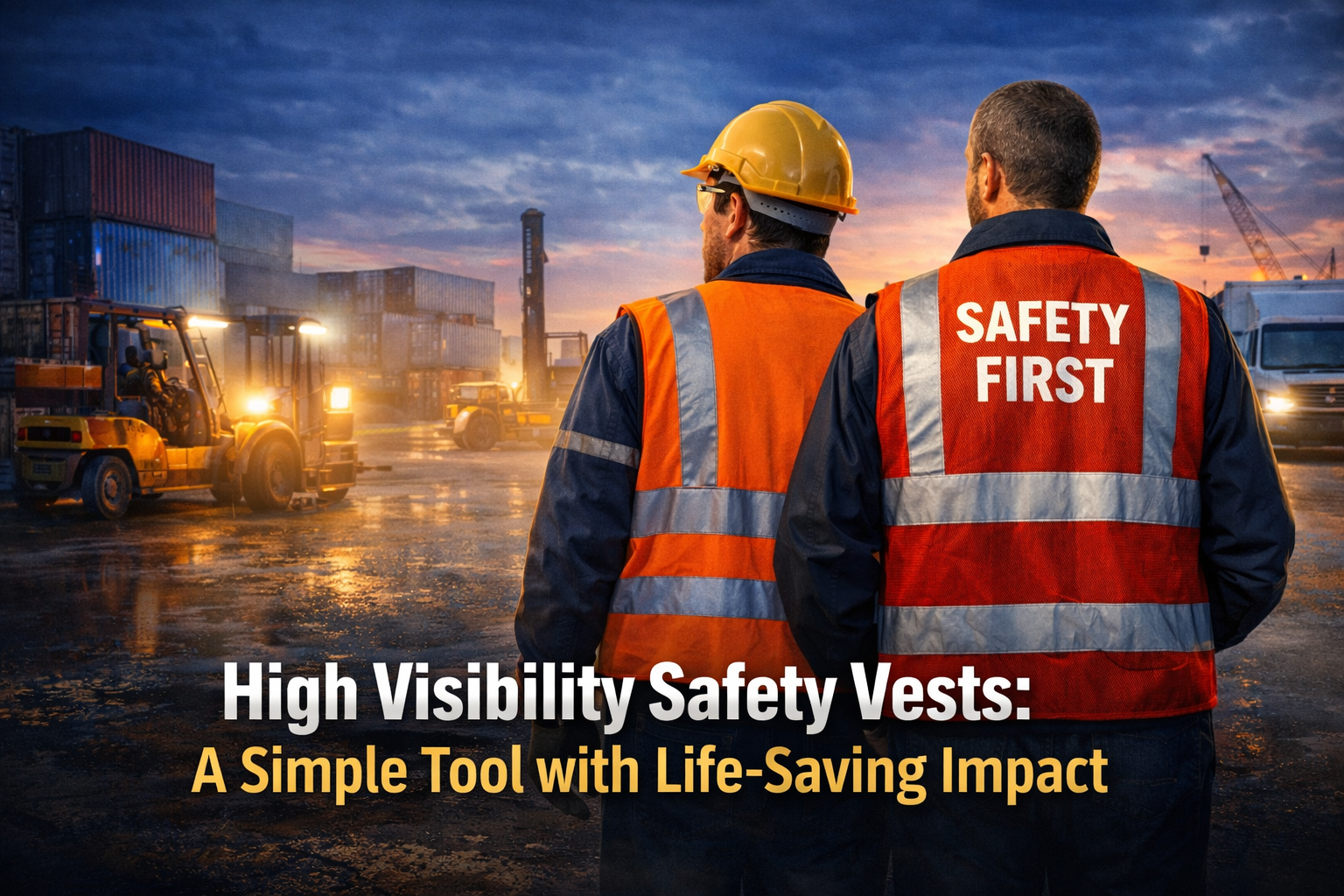
A high visibility safety vest is one of the simplest yet most effective tools for preventing workplace accidents. In busy industrial and construction environments, high visibility safety vests help workers stand out before danger gets too close. When used correctly, they reduce risk, support compliance, and protect lives.
- What Are High Visibility Safety Vests?

A high visibility safety vest is a type of personal protective equipment designed to make the wearer clearly visible in both daylight and low-light conditions. These vests combine fluorescent colors for daytime visibility with reflective strips that shine when hit by artificial light.
You can think of them like road signs worn on the body. Just as a bright warning sign alerts drivers from a distance, a reflective safety vest alerts equipment operators and drivers that a person is present.
As part of a complete PPE range, high visibility safety vests are typically worn alongside helmets, gloves, and safety footwear to create layered protection in hazardous environments.
- Why High Visibility Safety Vests Are Critical for Workplace Safety
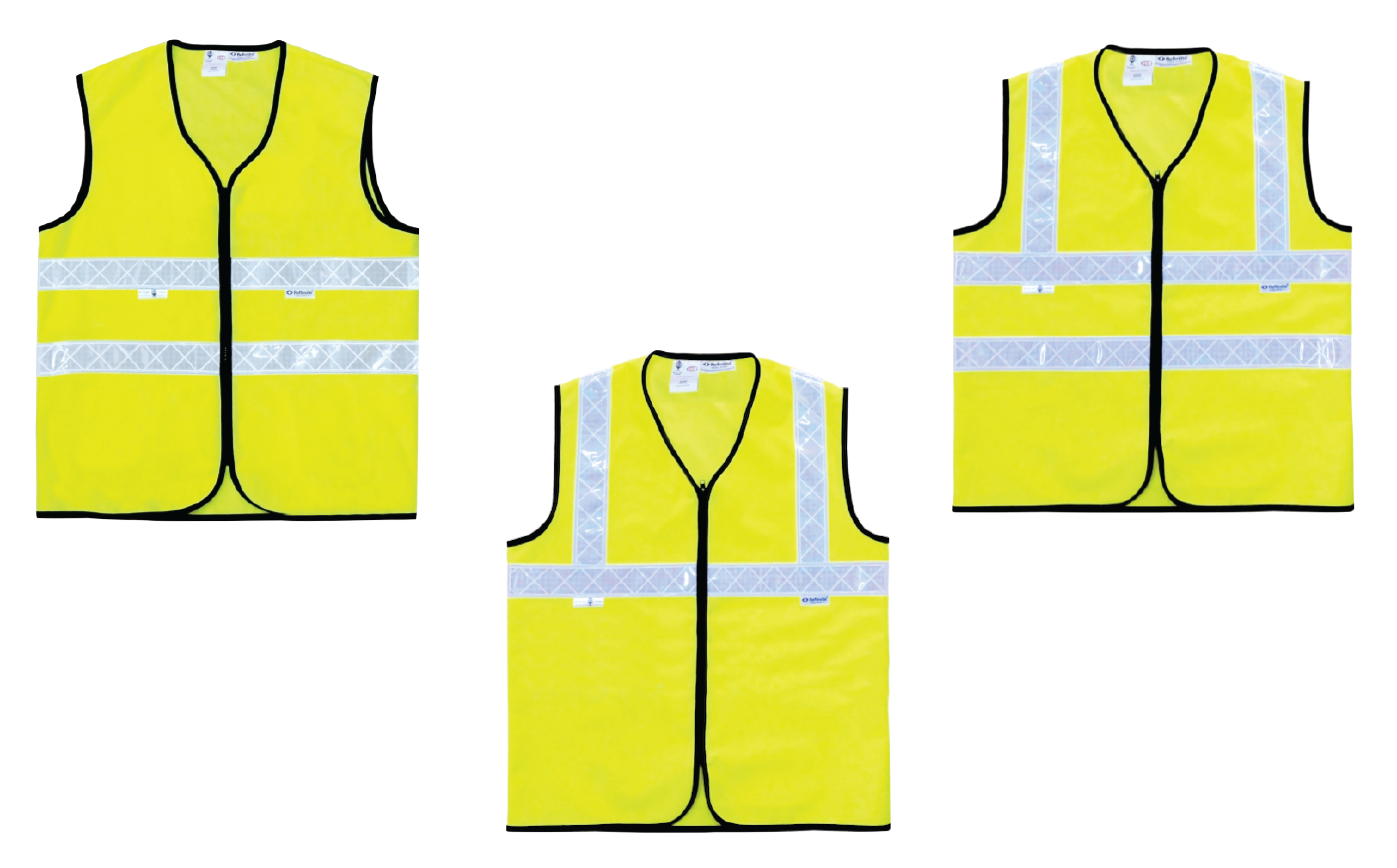
Many workplace accidents happen not because workers act unsafely, but because they are not seen in time. Forklifts reversing, trucks entering loading bays, or machinery operating in tight spaces all create visibility risks.
A hi vis safety vest works like a constant visual warning. It signals presence instantly, even from a distance. This is why high visibility vests are considered essential PPE in high-risk industries.
In fact, high visibility clothing is often listed alongside helmets and safety shoes as essential PPE for workplaces where people and moving equipment interact. When visibility improves, reaction time improves and accidents drop.
- Key Regulations and Safety Standards for High Visibility Vests
High visibility safety vests are not just recommended; in many cases, they are legally required.
4.1 International Standards (ISO, EN, ANSI/ISEA)
Globally, safety vests are governed by standards such as ANSI/ISEA and ISO 20471. These standards define minimum brightness levels, reflective tape placement, and performance after washing.
4.2 Industry-Specific Compliance Requirements
Construction, logistics, and road work often require higher-class vests due to faster-moving vehicles and greater exposure to risk.
4.3 Employer Responsibilities and Legal Implications
Employers are responsible for providing compliant PPE and replacing worn-out vests. Failure to do so can lead to fines, project shutdowns, or liability after accidents.
- Types of High Visibility Safety Vests by Use Case

High visibility safety vests are part of broader protective workwear, and different jobs require different designs.
5.1 Construction and Road Work Vests
Designed for high-speed traffic zones and heavy machinery environments.
5.2 Manufacturing and Warehouse Vests
Lightweight vests focused on forklift and pallet traffic visibility.
5.3 Logistics, Ports, and Transportation Vests
Built for wide-open areas, changing weather, and night operations.
5.4 Emergency and Night-Work Vests
Provide maximum reflectivity and 360-degree visibility.
- High Visibility Vest Classes Explained (ANSI/ISO)
Safety vest classes define how visible a worker must be based on risk level.
6.1 Class 1: Low-Risk Environments
For controlled areas with slow-moving equipment.
6.2 Class 2: Moderate Traffic and Industrial Areas
Common in construction sites and busy industrial zones.
6.3 Class 3: High-Risk and High-Speed Environments
| Vest Class | Risk Level | Typical Use |
|---|---|---|
| Class 1 | Low | Warehouses |
| Class 2 | Medium | Construction |
| Class 3 | High | Road & Night Work |
Required for highway work, night work, and high-speed traffic exposure.
Choosing the wrong class is like wearing a helmet that doesn’t fit it looks fine, but it won’t protect you when it matters.
- Materials and Design Features That Impact Performance (≈180 words)
Not all high visibility safety vests perform the same.
7.1 Fabric Types and Durability
Mesh offers breathability, while solid fabrics offer higher durability.
7.2 Reflective Tape Quality and Placement
Low-quality tape fades quickly and reduces compliance.
7.3 Breathability, Weight, and Comfort
Comfort directly affects whether workers wear vests correctly and consistently.
- How to Choose the Right High Visibility Safety Vest for Your Workforce (≈240 words)
Choosing the right vest starts with understanding the worksite.
8.1 Assessing Worksite Risks
Consider vehicle speed, lighting, and environment.
8.2 Matching Vest Class to Job Role
Different roles require different visibility levels.
8.3 Climate and Environmental Considerations
Hot climates may require mesh; outdoor work may need durability.
8.4 Sizing, Fit, and Compatibility with Other PPE
For unique needs or branding, customised workwear can improve comfort, compliance, and identification without reducing safety performance.
- Benefits of Using Certified High Visibility Safety Vests (≈150 words)
Certified vests reduce risk, simplify inspections, and support a strong safety culture. Working with suppliers that demonstrate a clear safety commitment also strengthens long-term compliance and trust.
Certified PPE is not just about passing audits it’s about protecting people consistently.
10. Common Mistakes Companies Make When Buying Safety Vests
One of the most common mistakes is choosing a high visibility safety vest based on price instead of performance. Low-cost vests often fade quickly or lose their reflective properties after repeated washing, which can lead to non-compliance.
Another mistake is using the same vest for every role. A warehouse worker and a road maintenance worker face very different risks. Using the wrong vest class can create a false sense of safety.
Some organisations also overlook fit and comfort. If a hi vis safety vest is too tight, too loose, or uncomfortable, workers may wear it incorrectly or not at all. Finally, many teams fail to plan for replacement, continuing to use worn or damaged vests long after they stop providing proper visibility.
- Best Practices for Bulk Purchasing and Inventory Management (≈180 words)
Buying high visibility safety vests in bulk can reduce costs, but only when done strategically.
11.1 Standardizing PPE Across Teams
Standardising vest types and classes across similar roles makes training easier and ensures consistent compliance. Workers know exactly what to wear and when.
11.2 Cost vs. Quality Considerations
Cheaper vests often need replacing sooner. A durable, certified reflective safety vest usually offers better long-term value, even if the upfront cost is slightly higher.
11.3 Replacement Cycles and Stock Planning
Plan replacement cycles based on usage, washing frequency, and exposure to sunlight and chemicals. Keeping a small buffer stock helps avoid shortages when damaged vests need immediate replacement.
- Maintenance, Inspection, and Replacement Guidelines (≈150 words)
Regular inspection is essential to ensure a high visibility safety vest continues to perform as intended. Check vests for fading fabric, torn seams, and peeling reflective tape.
Washing should follow manufacturer instructions. Harsh detergents and high heat can damage reflective materials, reducing visibility over time.
A simple rule works well: if the vest no longer stands out clearly under light, it should be replaced. Visibility that is “good enough” during the day may fail at night or in bad weather. Treat worn vests the same way you would treat damaged helmets or gloves replace them without delay.
- Frequently Asked Questions
13.1 What class of high visibility vest is required for construction sites?
Most construction sites require Class 2 or Class 3 high visibility safety vests, depending on traffic speed, equipment movement, and lighting conditions.
13.2 How often should high visibility vests be replaced?
There is no fixed timeline. Replace them when fabric fades, reflective tape loses brightness, or damage affects compliance.
13.3 Are reflective vests mandatory under workplace safety laws?
In many industries, yes especially where workers are exposed to vehicle or equipment movement. Requirements depend on local regulations and risk assessments.
13.4 What is the difference between ANSI and ISO standards?
ANSI standards are commonly used in North America, while ISO and EN standards are widely applied internationally. Both define visibility levels and performance requirements.
13.5 Can high visibility vests be customized with company logos?
Yes, as long as customization does not cover or reduce required reflective areas or affect compliance.
13.6 Do worn or faded vests still meet compliance requirements?
No. A vest that has lost visibility no longer meets safety standards, even if it is still structurally intact.
13.7 Are mesh vests suitable for heavy industrial environments?
Mesh vests are ideal for hot conditions but may not provide enough durability for all industrial settings. Always match vest type to worksite risk.
